Pan-Searing Made Simple: Perfect Crust and Juicy
Pan-searing is the fastest way to make food taste restaurant quality at home—because a real crust creates deep flavor and better texture in minutes. If you keep getting gray meat, burning, or sticking, it’s not bad luck. It’s a few controllable variables: surface moisture, pan heat stability, crowding, and when you try to move the food.
This is one of the core skills in the Master Cooking Techniques hub. Once pan-searing clicks, deglazing and fast pan sauces become automatic too.

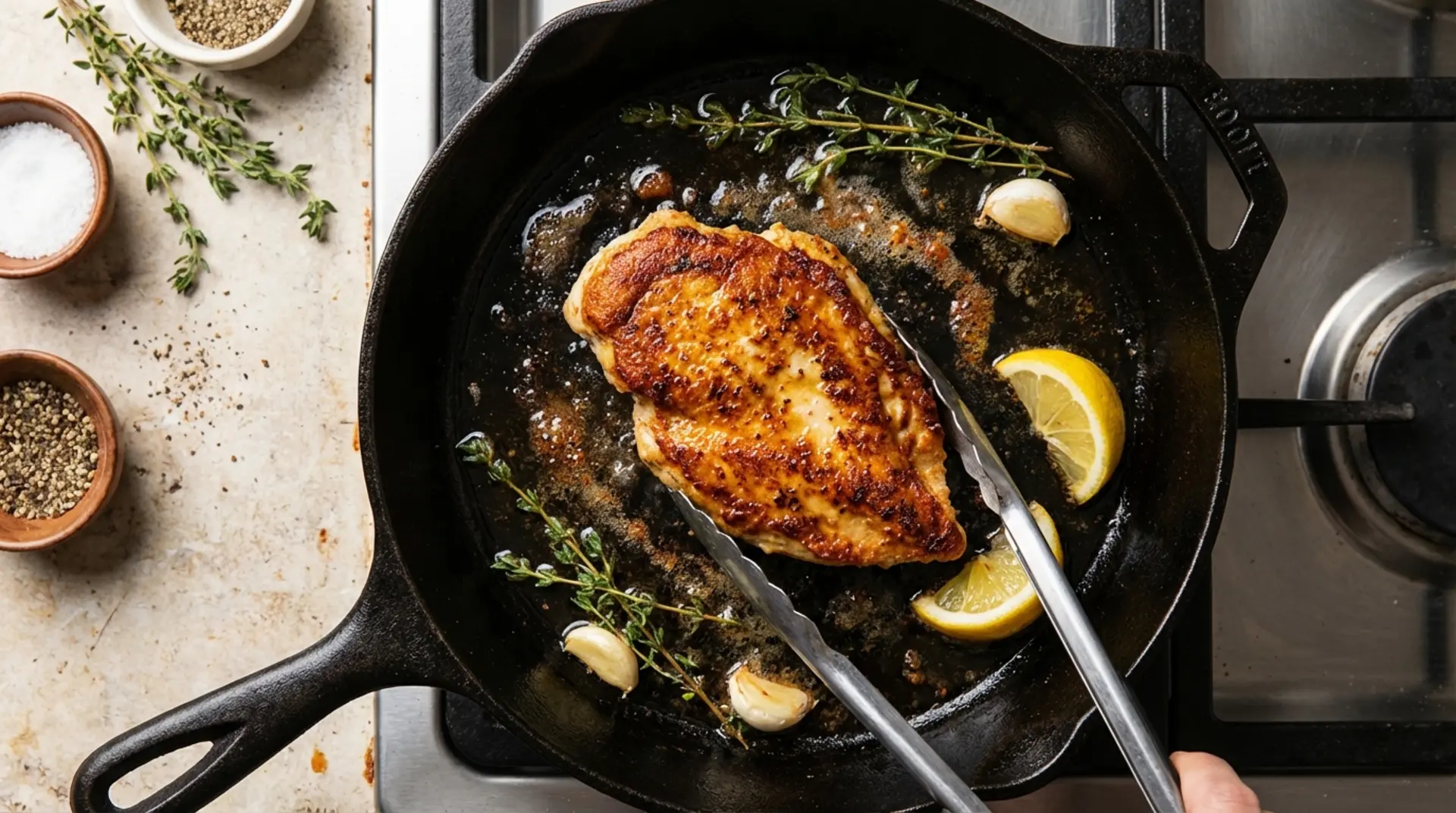
What pan-searing is (and what it isn’t)
Pan-searing is direct-contact browning. That’s the whole game. You’re using a hot pan to drive fast surface reactions that create a deep crust—while you keep the interior from overshooting. If you can’t get color, it’s usually because the pan temperature crashes (too much cold food, not enough preheat) or because moisture is stealing the heat (wet surface, marinades, overcrowding).
What pan-searing is not: it’s not “cooking everything on max heat,” and it’s not “moving the food constantly.” Searing needs contact time. If you keep shuffling the food, you interrupt browning and encourage sticking. Searing also isn’t the same as sautéing—sautéing uses more movement and often slightly lower heat to cook smaller pieces and aromatics quickly. If you’re not sure which you’re doing (and that’s why results are inconsistent), read Sautéing vs Searing to choose the right technique in seconds.
Pan-searing rules: dry surface, hot pan, don’t crowd
Rule 1: Dry surface. Moisture is the enemy of crust. Water must evaporate before browning can begin, and evaporation steals heat. That’s how you end up with “gray meat”: the pan is busy boiling off water, not building a crust. Pat food dry with paper towels and let it sit uncovered for a few minutes if it’s very wet. If you’re working with salted meat, a short rest after salting can pull moisture out—so pat dry again right before the pan.
Rule 2: Hot, stable pan. Preheat longer than you think—especially with stainless or cast iron. You want the pan hot enough that the surface doesn’t crash the moment food hits it. Add oil after preheating, then add food. Rule 3: Don’t crowd. Crowding traps steam and drops temperature. Steam prevents browning and promotes sticking. If you need to cook multiple pieces, cook in batches. It feels slower, but it’s faster than fighting pale, soggy, stuck food.
How to prevent sticking (especially with stainless steel)
Sticking has two main causes: the pan isn’t hot enough when food goes in, or you try to move the food before it naturally releases. Stainless steel intimidates people because it’s honest: it makes you pay attention to heat and timing. The fix is not “more oil.” The fix is heat stability and patience.
A simple stainless searing sequence
1) Preheat the dry pan until it’s properly hot (a few minutes, not 20 seconds). 2) Add oil, swirl to coat. 3) Add the food and immediately leave it alone. At first, it will stick. That’s normal. As the crust forms, it releases. If you force it early, you tear the surface and lose the crust you’re trying to build.
Common sticking triggers
Cold protein: straight-from-fridge meat drops pan temp and releases moisture. Wet surface: marinades and brines leave water on the exterior—pat dry aggressively. Low heat after adding: if you turn heat down the moment you add food, you sabotage crust formation. Keep heat steady through the initial sear, then adjust later if needed.
When to flip while pan-searing (visual cues + timing)
The right time to flip is when the crust has formed enough to release. That’s why “timing” feels inconsistent: different pan heat, thickness, moisture, and surface area change how long crust formation takes. Instead of flipping by panic, flip by cues.
The release test
Use tongs and gently nudge. If it resists, leave it. If it slides and lifts cleanly with a golden-brown crust, flip it. For many proteins, you’ll see the color creeping up the sides—another sign you’re close. If the exterior is still pale, flipping early just resets the contact clock and keeps you in the gray zone.
How often to flip
For a simple sear, one flip is fine: build crust on side A, flip, build crust on side B, then finish. For thick cuts, you can flip more often after the initial crust is set to manage heat more evenly. The bigger principle: don’t flip until you’ve earned the crust, and don’t move constantly like you’re sautéing. If you need to finish gently after browning, that’s where zones (or the oven) do the heavy lifting.
Thick cuts: sear then oven finish (the reliable method)
If you try to cook a thick cut entirely on the stovetop, you often get the worst tradeoff: either the outside burns before the center warms through, or you turn heat down and end up with a bland exterior. The reliable method is two-stage: sear for crust, then finish with gentler, more even heat.
The sear-then-oven blueprint
1) Sear both sides until you have the crust you want. 2) Move the pan to the oven (or move the food to a sheet pan) to finish to doneness. This removes the “burning panic” because the oven is more even than direct burner heat. It also lets you use the stovetop burner for other tasks while the food finishes.
Turn the pan into a sauce (don’t waste the fond)
After the sear, you’ve created fond—concentrated flavor you can convert into a quick sauce. That’s the natural next step: deglaze, reduce, finish. If you want the 5-minute version with the right liquids and scraping technique, go to Deglazing.
Frequently Asked Questions
Why does my meat turn gray instead of browning when pan-searing?
Gray meat usually means the pan is steaming, not searing. The surface is too wet, the pan wasn’t preheated long enough, or you crowded the pan so moisture got trapped. Pat the surface dry, preheat longer, and cook in batches. Browning starts after water evaporates and the pan heat recovers.
How do I pan-sear without burning the outside?
Burning usually comes from heat that’s too high for the timeline or from sugar-heavy marinades. Keep the initial sear hot but controlled, then use a two-stage method for thicker cuts: sear for crust, finish gently (oven or lower zone) so the inside catches up. Also avoid overcrowding, which can cause uneven hot spots.
When should I add oil for pan-searing—before or after preheating?
For most home setups, preheat the pan first, then add oil right before the food. This helps you reach stable pan heat without overheating the oil unnecessarily. Once the oil shimmers and moves easily, add the food and leave it alone until the crust forms and releases.
Conclusion
Pan-searing becomes easy once you stop treating it like a vibe and start treating it like a system: dry surface, stable heat, space, and patience until release. That’s how you get a deep crust without overcooking—and it’s the foundation for fast pan sauces, better weeknight meals, and predictable results.
Next Step: Learn Deglazing to turn fond into a quick pan sauce
Latest posts
About