Deglazing 101: Use Fond to Make Flavor Fast
Have you ever looked at the brown bits stuck to your pan and wondered "what is that?" Deglazing is the move that answers it. Deglazing turns good fond into a sauce in minutes by dissolving those caramelized browned bits with the right liquid, at the right heat with reduction for body and finishing for shine.
This technique is one of the core skills in Master Cooking Techniques, and it pairs perfectly with pan-searing when you want a crust + sauce combo that feels restaurant-level without much extra effort.

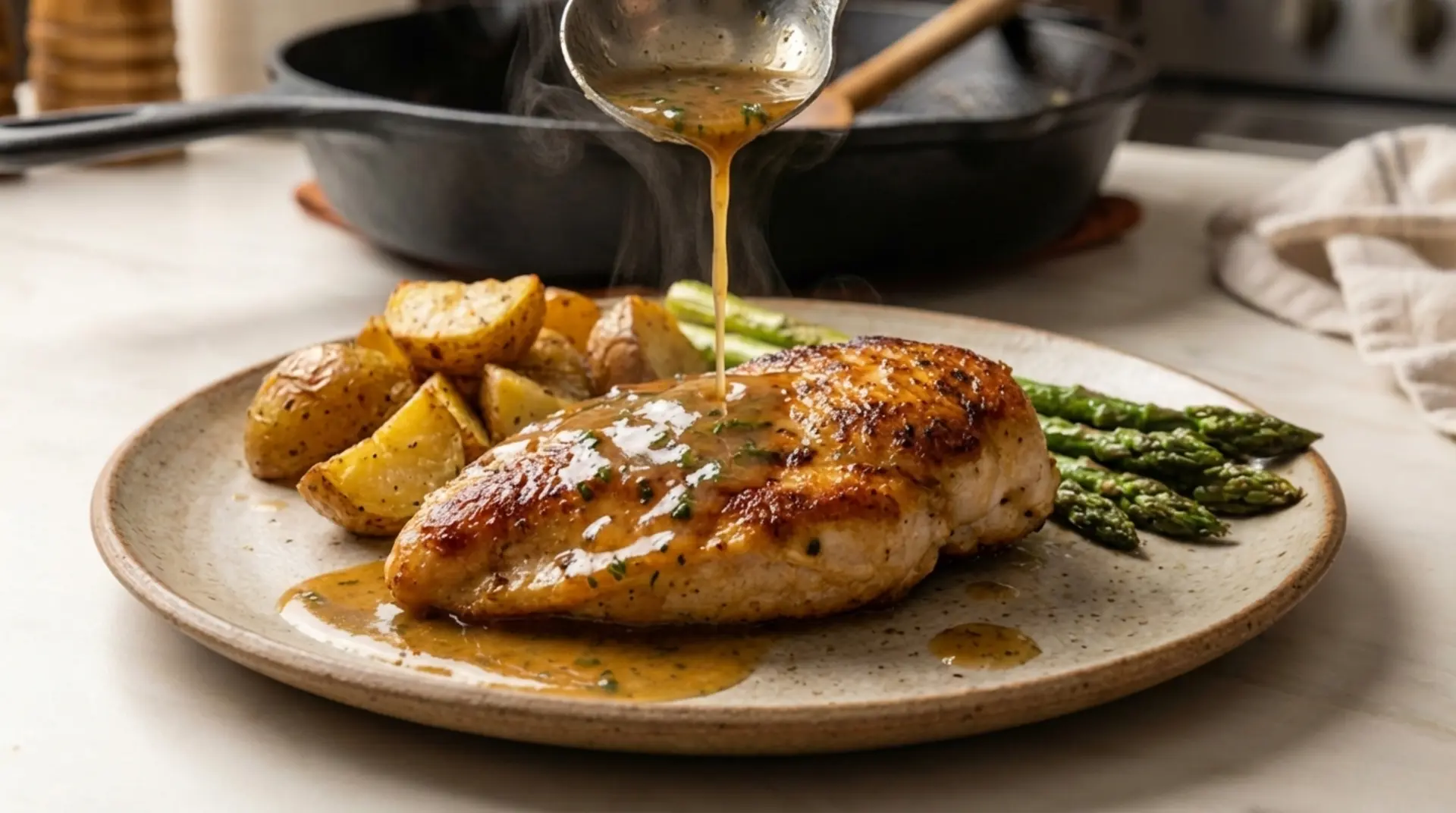
What is deglazing (and why it upgrades flavor fast)
Deglazing is what you do right after pan cooking when the pan looks dirty. Those browned bits aren’t for the drain. What you have is delicious, concentrated flavor created during searing and browning. When you add a splash of liquid to a hot pan, the liquid loosens the caramelized fond so it dissolves into a sauce. That’s why a pan sauce can taste rich and savory in minutes, even if you didn’t add any extra ingredients. It utilizes the aromatics, herbs and seasoning that are already present in your main dish. Deglazing is one of the fastest ways to make home cooking taste complete.
Deglazing turns cooking into a cohesive meal. You build flavor in the pan with your main, then you capture it to amplify the existing flavors, instead of washing it away. This is why it pairs naturally with pan-searing. Searing creates fond, and deglazing turns that fond into sauce. If you’ve ever felt like your food tastes good but is missing something, deglazing is often the missing step.
What fond should look like and what it shouldn't
Good fond looks dark golden to deep brown and smells savory, not acrid or bitter. It often forms as a thin, stuck-on layer after you sear meat and brown vegetables or aromatics. Bad fond is black, harsh, and unappetizing. If the fond is black, deglazing will pull that bitterness into your sauce. The goal is controlled browning that builds flavor without crossing into char residue.
Use this quick check: if the pan smells nutty, roasted, and appetizing, you’re in the right zone. If it smells sharp, smoky, or burnt, you’re too far. Another clue is texture: good fond scrapes up into the liquid cleanly; burnt fond smears and stays stubborn. If you’re consistently burning fond, the root cause usually comes earlier. Like if your heat is too high, there's not enough fat, or leaving small bits in the pan too long.
Best liquids for deglazing (wine, broth, water, vinegar)
The best deglazing liquid depends on what you cooked and the flavor direction you want. Wine is common because it adds acidity and complex aroma while lifting fond. Broth adds savory depth and is forgiving. Water works surprisingly well when you plan to finish with butter, herbs, or a concentrated ingredient like mustard. Vinegar or citrus can deglaze too, but they’re intense so use them in small amounts or blended with broth or water so the sauce stays balanced.
Practical pairing rules: for chicken, broth plus a squeeze of lemon at the end is easy. For steak, wine or broth plus a little butter works well. For pork, broth with a touch of vinegar can brighten the fatty richness. For vegetables, water or broth can lift browned bits, then you finish with herbs or a drizzle of a more intense flavor. If you want a glossy sauce that clings instead of a thin pan liquid, the next skill is reducing sauce or adding a roux.
How to deglaze a pan step-by-step
Deglazing is a short sequence, and timing matters. First, remove the protein or main food from the pan and set it aside to rest. Your crispy foods need to rest on a wire-rack to combat sogginess. If there’s excessive fat, pour off most of it, leaving a thin layer. Keep the pan hot enough to sizzle. Make sure it's not so hot that the fond starts to burn.
Next, add your liquid to the pan. It should sizzle immediately. Use a wooden spoon or spatula to scrape the bottom, lifting the fond into the liquid. Let it simmer briefly to dissolve fully while stirring, then reduce to the thickness you want. Finish off the heat with butter for shine, add herbs for aroma, or add a small splash of acid for balance. The entire process can take under three minutes once you're used to the process.
How to deglaze without bitter or burnt flavor
Bitter deglazing usually isn’t caused by the liquid it’s caused by burnt fond. The best prevention is controlling heat earlier. If you notice fond getting too dark while searing, reduce heat slightly and add a touch more fat if needed. Another key move: add your small garlic bits or spices towards the end, they burn fast and will poison the sauce flavor.
If you suspect some bitterness, you have a few rescue options. First, taste the sauce early before you reduce too far. If it’s slightly bitter, add a bit more liquid and reduce more gently. If it’s strongly bitter, don’t reduce it; you’ll concentrate the bitterness. In that case, start over or dilute heavily and pivot to a different finish instead of forcing a brown sauce.
Frequently Asked Questions
What can I use to deglaze a pan if I don’t cook with wine?
Broth is the best all-purpose option, and water also works well if you plan to finish with butter, herbs, or a flavorful ingredient like mustard. For brightness, add a small splash of vinegar or lemon at the end rather than deglazing with straight acid. The key is lifting fond, then balancing the flavors.
Why does my deglazed sauce taste bitter?
Bitterness almost always comes from burnt fond or burnt aromatics. If the pan residue is black or smells acrid, deglazing will dissolve that bitterness into the sauce. Lower heat during browning, add liquid sooner, and avoid burning garlic or spices. Don’t reduce a bitter sauce; it will concentrate.
Do I deglaze before or after I remove the meat from the pan?
Deglaze after you remove the meat so it can rest and you can control the sauce. Pull the meat to a plate, pour off excess fat if needed, then add your deglazing liquid and scrape up the fond. Finish the sauce while the meat rests, then serve together for a hotter, juicier plate.
Conclusion
Deglazing is the technique that stops concentrated flavor from going down the drain. Brown food to create fond, add a splash of liquid, scrape and dissolve the browned bits, then reduce and finish with butter, herbs, or a touch of acid. Control heat so fond stays deep brown (not black) and taste early so you don’t concentrate bitterness and unwanted flavors. Once you can deglaze confidently, pan sauces stop being intimidating and start being automatic.
Next Step: Reducing Sauce: concentrate flavor into a glossy finish
Latest posts
About