Sauté vs Sear: Pick the Right Technique
Sautéing vs searing is one of those tiny distinctions that fixes a shocking number of cooking problems. If your meat turns gray, your vegetables get watery, or your garlic burns before anything tastes good, you’re usually using the wrong heat + movement combo.
These are the master moves inside Master Cooking Techniques, because once you can sauté or pan-sear correctly, browning, texture, and timing get dramatically easier.

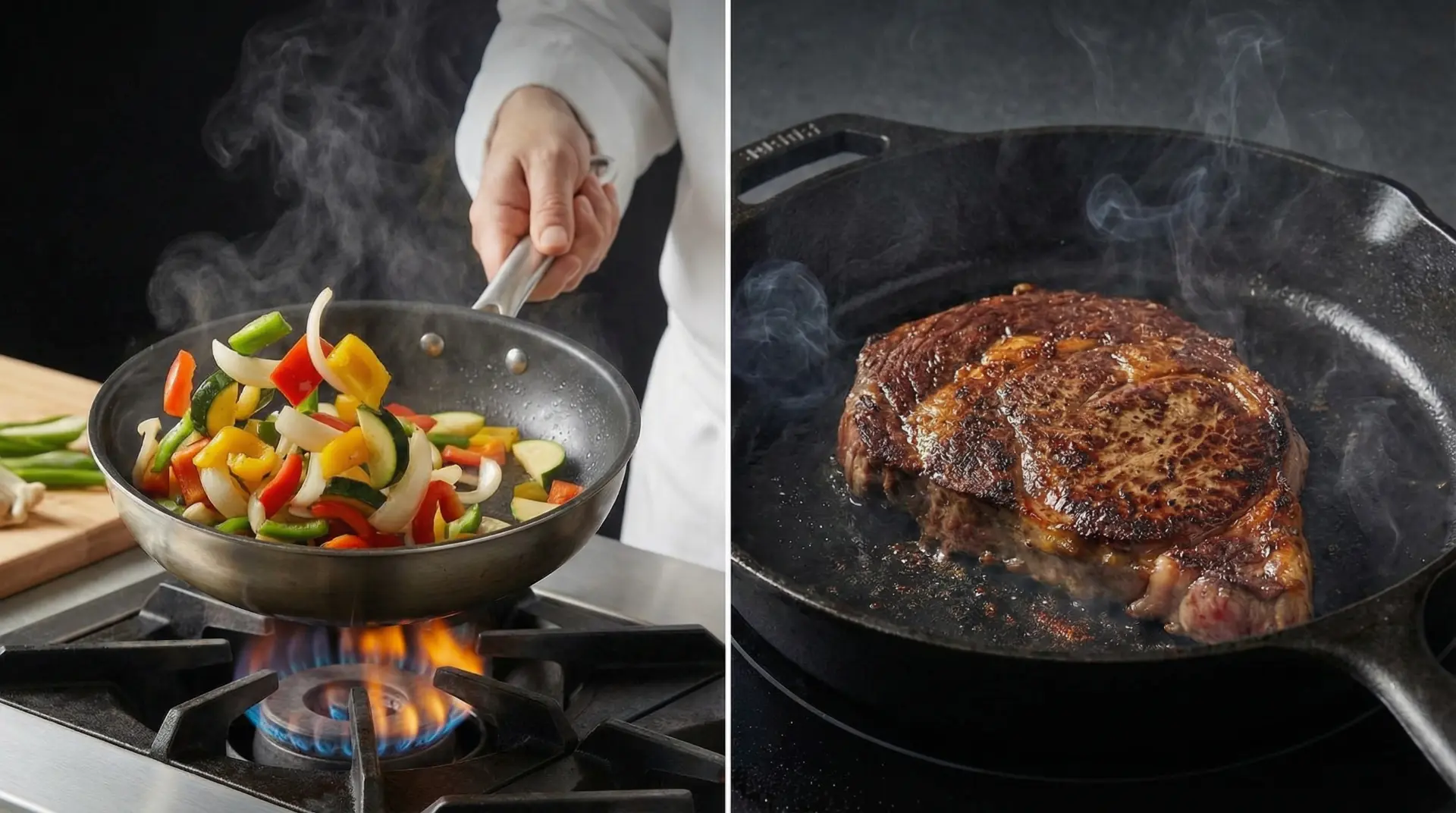
Sautéing vs searing difference
Here’s the clean distinction: sautéing cooks smaller pieces quickly with consistent movement, while searing builds crust with consistent contact and patience. If you remember nothing else, remember this: movement prevents crust; contact creates crust. That’s why you can’t stir your way into a deep sear, and if you don't stir you'll have an uneven sauté.
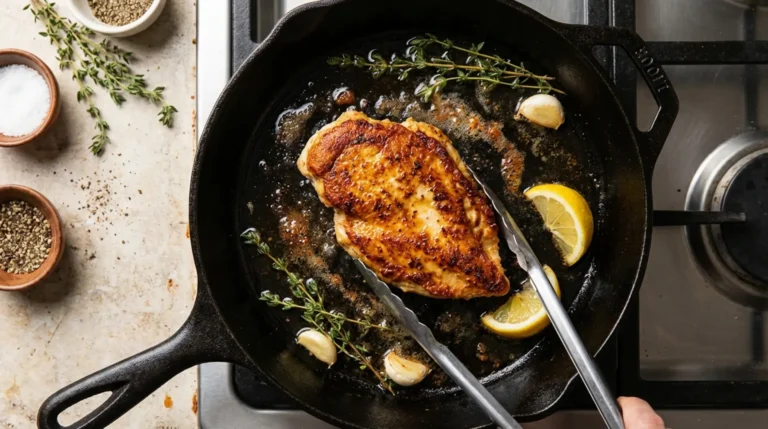
A lot of people accidentally mix the two. They want seared chicken, but they move it too soon and crowd the pan, so it steams instead. Or they want sautéed vegetables, but they use heat that’s too high and let pieces sit, so some burn while others stay firm. Once you decide your intent before food hits the pan, the rules become obvious. If your goal is a crust that releases cleanly, you want a pan-sear.
Sautéing vs searing heat level and movement rules
Sautéing: moderate-to-high heat, smaller pieces, enough oil to coat lightly, frequent tossing or stirring, and cooking in a thin layer so pieces heat evenly. The goal is even doneness with some browning, not a strong crust. Searing: medium-high to high heat, larger pieces, controlled oil, strong surface contact, minimal movement, and enough space so moisture can escape. The goal is browning and crust development.
Another simple rule: sautéing is forgiving when you adjust heat quickly; searing is forgiving when you stop touching the food. For sautéing, if things are browning too fast, lower heat and keep the ingredients moving. For searing, if things are sticking, it’s often because you’re trying to flip too early, wait for the natural release. Avoid maxing out heat by default. The right temperature is the heat that gives you the most control.
What foods are best for sautéing vs searing (quick examples)
Sautéing is best for smaller, quick-cooking foods: sliced onions, bell peppers, mushrooms (in batches), thin-cut chicken pieces, shrimp, chopped greens, and stir-fry vegetables. It’s also ideal for aromatics and any base you plan to build into a sauce. The goal is even cooking with controlled light browning.
Searing is best for foods where a crust elevates the flavor: steaks, chops, chicken thighs, salmon, burgers, tofu slabs, and hearty vegetables cut into larger pieces. Searing also sets you up for sauces because it creates fond. If you want to turn those browned bits into something you can spoon over the food, learn about deglazing next.
How to avoid steaming in a pan (spacing and moisture rules)
Steam is the silent crust sabatoger. It happens when moisture is trapped in the pan, usually from overcrowding or food that starts too wet which prevents browning. Instead of surface contact and evaporation, you get a humid microclimate that cooks like a lid is on the pan. The result can be pale food, soft texture, and diluted flavor.
The fixes are practical: dry surfaces thoroughly, don’t crowd your ingredients, and cook in batches. If you add cold, wet food to a small pan, your pan temperature drops and moisture spikes. For sautéing, use a thin layer and keep pieces moving to release steam. For searing, give pieces space and don’t move them until it wants to naturally release.
When to switch mid-cook (the hybrid approach)
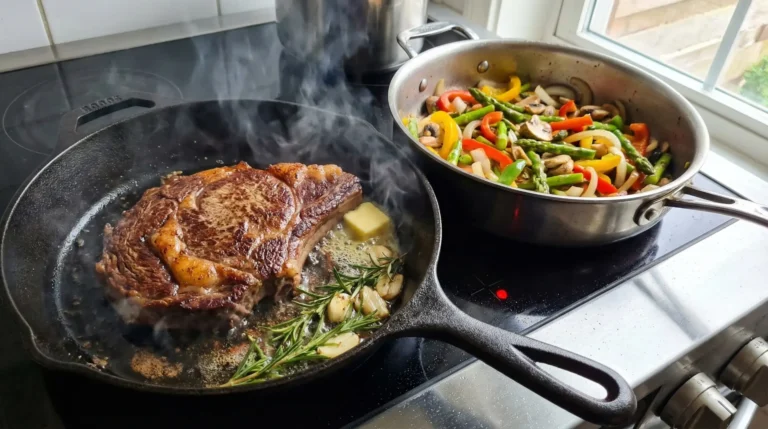
Many great pan results are hybrids. You might sauté aromatics first, then sear a protein. Or you might sear for crust, then lower the heat to finish gently. This is how you get both deep browning and correct doneness without overcooking the exterior. The mistake is thinking you must commit to one heat level for the entire cook.
An efficient hybrid technique is: sear first for color, then adjust the temperature to finish. After you build crust, you can lower heat, add aromatics, deglaze, and reduce into a sauce while the protein rests. If you want more control over crust-building, practice the techniques for the perfect pan-sear.
Frequently Asked Questions
Is sautéing the same as pan-frying or searing?
Not exactly. Sautéing uses moderate-to-high heat with movement to cook smaller pieces evenly with light browning. Searing uses higher heat and minimal movement to build a deep crust through contact. Pan-frying typically uses more oil and longer contact to create a crisp exterior.
Why won’t my food brown when I cook it in a pan?
The most common reasons are moisture and crowding. Wet surfaces and too much food trap steam, which blocks browning. Dry the food thoroughly, give pieces space, and cook in batches. For searing, stop moving the food until it releases; for sautéing, keep a thin layer and keep it moving.
When should I sear first and then sauté, or sauté first and then sear?
Sear first when crust is the priority, then lower heat to finish gently or build a sauce. Sauté first when you’re building a flavor base, then increase heat and sear proteins or vegetables in the same pan. Many dishes use both techniques in sequence.
Conclusion
Sautéing and searing aren’t the same, they’re entirely different techniques. Sautéing is quick cooking with movement; searing is crust-building through contact and patience. Decide your intent first, then match heat level, spacing, and movement to that intent. Once you stop mixing the rules, pan cooking becomes consistent.
Next Step: Roasting Vegetables: even browning without sogginess
Latest posts
About