Cookware Heat Materials: Cast Iron vs Stainless vs Nonstick
Most times when food won’t sear or everything sticks are problems with the pan. Cookware materials behave differently: some hold heat steadily while others respond quickly. When you match the pan to the job, cooking gets easier and more repeatable.
This article is part of the cooking science hub. For the full framework (heat, temperature, texture, browning), go back to Cooking Science Guide..

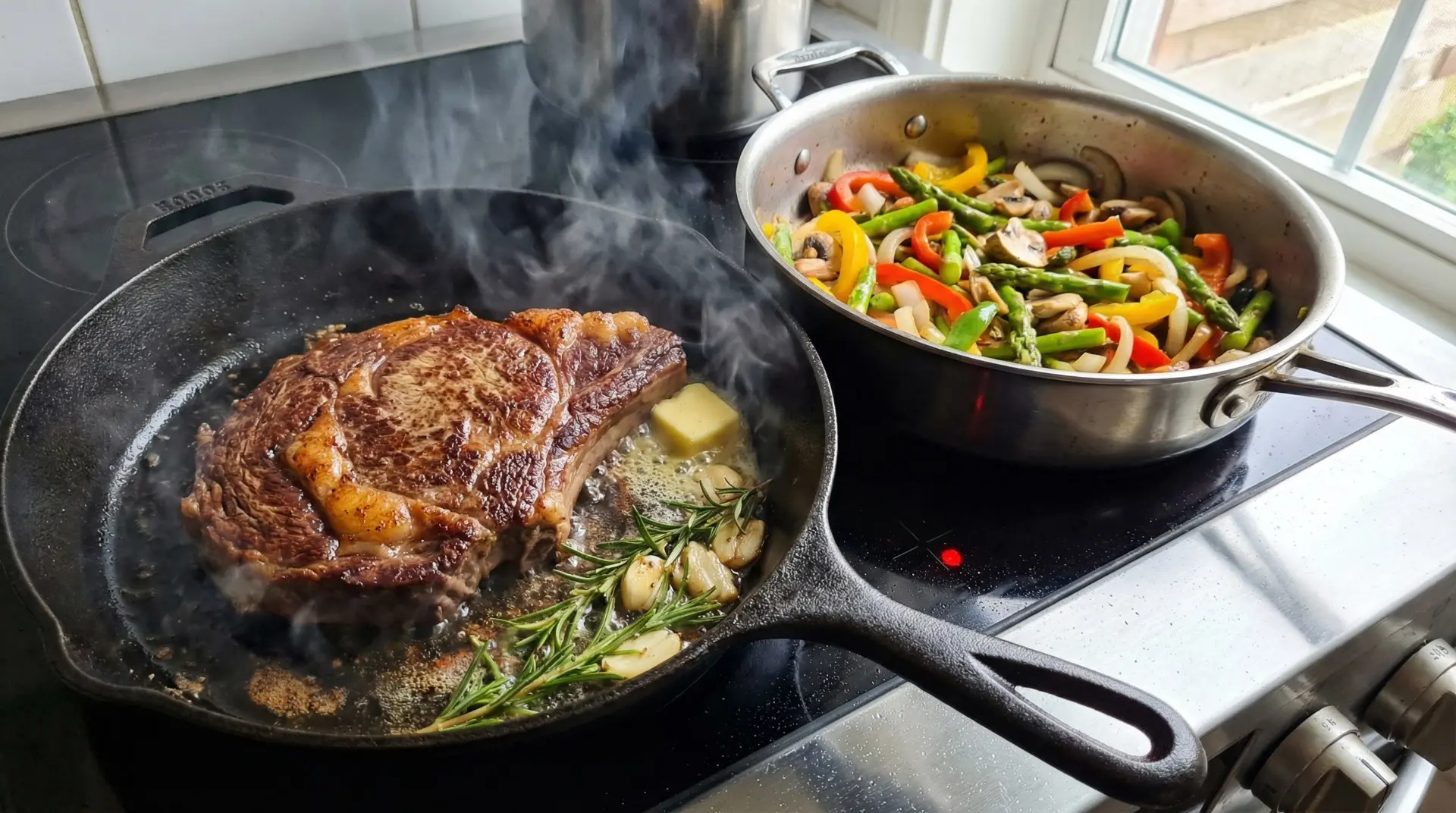
Heat retention vs responsiveness (what it means in real cooking)
Heat retention is a pan’s ability to stay hot when you add food. This matters most for searing and browning because cold food steals heat. If the pan temperature drops too much, you get pale meat and watery vegetables instead of a crust. A high-retention pan acts like a reservoir, resisting temperature swings and keeping the surface hot enough to drive evaporation and browning.
Responsiveness is how quickly a pan changes temperature when you turn the heat up or down. This matters for sauces, delicate fish, and any moment where too much heat can burn or break something. A practical rule is: retention helps you brown, responsiveness helps you not burn. If your cooking feels uneven, the physics behind hot spots and slow centers is covered in Heat Transfer in Cooking.
Cast iron: when it shines, when it fails
Cast iron shines when you want heat retention and steady surface temperature. It’s excellent for searing steaks, browning burgers, crisping chicken skin, roasting vegetables, and oven-to-stovetop methods. Once properly preheated, it holds heat aggressively, which helps you keep the surface hot enough to brown even when cold food hits the pan. It also becomes naturally slicker with seasoning and time.
Cast iron fails when you need quick temperature changes. If a sauce starts reducing too fast or butter begins browning, cast iron won’t respond quickly when you lower the flame because the material retains heat. It can also cook unevenly if you don’t preheat long enough, creating hot spots that burn before the rest is ready. If your goal is deep crust without bitterness, pair high-retention pans with Maillard Reaction so you brown without burning.
Stainless steel: how to prevent sticking
Stainless steel is the workhorse because it balances decent retention with better responsiveness than cast iron. It’s ideal for sautéing, pan sauces, browning aromatics, and cooking proteins when you want fond. The learning curve is sticking. Stainless will stick if the pan isn’t preheated properly, if you add food too early, or if you move it before a crust forms.
To prevent sticking, preheat first, then add oil, then add food. Let it brown until it naturally releases. If you drop food into a lukewarm pan, it glues itself on. Crowding also causes steaming, which drops surface temperature and increases sticking. If you’re learning release timing but keep overcooking while you wait, use Cooking Temperature Control so the inside stays on target while the surface finishes browning.
Nonstick: what it’s best for (and heat limits)
Nonstick is best for fragile foods and low-stress cooking: eggs, delicate fish, pancakes, tofu, and anything where you want easy release with minimal fat. It’s a great go-to pan for quick meals. The tradeoff is browning power. Many nonstick pans are thinner and can’t hold surface heat as strongly, which makes them weaker for searing and deep crust.
Heat limits matter. Nonstick coatings degrade faster at high heat, and overheating an empty nonstick pan is the fastest way to ruin it. Keep nonstick for low-to-medium heat tasks and use stainless or cast iron for high-heat browning and crisping. If you want crisp texture, airflow and moisture control matter as much as the pan, so connect this to How to Make Food Crispy for the surface-dryness rules.
Simple buying rules: the 3-pan setup that covers most cooking
If you want the fewest pans with the biggest coverage, use a simple set: one nonstick skillet for eggs and delicate foods, one stainless pan for everyday browning and sauces, and one cast iron pan for high-heat searing and oven finishes. This covers most home cooking and gives you both retention and responsiveness when you need it. You can expand later, but this base prevents most pan selection issues.
Remember that cookware doesn’t replace fundamentals, it supports them. For consistent doneness, use Cooking Temperature Control. For browning, use Maillard Reaction. For the full articles list, return to Cooking Science Guide..
Frequently Asked Questions
What’s the best pan for searing steak at home?
Use cast iron or a heavy stainless steel pan for heat retention. Preheat long enough to reduce hot spots, dry the steak surface well, and avoid crowding. If the pan temperature collapses when the steak hits, you’ll steam instead of sear. After browning, finish gently so the inside reaches your target without burning the crust.
Why does everything stick to my stainless steel pan?
Usually because the pan wasn’t hot enough before adding oil and food, or because the food was moved too soon. Preheat first, add oil, then add food and let it brown until it naturally releases. Crowding can also trap steam and drop surface temperature, which increases sticking and prevents browning.
Do I need nonstick if I already have stainless and cast iron?
Not strictly, but it’s convenient for eggs and delicate foods. Nonstick reduces friction and failure points on low-to-medium heat. If you prefer fewer pans, you can do eggs in well-seasoned cast iron, but nonstick is the easiest option. Keep it away from high heat to preserve the coating.
Conclusion
Cookware isn’t about brand, it’s about heat behavior. Use cast iron for retention and searing, stainless for versatile browning and sauces, and nonstick for low-heat easy release. Match the pan to the job, preheat correctly, and avoid crowding to reduce sticking and improve crust. Once cookware supports your intent, results become dramatically more easy and predictable.
Next Step: Back to the Cooking Science Guide
Latest posts
About