How to Reduce Sauce for a Glossy, Flavorful Finish
Reducing sauce is the simplest way to turn watery and meh into rich and delicious. If your sauce tastes flat, reduction fixes the real problem: too much water diluting that precious flavor. The trick is controlling heat and surface area so you concentrate steadily without burning, turning bitter, or accidentally making it too salty.
This is a core skill inside Master Cooking Techniques, because reduction shows up everywhere: pan sauces, braises, tomato sauces, and quick weeknight finishes. If you’re starting from browned bits in the pan, learn deglazing first for a solid base and then use reduction for more body and depth in your sauce.

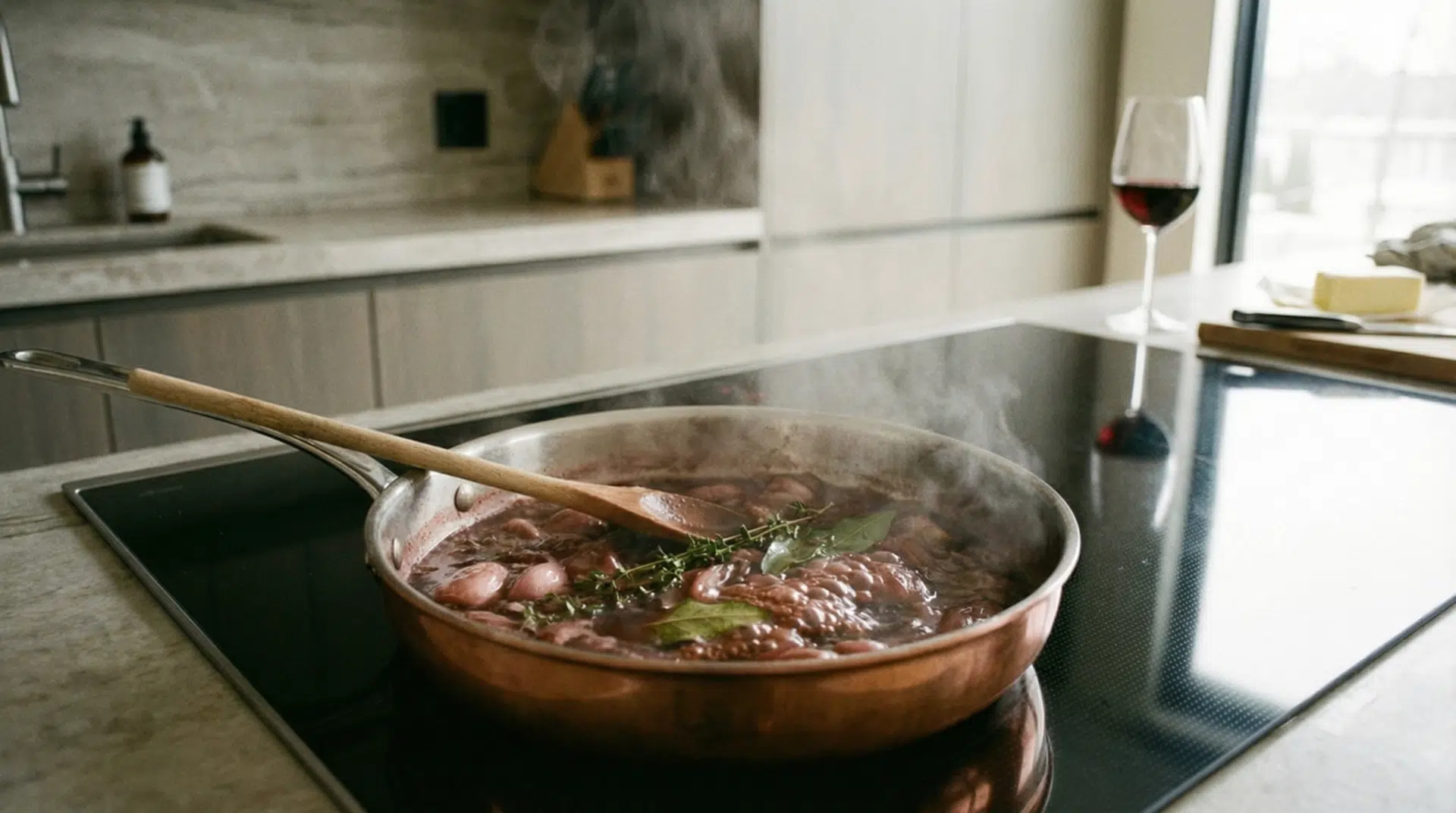
What sauce reduction does (and why it works)
Reduction is controlled evaporation. Most liquids are mostly water, and water doesn’t taste like much. When you simmer a sauce, water escapes as steam and the remaining compounds become more concentrated. Salt, aromatics, acids, sugars, and savory molecules are left behind. Simultaneously the sauce gets thicker because there’s simply less water relative to everything else. That’s why reduced pan juices become a sauce that coats food instead of running off it.
This is also why reduction makes simple ingredients feel complete. A quick reduction can turn broth and fond into a glossy sauce with almost no extra ingredients. If your reduction starts from a pan sear, pair that with deglazing to lift fond into liquid, then reduce that to concentrate it for an elevated meal.
What reduction can’t do
Reduction can’t fix a sauce that’s fundamentally unbalanced. If it’s bland because it lacks salt, reducing might intensify what’s already there, but it won’t magically create depth or harmony. If it’s bitter, reducing will concentrate bitterness. If it’s too salty, reducing will make it taste saltier. Reduction is a magnifier, amplifying your starting point.
This is why seasoning strategy matters: you often want to reduce first, then adjust salt near the end, because salt intensity increases as volume drops. It’s also why burnt bits are dangerous in reductions, anything harsh just becomes harsher. If you need thickness plus stability, like a classic gravy or cream sauce, reduction isn’t always the best tool. That’s where making a roux becomes the better thickening technique.
Best pan for reducing sauce
Pan choice controls speed and control. A wide pan reduces faster because more surface area is exposed to heat and air, which increases evaporation. A tall, narrow pot reduces slower because less surface area is exposed. Faster isn’t always better and you want a reduction speed you can control without constant stirring, especially when you’re close to the endpoint.
Use a wide skillet or sauté pan when you want quick reduction for pan sauces, glazes, or finishing liquids. Use a saucepan when you want more control and less risk of overshooting, especially for delicate sauces or reductions with sugar. If you’re reducing right after cooking in the same pan, keep in mind that residual heat can keep the reduction aggressive even after you turn the burner down if your pan isn't responsive, so adjust early and watch the surface behavior.
How to know when sauce is reduced enough (visual cues)
Reduction is easier when you stop guessing and start watching for cues. Early on, bubbles are large and watery because the liquid is thin. As the sauce concentrates, bubbles become smaller, tighter, and more numerous. The surface looks glossier. The sauce clings more to the back of a spoon. These cues tell you you’re approaching the endpoint.
Use the spoon test: dip a spoon, lift it, and look for light coating. If it runs off like water, keep reducing. If it coats the spoon lightly, you’re in the pan sauce zone. If it coats thickly and feels syrupy, you’re in the glaze territory. Another cue is the line on the pan: as liquid reduces, the sauce line marks where it used to be. Pay attention to the last 20% because that’s where reductions go from not ready to over-reduced quickly.
How to reduce sauce without making it too salty or bitter
The best way to avoid over-salting is to treat salt as a late-stage adjustment. If you salt heavily early, then reduce hard, the salt intensity can jump past your target. The same is true for anything harsh: burnt fond, overly bitter wine, scorched garlic, or too much spice residue in the pan. Reduction concentrates everything, including any mistakes.
Use these practical rules: reduce first, taste often, then season at the end. If you’re reducing from a deglaze, make sure the fond is deep brown (not black) before you lift it, because black fond always becomes bitter sauce. If you’re using wine, simmer long enough to mellow sharp alcohol notes before you push reduction too far. And if you suspect bitterness, don’t reduce aggressively, gently simmer for more control so course correction is possible.
Frequently Asked Questions
How long does it take to reduce a sauce?
It depends on pan size, heat level, and starting volume. A wide pan reduces faster than a tall pot because it has more surface area. Instead of timing, use visual cues: tighter bubbles, a glossier surface, and sauce that lightly coats a spoon. The last 20% happens quickly, so watch closely near the end.
Why does my sauce taste too salty after reducing?
Reduction evaporates water but leaves compounds like salt behind, so salt intensity increases as volume drops. Season lightly early, reduce first, then adjust salt near the end. If you’ve over-salted, dilute with unsalted broth or water and re-balance with a small splash of acid if needed.
How do I thicken sauce faster than reducing?
Use a thickening method like a roux when you need body quickly or when reduction would take too long. Roux thickens without requiring major evaporation. Reduction is best for concentrating flavor; roux is best for stable thickness. Choose based on whether your goal is intensity, texture, or both.
Conclusion
Reducing sauce is controlled concentration: simmer gently, use the right pan, and watch for the endpoint cues like tight bubbles, gloss, and spoon coating. Season towards the end to avoid over-salting, and finish off-heat with a little fat and brightness for a balanced, restaurant-style result. Once you trust reduction, you can turn simple pan liquids into a real sauce in minutes.
Next Step: Making a Roux (thicken sauces smoothly when reduction isn’t enough)
Latest posts
About