How to Make a Roux Without Guessing
A good roux is the difference between watery or chunky and smooth, glossy, restaurant-level gravies/sauces. If you’ve ever made gravy that tasted like raw flour, a cheese sauce that clumped, or a gumbo roux that just wasn't right, this is the easy method. Making a roux is just controlling heat and time, with a simple ratio.
This is one of the core thickening skills inside Master Cooking Techniques. Building a sauce from pan drippings is a whole other process because roux and reduction address different needs. Make sure you use the right steps so you get the exact end sauce you need.

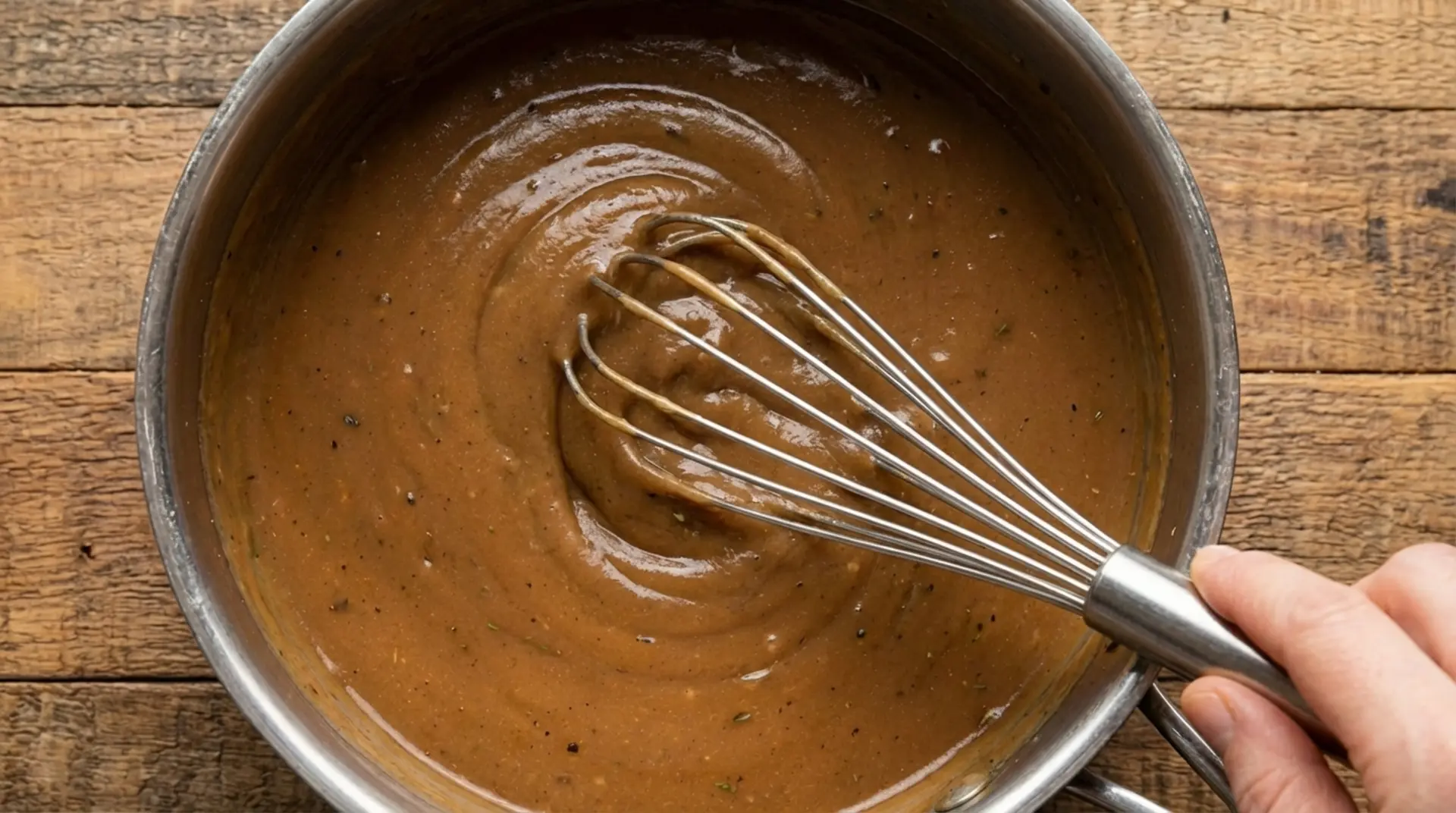
What a roux does (and when to use it)
A roux is a thickening system. Flour contains starch, and starch thickens liquid when it’s properly hydrated and heated. But if you dump raw flour into hot liquid, it clumps and will taste raw. A roux solves both problems by coating flour particles in fat first, then cooking the mixture to remove that raw flour flavor. When you whisk in liquid, those coated starch particles disperse evenly and thicken smoothly.
Use a roux when you want a stable, spoon-coating sauce: gravy, béchamel, cheese sauce, creamy soups, and stews that need body. It’s also useful when you're tight on time and can't reduce forever to get appropriate thickness. If you already know how to build fond and want your sauce to go from pan juices to a real sauce, you usually deglaze first, then continue with thickening. They're a great combo to learn together for restaurant-level meals.
Roux ratio (the simple mix that works)
The classic baseline roux ratio is equal parts fat and flour by weight. At home, you can treat it as a practical 1:1 baseline and get excellent results. The key is not precision to the gram but consistency with the ratio. If you always use the same ratio, you can predict how thick your sauce will become and adjust based on purpose. Too much flour and you get paste. Too much fat and you get greasy separation.
Use a repeatable method: melt the fat, sprinkle in flour while whisking, then cook the mixture until it looks smooth and bubbly. It should look like a paste that loosens slightly as it cooks. If it’s dry and crumbly, add a little more fat. If it’s oily with pools of fat, add a little more flour and whisk until smooth. Once you can make the roux itself smooth, the rest becomes a controlled add-liquid-and-whisk process instead of a panic moment.
Blonde, tan, and brown roux stages (what each is for)
Roux color is flavor plus thickening power. The longer you cook a roux, the darker it becomes, the deeper and toastier it tastes, and the less thickening strength it has. That’s why you don’t use the same roux stage for every dish. A blonde roux keeps thickening power high and flavor mild. A brown roux brings nutty depth but thickens less, so you’ll need more of it unless you want a looser sauce.
Use a blonde roux for béchamel, cream sauces, and mac-and-cheese style bases where you want clean, light thickening that doesn't add additional flavor. Use a medium or tan roux for gravies where you want more roasted flavor without losing too much thickening. Use a brown roux for gumbo and deeply savory dishes where the roux itself is part of the flavor foundation and you will be reducing the liquid anyway. The practical rule: cook the roux until it smells pleasant and toasted, not still raw and definitely not burnt.
How to add liquid to a roux without lumps
Lumps form when flour hydrates into clumps faster than you can break them up. Your goal is gradual hydration with constant whisking so the starch disperses. The most repeatable approach is: add liquid in small amounts at first, whisk until perfectly smooth, then add more once the mixture is loose. If you pour all the liquid in at once, you create a chunky slurry that’s hard to smooth out.
Use this sequence: with the roux cooked and smooth, add a splash of liquid and whisk until it becomes a smooth paste again. Add another splash and whisk until smooth. Once the mixture loosens to a sauce-like consistency, you can add the rest more steadily. Then bring it to a gentle simmer to fully activate thickening. If you’re building sauce from a pan, you’ll often deglaze first, then add more broth. It's the same idea, just controlled additions and steady whisking.
Fixes for roux sauces: too thick, too thin, grainy, or broken
If your sauce is too thick, whisk in more liquid gradually until it reaches the texture you want. If it’s too thin, simmer longer to thicken through reduction or make a little more roux and whisk it in. Graininess often comes from under-whisking early on or from not simmering long enough for starch to fully hydrate and thicken.
If your sauce breaks or looks oily, it often means heat was too high or the fat phase separated. Lower the heat and whisk steadily to re-emulsify. Another common issue is concentrating flavor too far before thickening (especially salt). Taste early and adjust late. If you want to learn how to thicken and concentrate flavor without relying solely on roux, pair this with reducing sauce so you can choose the best thickening path for the dish.
Frequently Asked Questions
What is the best roux ratio for gravy and sauces?
A reliable baseline is equal parts fat and flour by weight. At home, treat it as a consistent 1:1 starting point, then adjust if needed. If the roux is dry and crumbly, add a little more fat. If it looks oily, add a little more flour. Consistency matters more than perfect measurement.
Why is my roux lumpy when I add liquid?
Lumps happen when liquid is added too quickly and flour hydrates in clumps. Add liquid in small splashes at first, whisking until perfectly smooth between additions. Once the mixture loosens into a sauce consistency, you can add the remaining liquid more steadily and simmer to fully thicken.
How do I get rid of raw flour taste in a roux sauce?
Cook the roux long enough before adding liquid. Even a blonde roux should smell pleasant and lightly toasted, not raw. After adding liquid, simmer the sauce briefly to fully hydrate the starch. If the sauce still tastes floury, it usually needs a few more minutes of gentle simmering.
Conclusion
Making a roux is a repeatable thickening system: equal parts fat and flour, cooked to the color you need, then whisked into liquid gradually for a smooth sauce. Control heat, whisk consistently, and simmer briefly so starch fully hydrates. Once you trust roux, gravy and cream sauces stop being stressful and start being predictable.
Next Step: Reducing Sauce (concentrated flavor with a glossy finish)
Latest posts




About