Kitchen Safety at Home: The Simple Guide
The fastest way to reduce food poisoning risk at home is kitchen safety basics you can actually repeat: control time and temperature, stop cross-contamination, and store food correctly. Most problems come from a few invisible mistakes like food sitting out too long, raw juices spreading, or leftovers cooling slowly. This guide gives you a simple system you can run on autopilot.

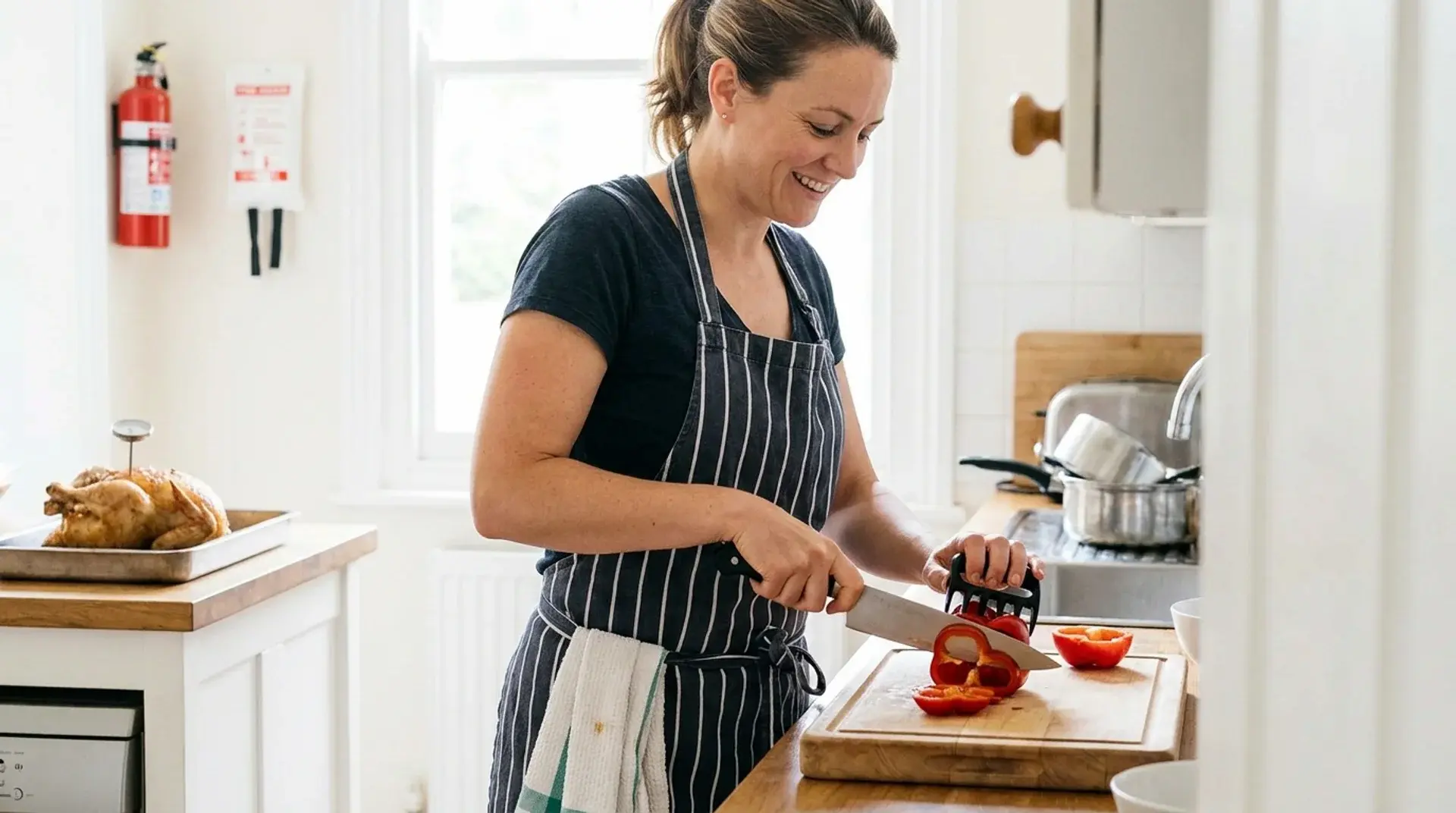
What is kitchen safety (and what causes most home problems)
Kitchen safety is about controlling a few predictable failure points so you never have to question those leftovers again. At home, most issues come from the same three categories: (1) food sits too long in the danger zone temperature, (2) raw foods contaminate ready-to-eat foods through hands/boards/knives/sinks, or (3) leftovers cool too slowly and get reheated inconsistently. You don’t need to memorize a textbook, you need a repeatable process so when you’re tired, distracted, or cooking for a crowd it can run smoothly and automatically.
A good safety system has two layers: a workflow layer (how food moves through your kitchen) and a temperature layer (how you control risk with heat and time). Workflow keeps raw and ready-to-eat foods from touching. Temperature keeps bacteria from multiplying. If you only fix one thing, fix workflow first because it prevents the invisible mistakes, like using the same knife for raw chicken and salad ingredients without realizing it. If you can fix a second thing, get comfortable with the danger zone rules and use a thermometer. For a dedicated workflow guide you can apply instantly, read cross-contamination prevention.
Danger zone temperature rules: time, safe temps, thermometer basics
Time + temperature is the core of cooking safety. The danger zone temperature is the range where bacteria can multiply quickly, so the safety goal is simple: keep cold foods cold, hot foods hot, and minimize how long food hangs out in the middle. At home, the most common risk moments are: groceries sitting in a warm car, cooked food cooling on the counter, buffet-style serving, and slow thawing on the countertop. None of these feel like a big deal in the moment, which is why they’re so easy to miss, but can leave you sick after consuming it.
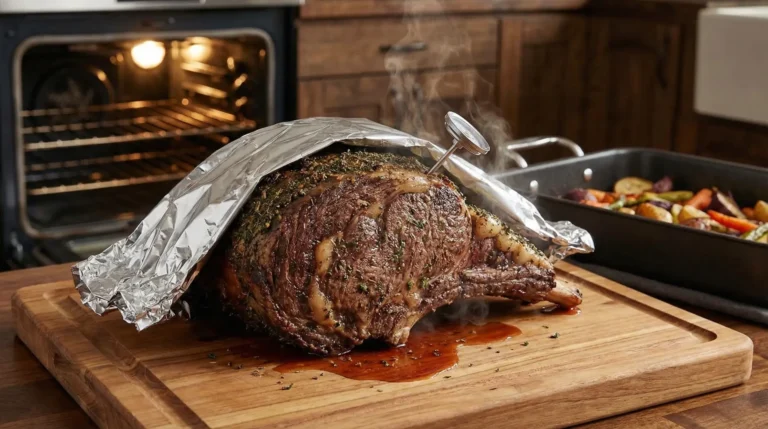
A thermometer turns guessing into certainty, especially for poultry, ground meats, and leftovers. Use it in the thickest part of the food and avoid touching bone or the pan (you’ll read the wrong temperature). For thin foods (burgers, cutlets), probe from the side. For casseroles and soups, measure in the center after stirring.
Cross-contamination prevention: hands, boards, knives, sinks, towels
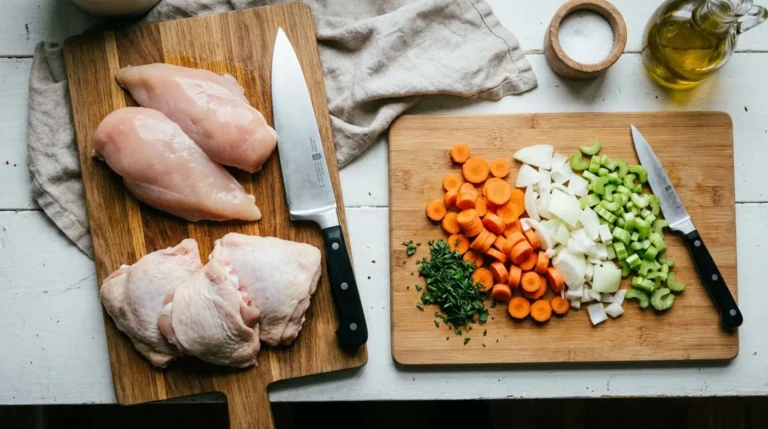
Cross-contamination is when germs from raw foods (especially raw meat, poultry, seafood, or eggs) transfer to foods that won’t be cooked again (think salad, fruit, bread, sauces, herbs and garnishes). The fix is easy but it has to be consistent: you create raw zones and clean zones, and you don’t let tools bounce between them without washing first. If you store fresh herbs this matters since they're often used in the finishing stage and won't be cooked themselves. Contamination is invisible; your kitchen can look spotless while still being risky.
A simple workflow: set a clean plate for cooked food (never reuse the raw plate), keep one board for raw proteins, and wash hands after touching raw protein packaging (not just after handling the meat itself). Don’t rinse raw poultry to avoid splashing bacteria around the sink and counter. Be extra careful with towels and sponges; they can become the vehicle that spreads contamination everywhere.
Safe thawing methods: fridge, cold water, microwave (and what not to do)
Thawing is one of the easiest places to accidentally create time in the danger-zone. Countertop thawing feels normal because the outside of the food looks fine, but the surface can warm into risky temperatures while the center is still frozen. That’s the core problem: thawing is uneven. Safe thawing methods are designed to keep the outer layer from becoming a bacteria playground while the inside catches up.
Use the refrigerator for the safest default. For faster thawing, use cold running water (sealed bag, water changed often enough to stay cold) or microwave thawing if you will cook immediately afterward. Cooking from frozen can be safe for some foods if you can reliably bring the center to a safe temperature, but it’s not ideal for thick items that will cook unevenly. For timings, do’s/don’ts, and solutions for how to thaw quickly, read safe thawing methods.
Safe cooling and reheating: leftovers without risk
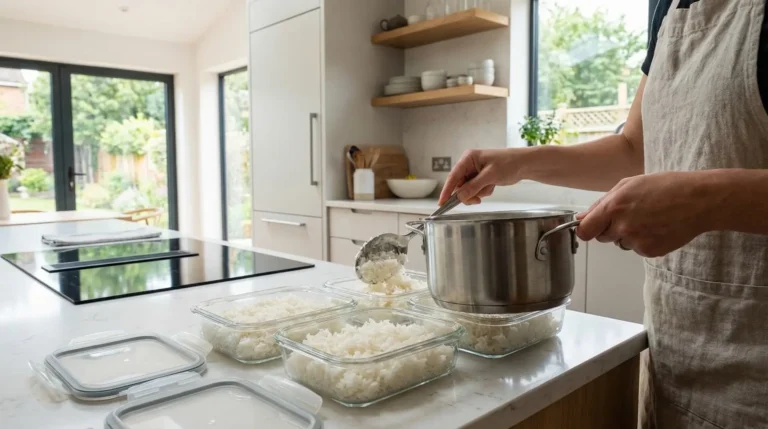
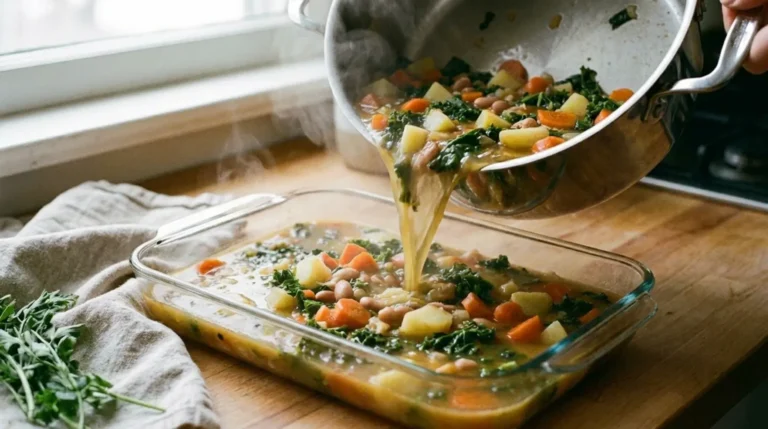
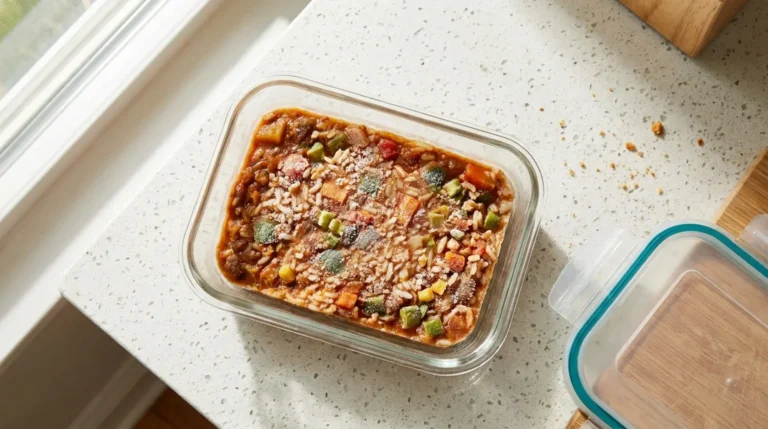
Leftovers can be where good intentions go to die: you cooked something safely, then it sat too long, cooled too slowly, or got reheated to just kind of warm. The riskiest scenario is a big batch (soup, chili, curry, rice, pasta) cooling as one large mass. The center stays warm for a long time, which increases time in the danger zone. Cooling safely is mostly about surface area and airflow: shallow containers, smaller portions, and ensuring heat escapes quickly.
Reheating is about consistency. Stir soups and sauces so cold spots don’t hide. Reheat until it’s fully hot throughout and not just around the edges. If you meal prep, label and date everything so you don’t play leftover roulette later. Some foods (like rice) deserve extra respect because they can cause problems when cooled slowly and held too long. For a complete leftover safety check on cooling fast, storing smart, and reheating evenly, read safe cooling and reheating.
Cleaning and sanitizing kitchen surfaces (what works, what doesn’t)
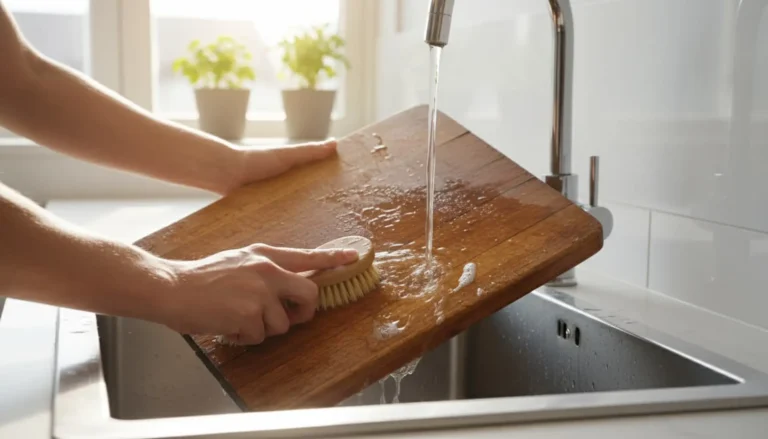
Clean and sanitized are not the same. Cleaning removes visible residue like grease, crumbs, and juices. Sanitizing reduces germs to safer levels. If you try to sanitize a dirty surface, the residue can block the sanitizer from doing its job. The most effective routine is two-step: wash/wipe first, then sanitize when it matters (after raw protein prep, after handling eggs, after a spill in the fridge, and before prepping ready-to-eat foods). An often forgotten rule is that cutting board's need sanitizing not just cleaning.
Focus on high-touch hotspots: faucet handles, fridge door handle, drawer pulls, phone, and towel surfaces. Also rethink your sink because people assume it’s clean if water and soap are splashed around frequently, but sinks actually hold more germs than counters usually. One more thing: sponges and dishcloths are notorious. If you use them, you need a plan to replace/sanitize them regularly, or they’ll spread contamination instead of clean.
Food storage basics: fridge organization, labeling, and when to toss
Good storage creates safe leftovers (don't lose out on all that hard work from cooking!) and reduces waste at the same time. The fridge isn’t one uniform temperature, there are warmer and colder zones. Your job is to place foods so the most vulnerable items stay colder and drips won't contaminate ready-to-eat foods. As a general rule: keep raw proteins sealed and low, keep ready-to-eat foods higher, and keep leftovers in shallow containers that cool quickly and reheat evenly.
Labeling is the underrated habit that prevents guessing how old that food is. You don’t need fancy labels, even just masking tape and a marker works. Date leftovers and rotate them to the front so you remember to eat them first. When it comes to when to toss, trust obvious signs like mold, but don’t rely on smell alone for everything since some risky foods will still smell normal. If you want a practical guide to fridge zones, shelf-life realism, and a simple toss decision guide, read food storage basics.
Freezer burn basics: packaging, shelf-life realism, and safety
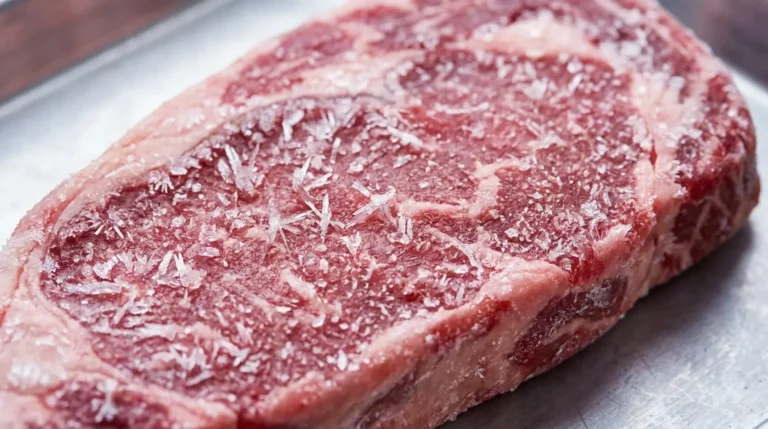
Freezer burn is mostly a quality issue, not a safety issue. It can make food dry, leathery, and bland, and overall gross, but it doesn’t automatically make it unsafe. It happens when moisture escapes from the food surface and the surface dehydrates, often because of air exposure or poor packaging. The practical takeaway: freezer burn is preventable if you reduce air contact and store in portions that freeze and thaw efficiently.
Use freezer-safe bags or containers, push out excess air, and label with dates so old items don’t become permanent freezer relics. Freeze in flat, thin layers when you can (faster freezing = better texture when reheated). If you find freezer burn, you can often trim affected areas or use the food in soups, braises, or sauces where texture matters less. For prevention, packaging tips, and how to tell if it's still safe, read freezer burn.
Fresh herb storage: keep herbs safe and fresh longer
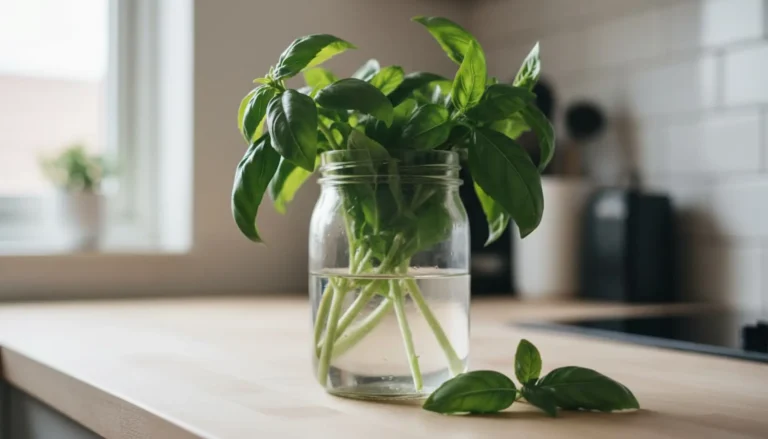
Fresh herbs are often added at the end of cooking or used raw, which means storage and handling matter. Most herbs fail for the same reasons: trapped moisture, bruising, and the wrong temperature. The goal is simple: keep herbs dry enough to avoid slime, but protected enough to prevent wilting. Basil typically does better at room temperature, while cilantro and parsley usually last longer in the fridge with a paper towel method.
If you want a practical “by herb type” system (basil vs cilantro vs parsley), plus washing and drying rules so herbs don’t rot, read storing herbs.
Knife sharpening for safety: why a sharp knife is safer
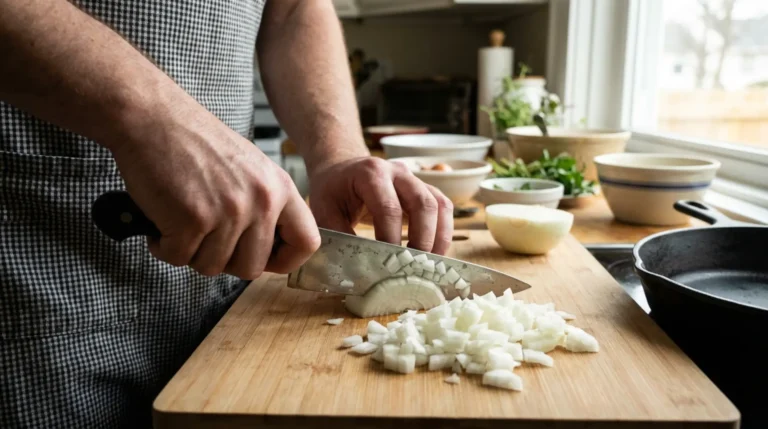
A dull knife is a safety problem. It requires more force, is more likely to slip off food, and increases the chance your hand will catch the blade. A sharp knife bites cleanly and moves predictably, which is why professional kitchens treat sharpening as a safety practice, not a luxury. If you do any amount of prep, keeping your knife sharp is one of the simplest ways to reduce cutting accidents.
Use a honing rod to realign the edge during normal cooking (it doesn’t replace sharpening). Sharpening restores the edge when the knife is truly dull with either with a whetstone, a guided sharpener, or a reputable professional service. For a clear home setup and simple rules for how often to hone vs sharpen, read knife sharpening.
Food safety for tricky foods: rice, eggs, poultry, seafood, deli meats
Some foods show up again and again in food safety stories because they’re easy to mishandle at home. Poultry and ground meats are high-risk because bacteria can be present and can spread easily through juices and hands. Temperature and workflow matter a lot. Seafood can spoil quickly if it’s held warm too long. Eggs require smart handling and clean surfaces. Deli meats and ready-to-eat foods because you typically don’t cook them again, so contamination and storage time are key.
Rice is a special case because it can cause problems if it cools slowly and sits too long. The safest approach: cool quickly in shallow containers, store promptly, and reheat thoroughly. For poultry, don't wash raw chicken and instead focus on clean prep and cooking to safe temps. For eggs, avoid leaving them warm for extended periods and keep your board/knife hygiene tight.
Kitchen safety checklist: simple habits you can repeat
If you only remember one thing, remember this: safety comes from repeatable habits, not perfect memory. A checklist isn’t about being strict—it’s about reducing decisions. When your kitchen is busy, you want defaults that keep you safe automatically. Think in moments: before you start, during raw prep, during cooking, and after cooking. Each moment has one or two actions that do most of the work.
Before you start
Wash hands, clear a clean zone for ready-to-eat foods, and set out a cooked food plate so you never accidentally reuse the raw plate.
During raw prep
Keep raw proteins on one board, wash hands after touching packaging, and don’t let towels/sponges spread raw juices around. When in doubt, reset tools and surfaces.
During cooking + serving
Use a thermometer for high-risk foods, and don’t let food sit out for long stretches—especially at parties or potlucks.
After cooking (leftovers)
Portion into shallow containers, cool quickly, label/date, and reheat thoroughly later. If you want the full leftover system, follow safe cooling and reheating.
Kitchen safety fundamentals
Use these as focused deep-dives when you want quick answers. Each one is written to be practical and science-backed.
Fastest risk reduction:
• Danger Zone Temperature Learn time + temperature rules that prevent most home food safety issues.
• Cross-Contamination Prevention Build an easy + clean workflow for the invisible kitchen risks.
• Safe Cooling and Reheating Stop leftover risk with a simple cooling + reheating system.
• Knife Sharpening Reduce slips and cutting accidents with a predictable sharp edge.
Storage + thawing fundamentals:
• Safe Thawing Methods Fridge, cold water, microwave, and what to do when you forgot to thaw.
• Food Storage Basics Fridge zones, labeling, shelf-life realism, and when to toss.
Sanitation + freezer confidence:
• Cutting Board Sanitizing Clean vs sanitize, wood vs plastic, and replacement rules.
• Freezer Burn Prevent it, understand what’s still safe, and reduce waste.
Reduce waste (and keep food safe):
• Storing Herbs Keep herbs fresh longer with the right method by herb type.
Frequently Asked Questions
What is the temperature danger zone for food safety?
The danger zone is the temperature range where bacteria can multiply quickly. The practical rule is to minimize how long food sits warm but not hot, and to cool leftovers fast in shallow containers. For a simple time + temperature rule set you can actually remember, see danger zone temperature.
Is it safe to thaw meat on the counter overnight?
Counter thawing is risky because the surface can warm into the danger zone while the center stays frozen. Safer options are refrigerator thawing (best default), cold-water thawing (faster, must stay cold), or microwave thawing if you cook immediately afterward. Use safe thawing methods for the exact workflows.
Do I need separate cutting boards for raw meat and vegetables?
Separate boards make it easier to prevent cross-contamination, especially when you’re cooking quickly. If you only have one board, you can still stay safe by prepping ready-to-eat foods first, then raw proteins last, followed by a full wash + sanitize. For routines that work in real life, read cutting board sanitizing.
Conclusion
Kitchen safety isn’t about being perfect, it’s about building defaults that reduce risk automatically: control time + temperature, keep raw and ready-to-eat foods separated, cool leftovers fast, and sanitize the right surfaces at the right times. Bookmark this guide and treat it like your kitchen safety home base whenever you’re unsure. Small habits, repeated consistently, beat anxiety and guesswork every time.
Next Step: Read: Danger Zone Temperature rules you can remember
Latest posts
About