Knife Sharpening: Hone vs Sharpen for Safer Cooking
Knife sharpening is one of the easiest kitchen upgrades because it makes everything calmer. A dull knife forces you to push harder, and that is when slips happen. A sharp knife bites cleanly, tracks where you aim it, and gives you more control with less effort.
This guide gives you a simple routine for honing, sharpening, and basic knife care so your knives stay safe and provide clean cuts. For the full kitchen safety hub with cross contamination, temp guides, leftover handling, and sanitizing, go back to Kitchen Safety.

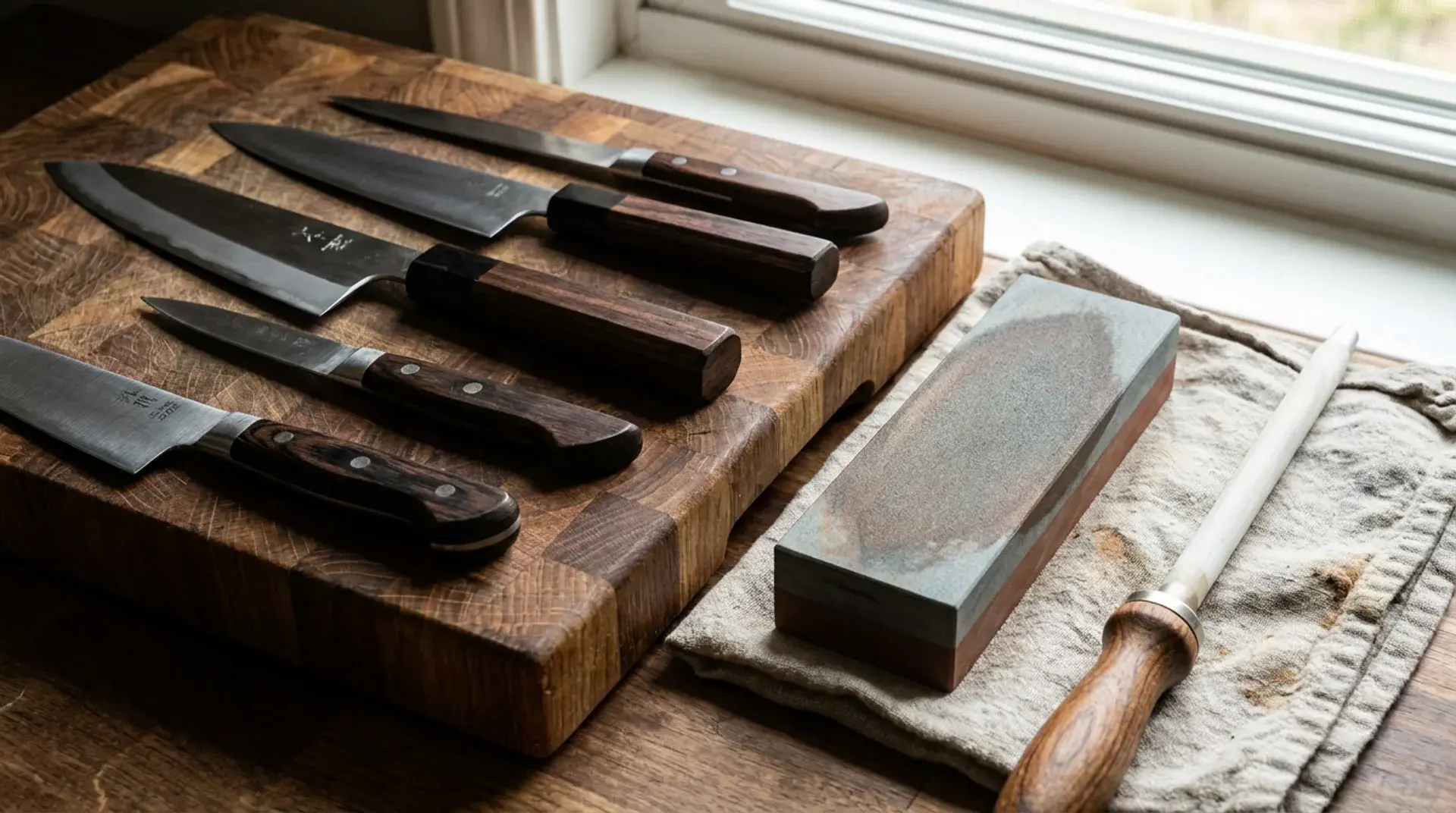
Honing vs sharpening: what is the difference?
Honing and sharpening get mixed up all the time. Honing is quick maintenance. It straightens and realigns the edge so the knife feels smoother again. It does not rebuild a worn edge. Sharpening actually restores the blade by removing a tiny bit of metal to create a new cutting edge.
Here is the simple rule. If your knife feels a little off, hone it and continue cutting. If honing does not change anything, it is time to sharpen. That one distinction keeps you from sharpening unnecessarily or wasting time honing a knife that is actually dull.
How to tell if a knife is dull
A dull knife gives you clear signs. It crushes tomatoes instead of slicing. It slides off onion skin. It tears fresh herbs instead of cutting cleanly. It also makes you tense up because you have to push harder with a blade that won't slice where you intend. More pressure with less control is the safety problem.
Use quick checks that match real cooking. Try slicing a tomato with light pressure. If it will not bite, the knife is dull. Try cutting a sheet of paper. A sharp knife grabs and glides. A dull knife snags and rips. If you feel yourself bearing down to get through food, treat that as your sign and sharpen.
Knife sharpening methods: stone, guided sharpener, pull through, pro service
You have a few solid options, and you do not need to be a knife nerd to have a safe and sharp blade. Whetstones can produce a great edge, but they take practice and patience. Guided sharpeners are a popular home choice because they help you hold a consistent angle with less guesswork. Pull through sharpeners are fast, but they can remove more metal than needed, so use them carefully and do not overdo it.
Professional sharpening is a great move if you want a clean result without learning the skill right now. The best method is the one you will actually use regularly. Pick something that feels approachable and repeatable, set it up on a non slip surface, and take your time. Sharpening while rushed is how people nick themselves.
How often to hone and sharpen knives
Frequency depends on how much you cook and how hard your board is, but you can keep it simple. Hone when the knife starts to feel less smooth or when you are about to do a big prep session. Many home cooks do well honing a few times a week.
Sharpen when honing stops helping. If the knife still slips on tomato skin or crushes herbs after honing, it needs a real edge reset. For a casual schedule, many home kitchens sharpen every couple months. If you cook a lot, you may sharpen more often. Review the knife's performance as the criteria and you will always be on the right timing.
Knife care that protects the edge and keeps cutting safe
A sharp knife gets dull fast if daily habits beat it up. Avoid glass boards, and do not toss knives loose into a drawer. Skip the dishwasher if you can. Heat and banging against other items can damage the edge and the handle. Wash by hand, dry right away, and store on a magnetic strip, in a block, or with a blade guard.
Also use the right knife for the job. Do not twist the blade through hard foods, and do not use the edge to pry. If your cutting boards are getting sketchy or hard to clean, pair knife care with cutting board sanitizing so your tools stay sharp and clean. And if you want the bigger safety framework for the kitchen, the hub is Kitchen Safety.
Frequently Asked Questions
Is honing the same as sharpening a knife?
No. Honing realigns the edge so the knife feels smoother again, but it does not create a new edge. Sharpening removes a small amount of metal to restore a fresh cutting edge. If honing no longer improves performance, it is time to sharpen.
What is the safest way to sharpen knives at home?
The safest option is the one you can do steadily and consistently. Many people like guided sharpeners because they stabilize the angle. Whetstones work well too, but they take more practice. Whatever you use, set it on a stable non slip surface and sharpen slowly with dry hands.
How do I know when my knife needs sharpening?
If your knife crushes tomatoes, slides off onion skin, or tears herbs even after honing, it needs sharpening. Another clue is pressure. If you have to push hard to make progress, the knife is dull and your risk of slipping goes up.
Conclusion
Knife sharpening is a small habit with a big payoff. Hone for quick maintenance, sharpen when honing stops working, and store and wash knives in a way that protects the edge. Sharp knives cut with less force, feel more controlled, and make prep faster and safer.
Next Step: Return to the hub for the full safety system: Kitchen Safety.
Latest posts
About