Knife Skills for Home Cooks: Cut Faster Without Feeling Unsafe
Knife skills are key for kitchen safety and cooking efficiency. They’re about removing friction from kitchen prep. When your cuts feel shaky, prep takes forever, sizes come out uneven, and cooking is more stressful than it needs to be. The good news: you don’t need twenty techniques. You just need a stable grip, a safe guiding hand, and a few cut patterns you can repeat without over-thinking.
This article is part of the Master Cooking Techniques resource, where the core skills add together for faster, more consistent cooking results.

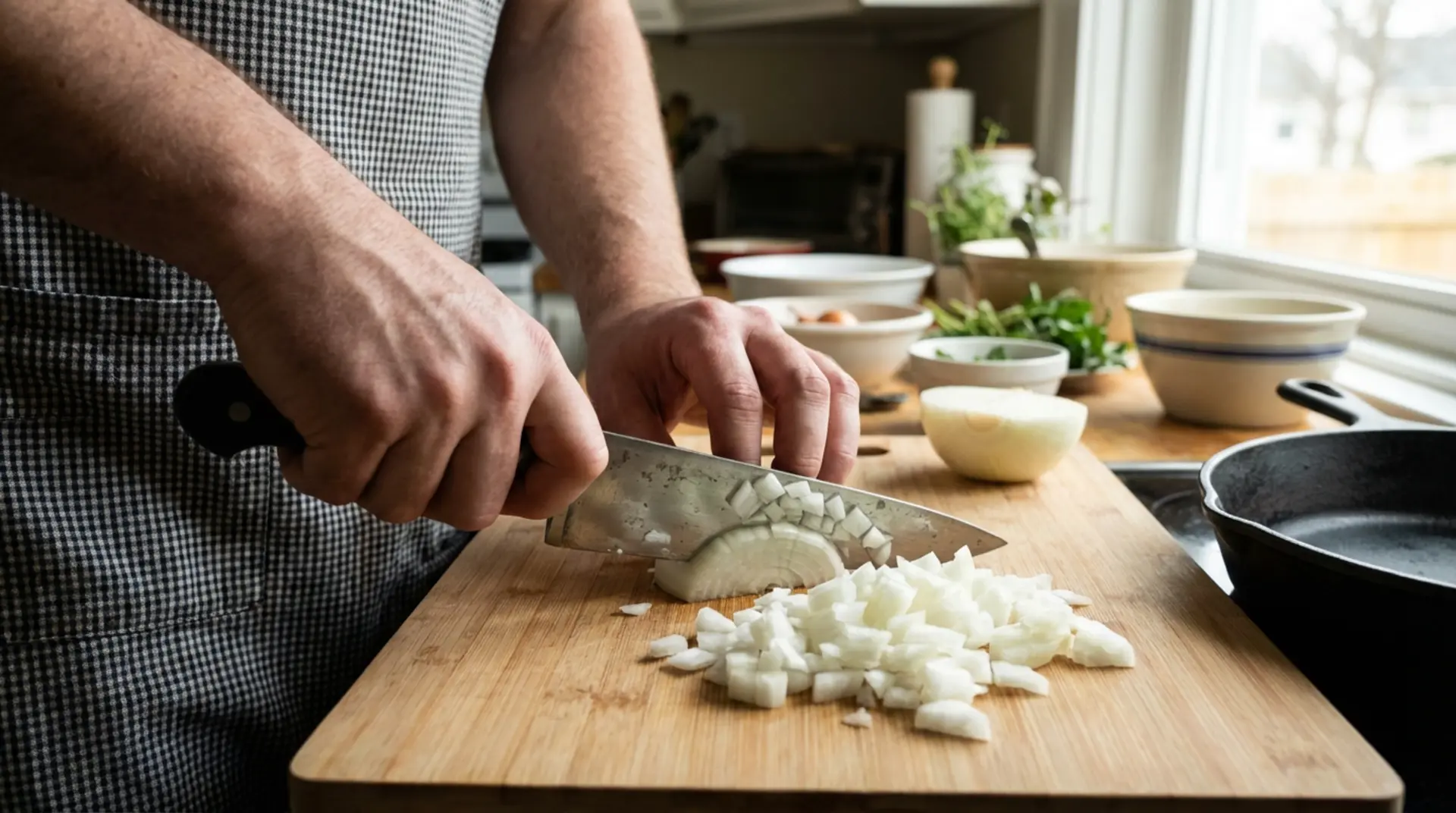
Knife skills basics: grip, stance, and safe control
Knife safety is not about just being careful. It’s about building a setup that makes safe movement automatic. Start with stability: put a damp towel or non-slip mat under the cutting board so it can’t slide. Then set your stance: feet planted, board at a comfortable height, and ingredients organized so you’re not reaching across the blade. Most cuts go wrong when the board moves or your hand position becomes sloppy from rushing and time pressure.
Next is control. Ensure your knife is properly sharpened to avoid slips and to achieve clean cuts. Use a firm, comfortable knife grip, ideally a pinch grip closer to the blade for stability, and use a claw on your guiding hand: fingertips curled under, knuckles forward, blade against the knuckle as a guide. That’s the real safety system. It also makes you faster because you stop the micro-hesitations. If you find yourself frazzled in the middle of cooking because pieces are cooking unevenly, that’s a size consistency issue in your cutting. Pan materials vary with which tasks they're ideal for, so make sure you are matching the type of pan to the way you want to cook too.
How to cut vegetables evenly: the size rules for even cooking
Even cooking comes from even cuts. If some pieces are thin and some are thick, they finish at different times. Thin pieces burn while thick pieces stay more raw, which creates the illusion that you’re bad at roasting or sautéing. But consistency will automatically elevate your meal. Aim for pieces that share the same thickness so heat penetrates at the same speed.
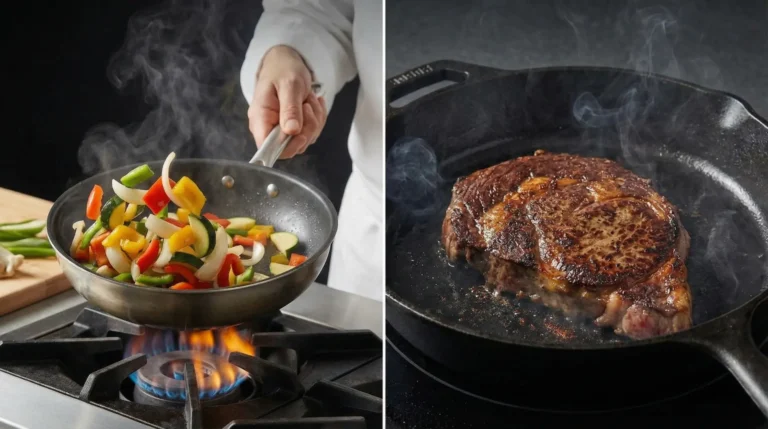
Use practical rules: match cut size to cooking method and vegetable density. Dense vegetables need smaller pieces than watery vegetables. If you’re cooking mixed vegetables together, either cut the slow vegetables smaller or cook in stages. If you’re sautéing or searing, keep pieces similar so they brown at the same pace. This one skill reduces inconsistently cooked veggies immediately, and it makes pan work feel far more controllable. Pan-cooking and roasting vegetables are fundamental cooking skills to upgrade your meal.
Basic knife cuts (the 5 you’ll actually use)
You don’t need culinary school cuts to cook well. You need a small set of cuts that cover almost everything you do at home. The first is the slice for quick cooking and even browning. The second is the dice for even cooking in soups, sautés, and sheet pans. The third is the rough chop for rustic cooking where perfection doesn’t matter. The fourth is the mince for garlic, herbs, and aromatics that should distribute evenly. The fifth is the baton/strip for stir-fries and quick sautés.
The biggest upgrade is learning to choose the cut based on your intent. Thin slices cook fast and brown quickly. A small dice cooks evenly and blends easily into sauces. Larger chunks keep texture and shape. Mincing distributes more flavor. Once you understand that, knife work becomes strategic instead of mechanical. You'll stop chopping just because that’s what the recipe said, and start chopping for a specific cooking behavior and a specific outcome.
Patterns for how to prep onions, garlic, and herbs faster
Speed comes from patterns, not rushing. Onions, garlic, and herbs show up constantly, so you’ll feel the biggest payoff by making these steps automatic. For onions, the goal is a stable half-onion with flat contact on the board, then a consistent dice or slice using a solid grip. For garlic, the goal is to remove the peel quickly and mince without chasing tiny pieces around the board. For herbs, the goal is to avoid bruising while still cutting efficiently.
Use this practical workflow: stack tasks. Start by setting up a scrap bowl. Peel and trim in batches, then cut. Keep your knife motion smooth and consistent instead of stabbing. If you have fresh herbs on hand, make sure to dry them well and use a clean rocking motion for cutting, then stop. Over-chopping turns herbs into wet mush that makes flavors muddy. Improving these three ingredient patterns will make you feel much faster and more confident with tasty meals.
How to chop faster without rushing for a calm workflow
The fastest cooks don’t rush, they eliminate wasted motion and use the proper tools. That means setting up the board, organizing ingredients, and using a sharpened knife with a cut style that matches the technique. If you’re constantly stopping to wash a knife, hunting for bowls, or moving ingredients off the board with your fingers, you’re losing time and increasing risk of injury or cooking mishaps. A calm workflow creates speed as a natural byproduct.
Build a simple system: stabilize the board, keep a scrap bowl nearby, keep a finished bowl nearby, cut in batches, and use the spine of the knife or a bench scraper to move ingredients. This keeps your hands away from the blade and keeps the board clear. The goal is to feel in control, not frantic. Once prep feels calm, cooking becomes fun again and you won't be sitting down for dinner already stressed.
Frequently Asked Questions
What’s the safest way to hold a knife for home cooking?
Use a stable grip and a stable board. A common safe option is a pinch grip near the base of the blade for control, plus a claw with your guiding hand: fingertips curled under and knuckles forward. Stabilize the cutting board with a damp towel underneath so it can’t slide while you cut.
Why do my vegetables cook unevenly even when I follow recipes?
Uneven cooking usually comes from uneven cut size. Thin pieces finish early and can burn while thick pieces stay firm. Aim for consistent thickness so heat penetrates at the same rate. This matters most for roasting and pan cooking where timing is tight and browning depends on surface exposure.
Do I need expensive knives to improve my knife skills?
No. One decent chef’s knife that you keep sharp is enough. Consistent technique matters more than brand. Focus on a stable cutting board, safe hand position, and a sharp edge. Sharp and moderately priced knives are easier and safer to use than an expensive knife that’s dull. Invest in the appropriate sharpening tool and honing rod.
Conclusion
Knife skills are the quiet upgrade that makes everything else easier. Stabilize the board, use a controlled grip and claw hand, cut for consistent thickness, and build your prep patterns for onions, garlic, and herbs. Once prep feels calm, your cooking gets faster and your results get more predictable because even cuts create even cooking.
Latest posts
About