Cutting Board Sanitizing: Clean, Sanitize, and Prevent Cross-Contamination
Cutting board sanitizing is where kitchen safety gets real. Boards take the highest-contact hits—raw meat juices, knife grooves, fast prep, and “I’ll wash it later” moments. If you get one thing right, get this: cleaning removes residue, but sanitizing reduces germs. You need both after high-risk prep.
This guide gives you a repeatable board routine you can run on autopilot, especially after poultry. If you want the bigger behavior system that stops germs from spreading through hands, tools, and surfaces, read cross-contamination prevention.

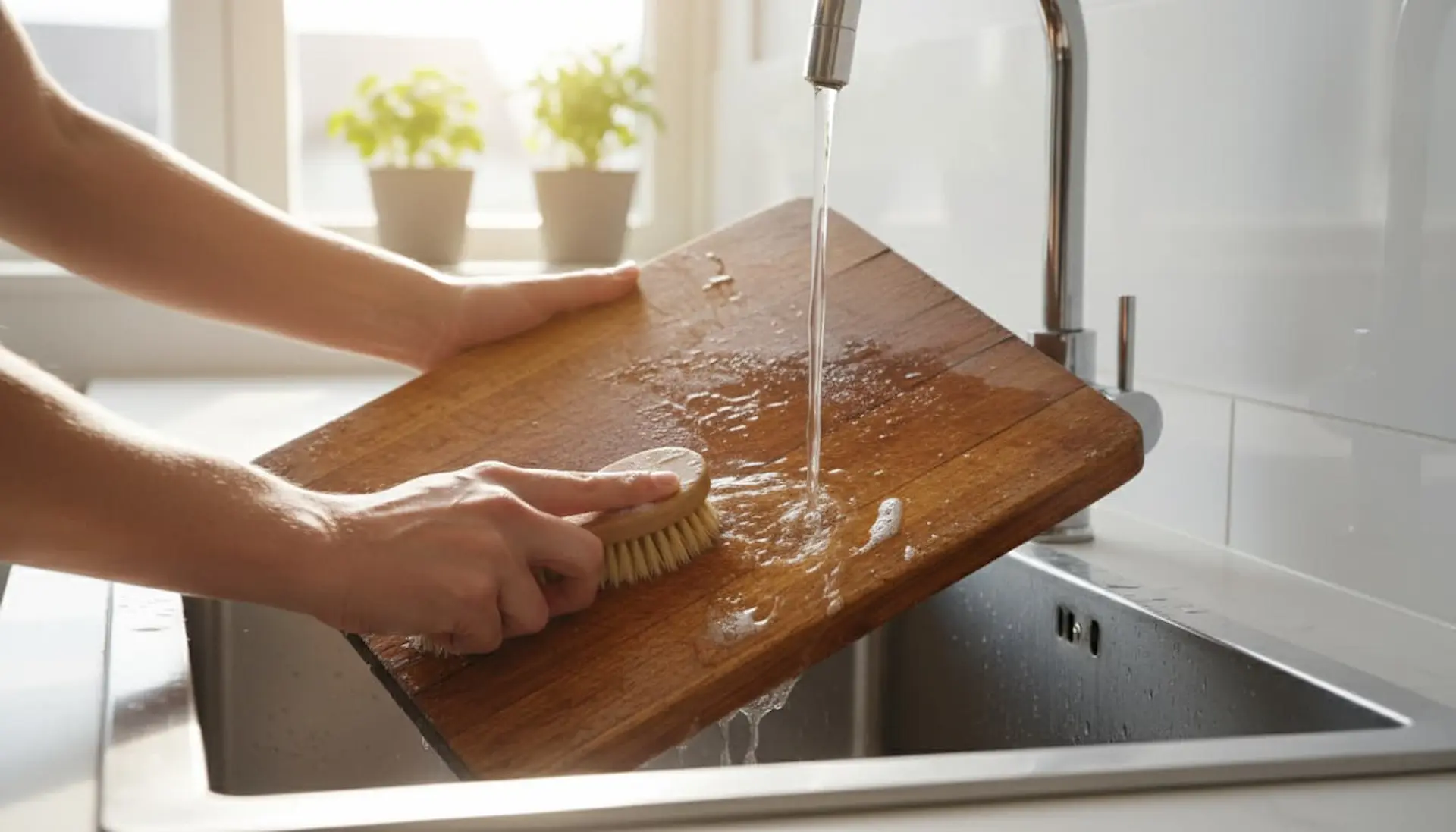
Cleaning vs sanitizing: what’s the difference?
Cleaning and sanitizing are different jobs. Cleaning is about removing grime: grease film, protein residue, sticky sauces, raw juices, and tiny food particles that lodge in knife marks. If you skip cleaning, sanitizer can’t do its job well because residue blocks contact. Think of cleaning as removing the obstacles so sanitizing can actually touch the surface.
Sanitizing is about reducing germs after the board is already clean. You don’t need to sanitize after every tomato or apple. You do want to sanitize after raw poultry, after raw-meat prep with visible juices, and after any situation where drips could have spread across the board and counter. The reliable order is: scrape and then wash with hot soapy water, rinse, sanitize (when needed), air-dry. Air-drying matters because wet boards can stay hospitable longer, and towels can re-contaminate the surface if they’re not truly clean. Once you separate these two jobs mentally, you stop either (a) over-sanitizing everything or (b) under-sanitizing after high-risk prep.
How to sanitize a cutting board after raw chicken
Raw chicken is the moment to be strict. Poultry juices spread easily, and people tend to move fast during prep, meaning the board is probably not the only contaminated surface. Your goal is to reset the board in a way that’s easy so it will be consistent. Start by scraping off scraps into the trash. Then wash the board thoroughly with hot soapy water, scrubbing into knife marks and corners. Rinse well.
After the board is clean, sanitize using a method you can repeat. Many kitchens use a dilute unscented chlorine bleach solution (follow label guidance and your local rules), applied so the board stays wet for the required contact time, then air-dried. Alternatively, some people prefer dishwasher heat sanitizing when the board and manufacturer allow it (more on that below). The real win is not which sanitizer you choose, just that you actually sanitize after cleaning, and you don’t immediately undo the reset by wiping the board with a questionable towel. If your routine includes towels, assign them roles (hand towel vs cleanup cloth) and swap them often.
Wood vs plastic cutting boards: what’s safer?
The safer board is the one you can keep clean consistently. Both wood and plastic can be safe when washed properly. The bigger variables are (1) how deep the grooves are, (2) how quickly you wash after use, and (3) whether you sanitize after high-risk prep. Wood boards can be gentle on knives and are often used for produce and bread. Plastic boards are common for raw protein because they’re easy to wash and many are dishwasher-safe.
Here’s the easiest approach: if you have more than one board, keep one as a protein board and another as a ready-to-eat board. If you only have one board, use sequencing instead: prep ready-to-eat foods first, then raw protein last, then wash and sanitize before anything else touches the board again. Also pay attention to board condition. A plastic board with deep trench marks can hold residue and become harder to truly clean. A wood board that stays damp or starts to split can also become harder to maintain. Don’t overthink the material, be sure to commit to a workflow that prevents raw juices from touching foods you won’t cook again, and you’ve solved most of the real risk.
Dishwasher safety and heat sanitizing
Dishwashers can be useful because they combine detergent, high heat, and thorough rinsing, but not every board belongs in one. Many plastic boards are dishwasher-safe and can handle a sanitize cycle. That can be a great end of day reset if the board is structurally stable and won't warp. Warping matters because it creates gaps and uneven surfaces where residue can hide and where the board becomes harder to scrub effectively.
Wood boards generally don’t love dishwashers. Prolonged heat and water can cause swelling, cracking, and splitting, which makes the surface harder to keep clean long-term. If you use wood, wash promptly with hot soapy water, avoid long soaking, and let it dry fully upright with airflow. Whether you use dishwasher sanitizing or chemical sanitizing, the logic stays the same: first remove residue, then reduce germs, then dry. If your fridge storage system is part of why boards get messy (leaky packages, drips, chaotic placement), fix the upstream problem with food storage basics.
When to replace a cutting board
Replace a cutting board when the surface becomes hard to clean reliably. Deep grooves that you can feel with your fingernail are a sign that residue can lodge below your scrub reach. Warped boards that rock on the counter create unsafe cutting and make cleanup sloppy. Cracks, splits, or separating layers are also replacement signals, especially for wood, because they trap moisture and particles and become harder to dry completely.
Use this simple decision rule: if you can’t confidently reset the board back to clean zone safe, don’t waste time with it, replace it. Boards are relatively inexpensive compared to the cost of a food poisoning incident (or even just ruining a week with stomach issues). Many kitchens keep a rotation: one dedicated protein board (replaced more often) and one board for produce/ready-to-eat foods. That alone reduces the number of moments where sanitization is a question and makes the whole workflow easier to maintain.
Frequently Asked Questions
Do I need to sanitize my cutting board after cutting vegetables?
Usually, no. For produce, thorough washing with hot soapy water is typically enough. Sanitizing matters most after raw poultry, raw meat/seafood, or visible raw-juice spills. The key is cleaning first, then sanitizing only when risk is high, so you stay consistent without turning kitchen safety into a full-time job.
What’s the safest way to sanitize a cutting board after raw chicken?
First wash the board thoroughly with hot soapy water and rinse. Then sanitize using an approved method you can repeat (many people use a dilute unscented bleach solution per label directions, or a dishwasher sanitize cycle for dishwasher-safe boards). Let the sanitizer contact the surface as directed, then air-dry completely.
Is wood or plastic better for preventing cross-contamination?
Either can be safe if you clean and sanitize correctly. The bigger factor is condition: deep grooves, warping, cracks, or persistent odors make any board harder to clean. If possible, keep one board for raw protein and one for ready-to-eat foods, or use sequencing (produce first, raw protein last) plus sanitizing after high-risk prep.
Conclusion
Cutting board sanitizing is a workflow, not a vibe. Clean first to remove residue, sanitize after high-risk prep (especially poultry), and air-dry so you don’t reintroduce germs with towels. Keep boards in good condition and replace them when grooves and damage make reliable cleaning impossible. For the complete food safety system that ties this into temps, thawing, leftovers, and storage, return to Kitchen Safety.
Next Step: Food Storage Basics (fridge placement + labeling)
Latest posts
About