Safe Thawing Methods: Defrost Meat Without Risk
Safe thawing methods matter because thawing is when food quietly spends the most time in the danger zone, even when meat is left out for just for a bit. The surface warms first, bacteria get comfortable, while the center is still frozen. If you fix thawing, you eliminate one of the most common home food safety failure points with almost no extra effort.
This guide gives you a clear decision tree: fridge (best default), cold water (fast + attentive), microwave (if cooking immediately), and when cooking from frozen is a better move than risky thawing. Avoiding food-borne illness is made simple with this easy article library.

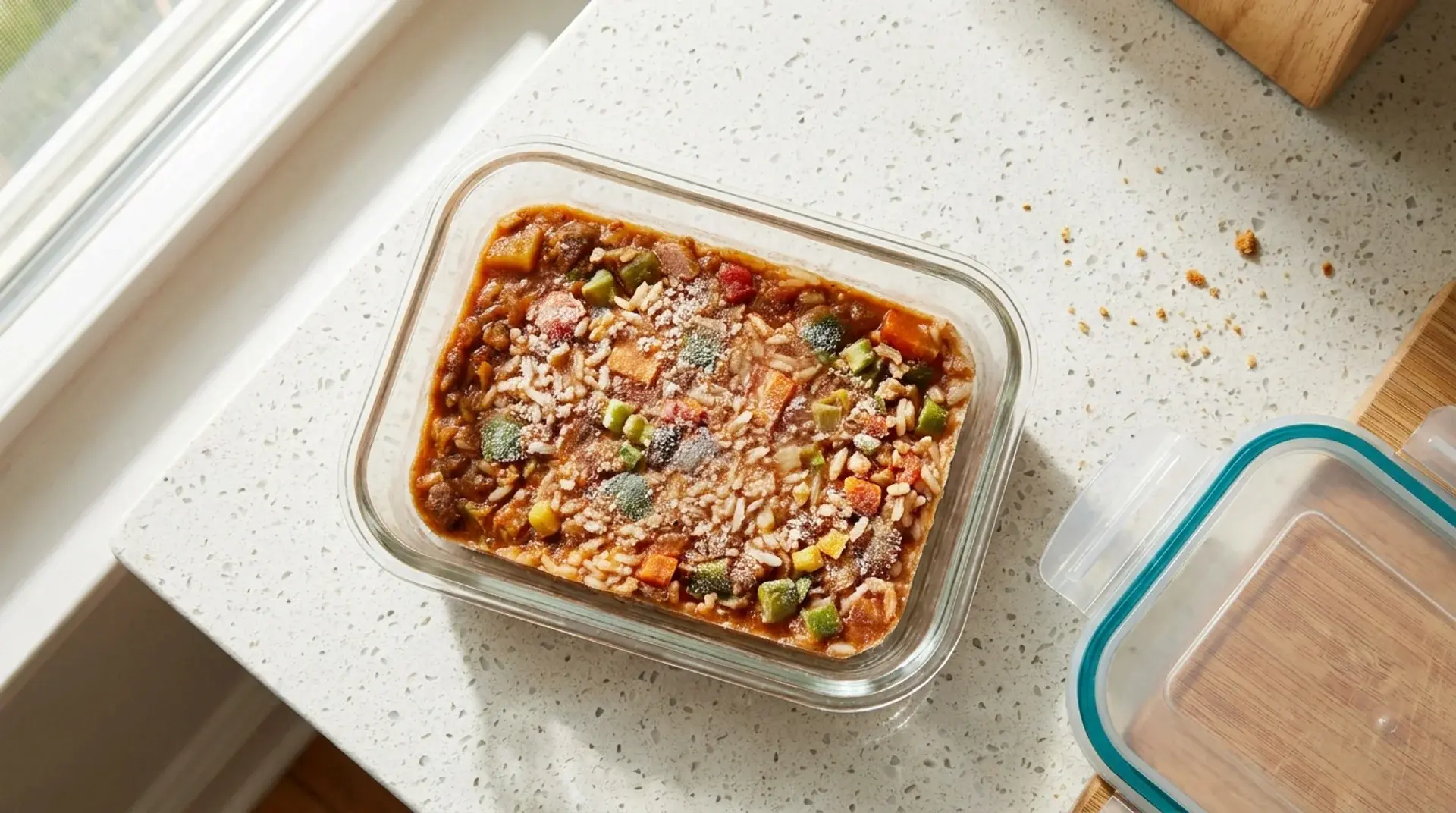
Is it safe to thaw meat on the counter?
Counter thawing is risky because thawing is uneven. The outside warms first (often into the danger zone temperature) while the center is still frozen. That creates the exact conditions where bacteria thrive: warm surface temperature + time. The bigger and denser the item, the worse the problem gets. A thick roast, whole chicken, or a tight brick of ground meat can sit for hours with a warm exterior and a frozen core. Even if the food still feels cold in places, the surface can be warm enough for growth.
Counter thawing also increases cross-contamination risk. As the exterior thaws first, raw juices can leak onto counters, fridge handles, towels, cutting boards, and anything else you touch. That’s why the safest framing is simple: if food isn’t being held cold or hot, it’s on a clock and the counter is the easiest way to lose track of that clock.
If you forgot to thaw something, don’t use the counter method. Use cold-water thawing (safer + faster), microwave thawing (only if cooking immediately), or cook from frozen if the food and method allow it. Those options keep you in control instead of taking the risk.
Refrigerator thawing: timing and shelf placement
Refrigerator thawing is the safest default because it keeps food cold the entire time. It’s also the most forgiving: if dinner plans shift, your food can stay refrigerated without instantly becoming risky. The tradeoff is time. Thick items can take a full day or more, so the real skill is building a simple habit: move tomorrow’s protein from freezer to fridge today.
Placement matters. Thaw on a rimmed plate, pan, or container to catch drips, and put it on the bottom shelf so raw juices can’t drip onto ready-to-eat foods. This is especially important for poultry and vacuum-sealed packs that can leak without warning. If you thaw in the original packaging, still place it on a tray because packaging is not a reliable containment for dripss.
Timing doesn’t need to be perfect; it just needs to be consistent. Smaller portions thaw faster, so if you routinely forget to thaw, start freezing in flatter, thinner portions. That one change turns fridge thawing from long waits into an easier default. If you go to defrost and see frosty freezer burn don't worry as it isn't a sign of a safety risk (though it may not taste great).
Cold-water thawing: step-by-step and how often to change water
Cold-water thawing is the best same-day method when you do it correctly. The goal is to thaw faster than the fridge while keeping the surface cold enough that it doesn’t spend extended time in the danger zone. The two mistakes that make cold-water thawing unsafe are (1) using warm water to speed it up, and (2) letting the water sit until it drifts warmer. Cold water works because water transfers heat faster than air even when the water is cold.
Use this workflow: keep the food in a leak-proof sealed bag (or an air-tight container). Submerge it in a bowl of cold water. Refresh the water regularly so it stays cold and set a timer so it's an active process, not a passive soak. Once thawed, cook immediately. Don’t cold-water thaw, then leave it for later.
Cold-water thawing shines for chicken breasts, steaks, ground meat, shrimp, and smaller frozen portions. It’s not ideal for very large items (whole turkeys, big roasts) because they thaw unevenly and tempt you into leaving food out too long. For big items, plan fridge thawing instead and protect your shelf placement so drips can’t contaminate other foods.
Microwave thawing: when it’s safe (and what to do next)
Microwave thawing is safe when you thaw and cook right away. Microwaves can warm edges while the center stays icy, which creates warm spots where bacteria can grow if the food sits afterward. That’s why microwave thawing has one hard rule: once you microwave-thaw, you cook immediately. No delay or breaks between. If you can’t cook right away, choose fridge or cold-water thawing instead.
To reduce partial cooking and hot spots, use the defrost function, flip/rotate the food, and separate pieces as soon as they’re pliable. For ground meat, break it apart mid-thaw. Then move directly into cooking using a method that finishes the interior reliably (pan-searing, oven finish, simmer, etc.).
Microwave thawing is great for weeknight meals: ground meat for tacos, thin cutlets, shrimp you’ll cook immediately, or a frozen meal you’ll heat through. It’s not ideal for large, dense proteins where the outside can start cooking while the inside is still frozen-solid.
Can you refreeze thawed meat?
The safe answer depends on how you thawed. If meat thawed in the refrigerator and stayed cold the entire time, it can generally be refrozen (though the texture and taste may suffer due to moisture loss). If meat was thawed in cold water or in the microwave, the safer pattern is to cook it immediately first and then you can freeze the cooked food if needed. The reason is simple: those faster methods can create warmer spots and less predictable temperature history.
This is where a storage system saves you from guesswork. If you routinely thaw more than you need, portion smaller before freezing. Label packages with what they are and when they were frozen. Store thawing foods on a tray so you don’t contaminate other items. Then refreezing becomes a rare edge case, not a weekly debate.
If you want the easiest way to prevent thawing chaos entirely, build a freezer-to-fridge workflow and a labeling habit from food storage basics so you can eliminate guess-work of whether something has gone bad because the smell test isn't usually accurate.
Frequently Asked Questions
Is it safe to thaw meat on the counter overnight?
It’s risky because the surface can warm into the danger zone while the center is still frozen, increasing bacteria growth and leak risk. Use refrigerator thawing as the safest default. If you need it fast, use cold-water thawing (sealed bag + cold water kept cold) or microwave thawing only if you cook immediately afterward.
Can I cook meat from frozen instead of thawing?
Often, yes! Especially for smaller portions and foods designed for it. Cooking from frozen can be safer than risky counter thawing because it avoids extended danger-zone time. Add extra cook time and use a thermometer for thicker items to confirm the center is fully cooked.
Where should thawing meat go in the refrigerator?
Put thawing meat on a rimmed plate or tray on the bottom shelf so any drips can’t contaminate ready-to-eat foods. Keep it sealed or contained. This one placement rule prevents the most common invisible fridge contamination problems.
Conclusion
Safe thawing methods are simple. Fridge thawing is the safest default, cold-water thawing is the best fast option when you stay attentive, and microwave thawing is for food you'll cook immediately. Skip countertop thawing altogether. It creates uneven warming and any leaked juices create unnecessary risk.
Next Step: Learn about Safe Cooling and Reheating methods.
Latest posts
About