Food Danger Zone Temperature: Temperature and Time Rules
Danger zone temperature is where most home food safety mistakes happen. Food sits out, cools too slowly, or gets held warm for too long. If you can control time + temperature in a few common scenarios (dinner cleanup, parties, meal prep, thawing), you prevent most food poisoning risks without having to spend much more energy.
This is one cluster in the full safety system. For the complete playbook (cross-contamination, thawing, leftovers, storage, sanitizing), go back to Kitchen Safety.

What is the danger zone temperature (simple definition)
The danger zone is that middle temperature range where bacteria can multiply fast if food stays there too long. Learn about which situations create the longest danger-zone exposure: buffet-style meals, big pots cooling on the counter, slow thawing on the countertop, and leftovers stored in deep containers that stay warm in the center. The risk increases because food warms or cools unevenly. The outside might feel cool enough, while the center is still warm enough to support rapid bacteria growth.
Think of it like this: food safety has three modes.
Mode 1: Cold and controlled.
Mode 2: Hot and controlled.
Mode 3: In-between.
The danger zone is basically that in-between space. The reason this framework works is that it matches how home kitchens actually operate. You’re not running a lab—you’re cooking, eating, cleaning, answering a text, and putting things away later. The winning move is to build defaults: portion leftovers shallow, refrigerate promptly, and keep hot foods hot during serving. Once you treat “in-between time” as active clock time, you’ll automatically make safer decisions without needing to remember a hundred rules.
How long can food sit out at room temperature?
Asking how long food can stay out is really about how long perishable food can remain in the danger zone before the risk becomes unacceptable. The exact answer depends on the room temperature, the type of food (moist, protein-rich foods are higher risk), and the shape/volume (a thin layer cools faster; a dense mass stays warm longer). But you don’t need a complicated formula to make good decisions, you need a conservative rule you’ll actually follow every time, especially when you’re distracted.
Use this mindset: time starts the moment food leaves temperature control. That includes serving on the table, sitting in a warm car, hanging out on the counter while you clean, or lingering after a meal. If you’re grazing over time (holiday spreads, game-day food, buffet-style dinners), don’t put everything out at once. Put out smaller portions, keep the rest hot or cold, and refresh the serving tray as needed. This reduces total danger-zone time for the bulk of the food. If you can’t confidently account for the time/temperature history, don’t smell-test your way into safety because smell can be unreliable. The best safety decision is the one you can defend with history: how long it sat out, what temperature conditions it experienced, and whether it cooled quickly once you were done serving. That's why a process that can be automatic is the most helpful, you can keep your food in the safe zone on autopilot.
Hot holding vs cold holding: what counts as safe?
Hot holding and cold holding are the two ways you keep perishable food out of the danger zone during serving and storage. Hot holding means food is maintained hot enough that bacteria growth is minimized during the holding period (think: slow cooker on the correct setting, warming tray, low oven used intentionally). Cold holding means food stays chilled enough that growth slows dramatically (think: refrigerator, cooler packed with ice, bowls nested in ice for serving). The danger zone problems usually happen when people keep their food in the warm-ish holding zone, that’s not truly hot and not truly cold.
The most common holding failures look like this: a pot of soup sits on the stove with the heat off because they might want seconds, a tray of chicken stays on the counter while everyone eats, or a bowl of potato salad sits outside during a party with no ice. These are the workflow issues that could get someone sick. Fix it with simple defaults: keep one designated hot-hold spot (slow cooker, low oven, warming tray) and one designated cold-hold setup (cooler, ice bath bowl, fridge shelf you keep clear). If you’re hosting, rotate food: hold most of it safely, serve in smaller batches, refresh the tray, repeat. This keeps the majority of food under control and makes the decision easy: if it’s not in a controlled hot or cold environment, it’s on a countdown to becoming unsafe to consume.
Signs food has been unsafe (and what not to trust)
The hardest part of danger-zone decisions is that unsafe food often looks normal. People want a simple tell like smell, appearance, texture, but many foodborne risks aren't super clear. That’s why it can smell fine but make you sick later. The most dependable indicator is history: whether you can account for the food’s time + temperature exposure. If you can’t confidently answer how long it was out and if it cooled quickly, you’re guessing, not knowing.
What not to trust: a quick taste, a normal smell, or the fact that it was cooked thoroughly the first time. Cooking doesn’t protect food that later spends hours in the danger zone. What to trust instead: your process. If food sat out for a long time, if a big pot cooled slowly, if leftovers were stored deep and warm in the center, or if food was thawed safely on the counter, your best move is to build simple habits to ensure your cooking efforts don't go to waste later.
Quick rules for parties, picnics, and meal prep
The safest kitchen is the one that’s easy to run when you’re busy. Parties and picnics are danger-zone magnets because food is served for long periods and people lose track of time. Meal prep is a danger-zone magnet because food is cooked in large batches and cools slowly. Don't worry, it's a simple structure. Before guests arrive for a gathering, decide what foods will be held hot, what will be held cold, and what will be served in small batches. Use smaller serving dishes so you can refresh them without leaving the entire amount out at once.
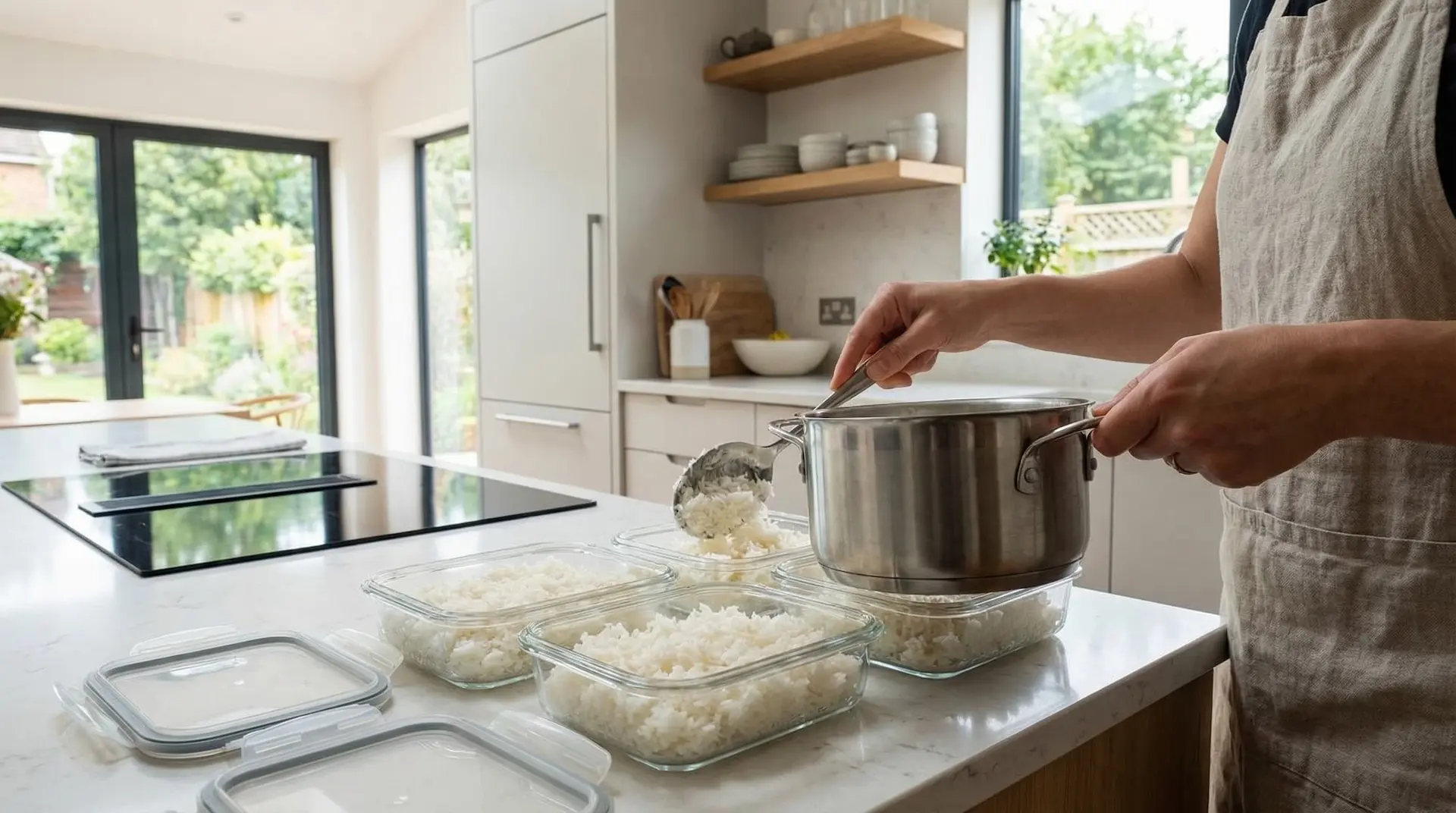
For meal prep, the biggest rule is cool fast, then store. Don’t leave big pots on the counter until later. Portion into shallow containers, vent briefly, then refrigerate. This is safe cooling and reheating in action. It reduces the time food spends in the danger zone and makes reheating safer because smaller portions heat more evenly. The goal is to stop relying on memory. When you default to small batch serving + fast cooling + labeled storage, danger-zone decisions become automatic.
Frequently Asked Questions
What is the danger zone temperature for food safety?
The danger zone is the temperature range where bacteria can grow quickly when perishable foods are held too warm for too long—between safe cold storage and safe hot holding. The simplest way to use it at home is to treat in-between time as being on a clock: keep food cold, keep it hot, and minimize time sitting out during serving, cooling, and thawing.
Can I leave cooked food out to cool before refrigerating?
You can let steam vent briefly, but don’t leave cooked food out for a long time to cool down. Big pots and dense foods stay warm in the center, which keeps them in the danger zone longer. A safer approach is to portion into shallow containers so heat escapes quickly, then refrigerate promptly.
How do I know if food is unsafe if it smells fine?
Smell isn’t a reliable safety test. Some unsafe foods smell normal, and some safe foods smell off due to strong ingredients. Use the food’s history instead: how long it sat out, whether it cooled quickly, and how long it’s been stored. If you can’t confidently account for time + temperature, it’s safer to toss it.
Conclusion
Danger zone temperature rules are simple when you treat them like workflow, not trivia. Keep cold foods cold, keep hot foods hot, and treat in-between time as a countdown, especially during parties, meal prep, cooling, and thawing. When you can’t defend a food’s time/temperature history, don’t negotiate with uncertainty. Build defaults once, then reuse them.
Next Step: Safe Cooling and Reheating (leftovers without guesswork)
Latest posts
About