Safe Cooling and Reheating: Food Safety
A lack of safe cooling and reheating is where most random food borne illness come from. The food isn’t bad when it’s freshly cooked, the risk shows up later, when a big pot cools too slowly, leftovers sit out during cleanup, or reheating leaves cold spots in the center. If you build one consistent leftovers workflow, you eliminate a huge percentage of home food poisoning risk.
This guide gives you a repeatable system: cool fast, store smart, reheat evenly. For the full safety library (temps, thawing, cross-contamination, storage), go back to Kitchen Safety.

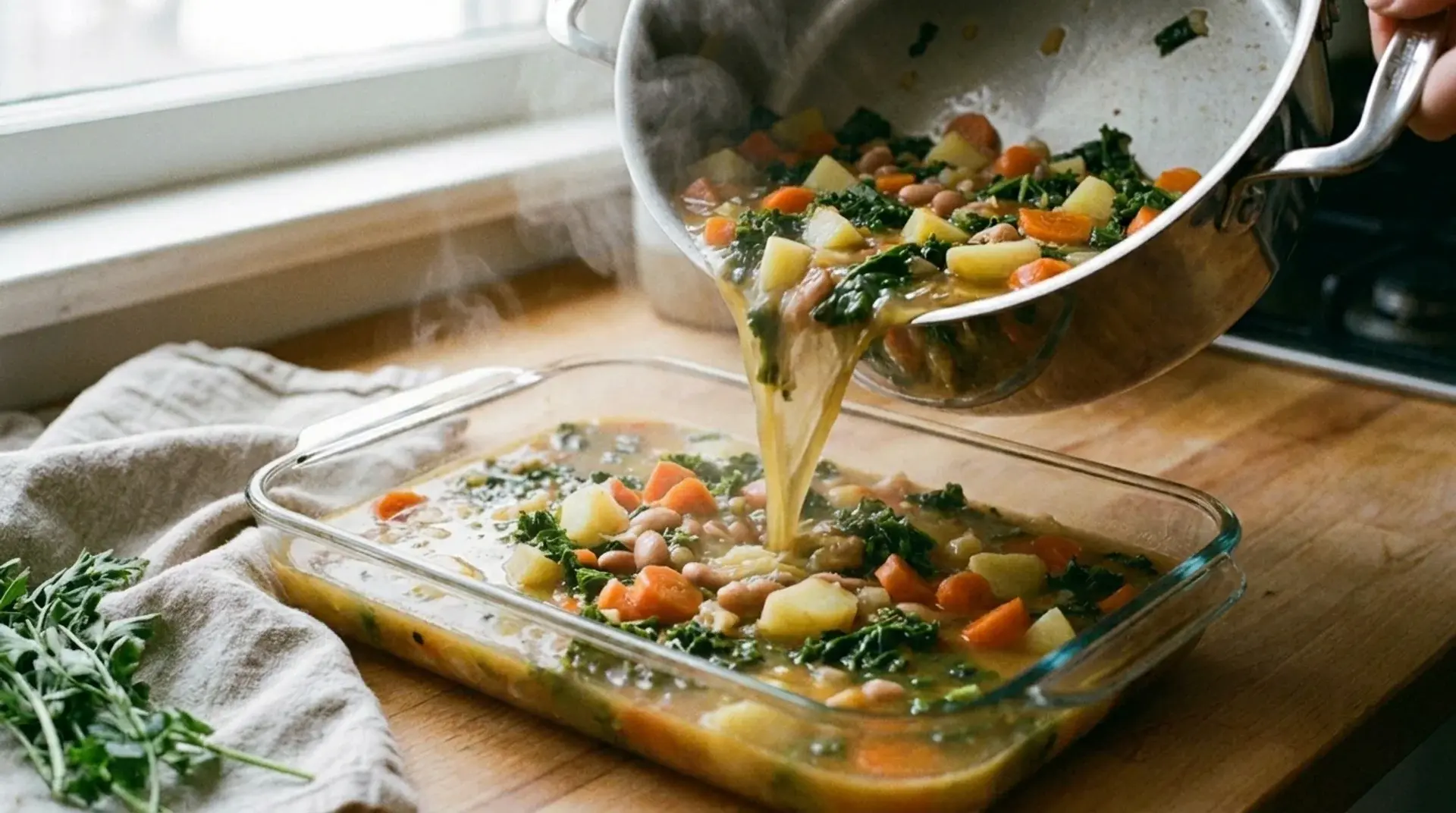
How fast should food be cooled for safety?
Cooling speed matters because bacteria growth isn’t about cooked vs not cooked. It’s about time + temperature after cooking. Once cooking is done, food starts to pass through the middle danger zone temperature on its way down to refrigeration. The longer it lingers warm, the more opportunity any microbes have to multiply. That’s why the biggest leftover trap isn’t forgetting to cook food properly; it’s letting food hang out on the counter while you eat, talk, and clean up.
The most important shift is to treat cooling as an active step, not passive waiting. Waiting to put leftovers away creates risk. Build a default: as soon as you’re done serving, portion leftovers. If it’s a big pot (soup, chili, curry, rice), don’t leave it in the original pot as one huge thermal mass, split it up so heat can escape.
Best containers for cooling (shallow vs deep)
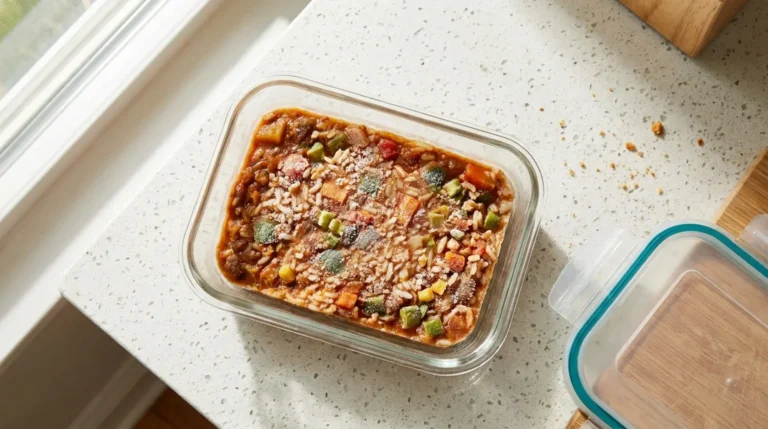
Containers determine cooling speed more than almost anything else. Deep containers cool slowly because the center stays insulated and warm, even if the outside feels cool. Shallow containers cool faster because they increase surface area and reduce the thickness of the food so heat has a shorter distance to travel before it can escape. This is why the same dish can be fine when served fresh but make you sick later if it cooled slowly in a deep pot or thick storage container.
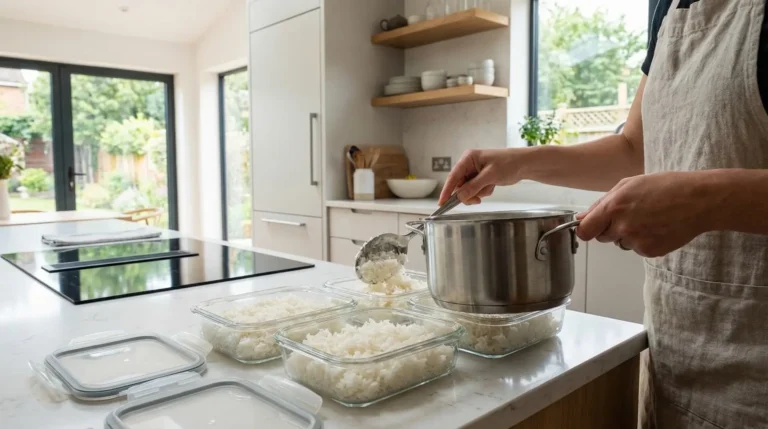
The practical standard is simple: use multiple shallow containers instead of one big one. For thick foods (mashed potatoes, rice, beans, chili), spread them out rather than piling them high. For soups and sauces, portion into smaller containers and let steam vent briefly before sealing so condensation doesn’t trap heat. If you meal prep, buying a set of stackable shallow containers is one of the easiest purchases because it turns the correct choice into the default choice.
Reheating leftovers: safe temps and when to stir
Reheating fails when the outside gets hot and the center stays lukewarm. That’s why stirring and portioning are important details. They’re the factors that prevent cold spots and high-bacteria risk. For soups, stews, sauces, and anything liquid, stir before measuring heat or serving. For dense leftovers (rice, pasta, casseroles), break the portion up so heat can move through it. If you microwave, use shorter bursts with stirring in between rather than one long blast that overheats edges and leaves the center behind (remember hot-pockets?).
When should you use a thermometer? Any time the food is dense, thick, or you’re reheating a big portion because guessing is where people can get sick. The goal is hot throughout, especially in the center. If you can’t confidently say the center is fully hot, keep going. Also: reheating doesn't renew the longevity of your leftovers. The safest leftovers are the ones that were cooled quickly, stored cleanly, and reheated with an even method, and consumed within a reasonable time-frame.
How many times can you reheat food?
The bigger risk than the number of reheats is the number of times food drifts through warm temperatures. Every time you take leftovers out, let them sit while you decide what to do, warm them partially, cool them again, and repeat. This creates extra time in the danger zone. That’s why the best rule is: reheat only what you will eat. Keep the rest cold and untouched.
A good approach: portion leftovers into meal-sized containers when you store them. Then reheating becomes an easy single-serving, without having to warm the whole pot again. It also improves texture and reduces waste because you’re not repeatedly cooking the same food. Easy food storage basics makes portioning less annoying (containers too big, fridge too chaotic, unknown expiration dates). Starting with organized leftovers sets you up for safe reheating with the least resistance.
Common cooling and reheating mistakes (and quick fixes)
The most common mistake is leaving food out because you think it needs to cool first. In reality, big pots cool dangerously slowly as a single hot mass. The easy fix is to portion into shallow containers right away. The second mistake is sealing hot food tightly so heat and steam stay trapped. All you need to do is vent briefly, then seal and refrigerate. The third mistake is stuffing the fridge with a hot pot that warms the surrounding space and slows cooling for everything. If you use smaller containers, the fridge won't warm up and the food will cool quickly.
On reheating, the classic mistake is heating without stirring, which leaves cold pockets. To fix this be sure to stir liquids, break up dense foods, and reheat in steps. Another common issue is reheating the entire batch repeatedly. There's less risk if you only reheat single portions. Be sure to avoid the smell and taste test as this can't verify the actual safety. Instead trust the history of how it was cooled, how it was stored, how long it’s been there, and whether the center has been reheated thoroughly. When you treat leftovers like a system built on automatic good habits, you stop relying on luck.
Frequently Asked Questions
Can I put hot food straight into the refrigerator?
Yes, if you portion it into shallow containers so it cools quickly and doesn’t heat up the whole fridge. Avoid putting a huge pot in as-is because the center stays warm too long and can warm surrounding foods as well as the overall temperature in the fridge. Split a big pot up, vent briefly, then refrigerate promptly.
Why do leftovers spoil faster in big containers?
Big, deep containers insulate the center, so food cools slowly and spends more time warm. That extended warm time increases risk and can also make texture worse. Shallow containers cool faster, reheat more evenly, and make it easier to reheat only what you’ll eat.
How do I reheat leftovers evenly without cold spots?
Reheat in smaller portions, stir liquids before and during heating, and break up dense foods like rice or pasta so heat can penetrate. If microwaving, use shorter bursts with stirring between. The goal is hot throughout, especially in the center.
Conclusion
Leftovers become risky when cooling is slow and reheating is uneven. The fix is a workflow of simple habits: portion into shallow containers, refrigerate promptly, and reheat only what you’ll eat using stirring and smaller portions to eliminate cold spots. If you can do this consistently, you remove most leftover guesswork and most leftover risk.
Next Step: Ensure you aren't making common cutting board sanitization mistakes.
Latest posts
About