Maillard Reaction in Cooking: Get Deep Flavor, Not Bitter Burn
The Maillard reaction is why seared steak tastes rich, roasted potatoes taste nutty, and toasted bread smells incredible. It’s also why food sometimes turns bitter and black. If you can’t get your browning right or you keep charing your food while the inside is still raw, the fix is an easy system of surface dryness, surface temperature, and timing.
This is part of the cooking science series. For the full framework (heat, temperature, texture, tools and more), go back to Cooking Science Guide.

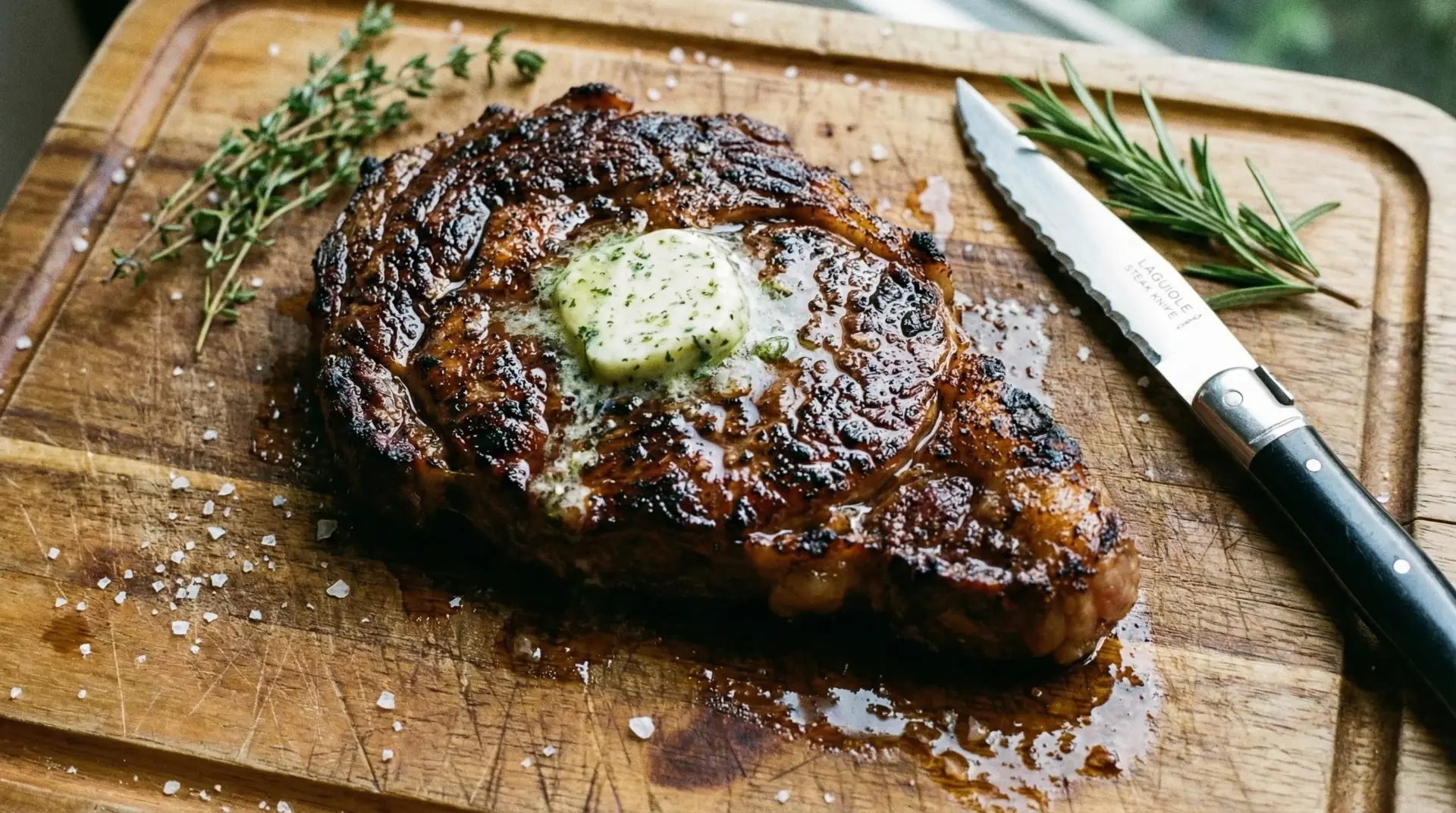
What is the Maillard reaction?
The Maillard reaction is what happens when heat triggers a chain of reactions between amino acids and sugars on the surface of food. It creates browning and “deep flavor” that reads as roasted, savory, and rich. It’s not the same as caramelization, which is sugar-only browning, though both can happen in the same dish. You don’t need to memorize chemistry to cook better; you need to recognize the conditions that turn browning on or off.
Maillard is mostly a surface event. The outside reaches higher temperatures first, while the inside stays cooler because moisture and thickness slow heat movement. That’s why you can have a pale surface and a cooked interior, or a dark surface with an undercooked center. If doneness is inconsistent while you chase browning, use Cooking Temperature Control so you can brown the outside while still landing the inside exactly where you want it.
Best temperature range for browning
Browning is driven by surface temperature, not wishful thinking. Practically, Maillard ramps up in the hot-pan and hot-oven zone, where the surface can dry and climb quickly. There isn’t one magic number because foods differ in moisture, sugar content, and thickness, but the logic is consistent: if your food is steaming, you are not browning yet. Steam means energy is going into evaporation, which holds surface temperature down.
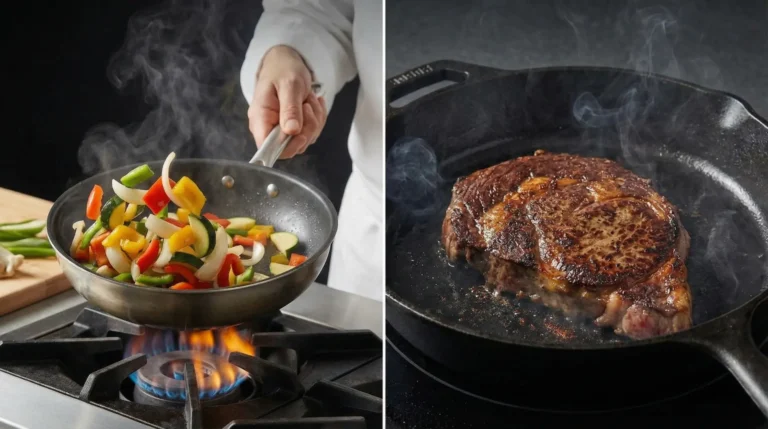
The reliable way to “hit the browning zone” is preheating plus spacing. Preheat the pan long enough that it holds heat when cold food hits it, and don’t crowd pieces so moisture can escape. In the oven, spread food out so air can circulate and moisture can evaporate instead of pooling. If crispiness is the outcome you care about, browning is often part of the structure, so pair this with How to Make Food Crispy for moisture removal and holding rules.
Why meat won’t brown
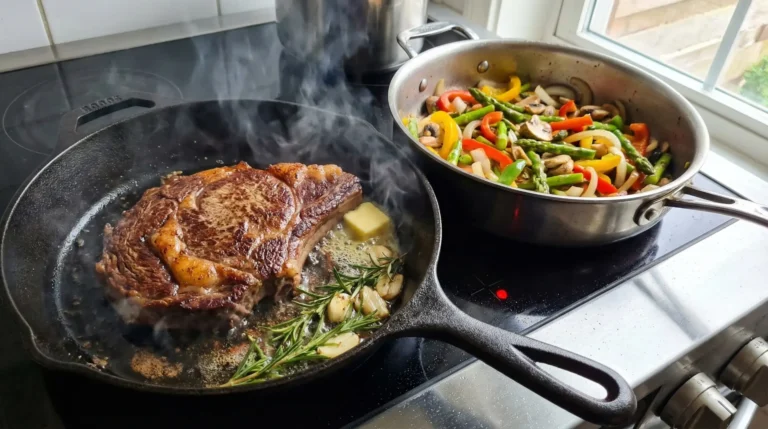
Most weak browning comes down to three problems: wet surfaces, overcrowding, and insufficient preheat. Wet surfaces stall temperature because water must evaporate before the surface can get hot enough to brown. Overcrowding traps steam and also drops pan temperature because too much cold mass hits at once. Under-preheating means the pan never reaches a stable surface temperature, so you get pale food that releases water and “boils” instead of browns.
The fixes are mechanical. Pat meat dry thoroughly, and if you have time, air-dry uncovered in the fridge to dehydrate the surface. Cook in batches with space between pieces so moisture can escape. Preheat longer than you think, then add oil and look for shimmer. If you keep failing at searing even when technique is solid, cookware heat retention might be the limiting factor, so use Cookware Heat Performance to match the pan to the job.
How to brown without burning (timing + fat choice)
“Brown without burning” is managing how fast the surface temperature climbs. You want enough heat to brown efficiently, but enough control to stop before bitter black. The pattern is usually: preheat, add fat, add food, don’t move it too soon, then adjust heat once browning starts. Moving too early tears the surface and releases moisture; waiting allows a crust to form and naturally release.
Fat choice matters because it changes heat behavior and can burn at different points. If fat smokes aggressively, your pan may be too hot for that stage or your fat can’t handle the heat you’re using. If aromatics burn, add them later or lower heat before they go in. Use zones to finish gently after browning so the interior can catch up without scorching the crust. To keep the inside consistent while you nail browning, pair this with Cooking Temperature Control.
Putting Maillard into practice: a simple browning checklist
Use a quick checklist: dry the surface, preheat properly, leave space, and give the food time to release. If food is steaming, you need more space or less moisture. If food is burning, you need less heat, better timing, or to finish indirectly. If browning is weak, your pan likely cooled too much or never reached a stable surface temperature.
Once these are habits, browning stops feeling random. If you want the deeper explanation behind uneven heating and hot spots, read Heat Transfer in Cooking. For the full series, return to Cooking Science Guide.
Frequently Asked Questions
Why does my food burn instead of turning golden brown?
Burning usually means the surface temperature climbed too fast or stayed too high too long. Common causes are an overheated pan, fat smoking aggressively, or sugars and spices hitting high heat early. Lower heat after the initial sear, use zones to finish indirectly, and add aromatics later. Also dry surfaces first so you don’t crank heat trying to “force” browning.
How do I get better browning in the oven without drying food out?
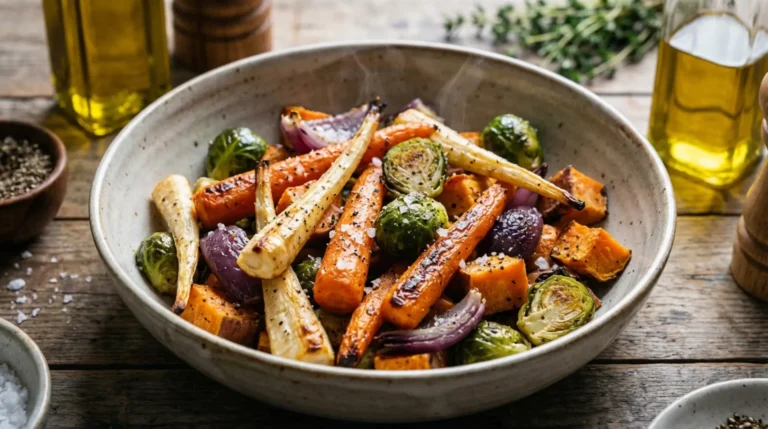
Maximize airflow and surface exposure: spread food out, avoid crowding that traps steam, and use a rack when possible. Roast hot enough to evaporate surface moisture efficiently, then finish with a short broil or higher-heat phase for color. For proteins, pull slightly early and rest so carryover finishes doneness while the crust stays intact.
Is the Maillard reaction the same as caramelization?
No. Caramelization is sugar-only browning, while the Maillard reaction involves amino acids and sugars reacting together. Both create browning flavor, but Maillard is especially responsible for savory roasted notes in meats and toasted foods. Practically, both require heat and a surface that isn’t flooded with moisture.
Conclusion
The Maillard reaction is the controllable engine behind “restaurant flavor.” If you can’t brown, it’s almost always surface moisture, crowding, or insufficient preheat. If you’re burning, it’s usually too much heat for too long or the wrong timing for fat and aromatics. Dry the surface, preheat properly, give food space, and use zones so you can finish gently after browning.
Next Step: How to make food crispy with moisture & browning control.
Latest posts
About