How to Make a Roux Without Guessing
A good roux is the difference between “watery and weird” and “smooth, glossy, restaurant-level.” If you’ve ever made gravy that tasted like raw flour, a cheese sauce that clumped, or a gumbo roux you were scared to burn—this is the repeatable method. Making a roux is just controlling heat, time, and a simple ratio.
This is one of the core thickening skills inside Master Cooking Techniques. If you’re building sauces from pan drippings first, learn reducing sauce too—roux and reduction solve different problems, and using the right one is how sauces stop feeling random.

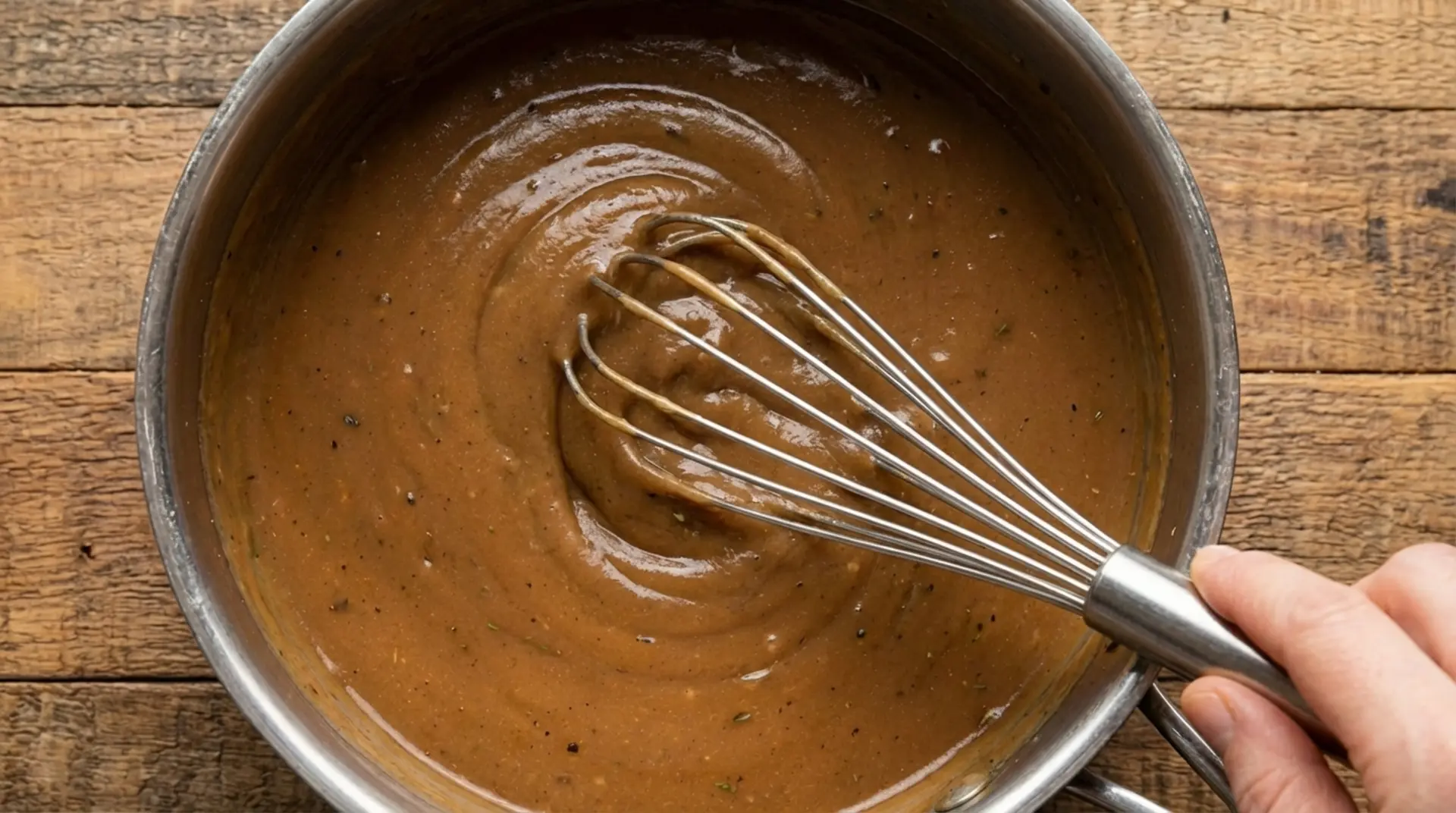
What roux does (and what it doesn’t)
Roux thickens by coating starch granules in fat, then letting those starches swell in liquid as they heat. That’s why roux-thickened sauces feel silky instead of “starchy” when done right. It also adds flavor—especially as it browns—so it’s not just a texture tool. Roux is the backbone of gravies, creamy sauces, and many stews because it stabilizes texture and makes a sauce cling to food instead of pooling underneath it.
What roux does not do: it won’t magically fix a sauce that tastes bland or unbalanced. Thickening makes flavors feel louder because the sauce coats your mouth, but if the base is weak, thickening just gives you thicker weakness. Roux also doesn’t replace reduction when your sauce is watery because it’s under-concentrated—thickening and concentrating are different operations. If the sauce tastes “fine but thin,” roux helps. If it tastes “weak and watery,” you likely need reduction first, then choose whether to thicken. And if your sauce tastes too salty, roux won’t remove salt—it can only change how the salt is perceived.
Roux color stages (white → blond → brown → dark)
Roux color is a time-and-heat decision that changes both flavor and thickening power. A white roux is cooked just long enough to lose raw flour taste—think 2–5 minutes on moderate heat. It stays pale and has the strongest thickening ability, which is why it’s used for béchamel-style sauces and many gravies. A blond roux is slightly darker with a gentle nutty smell; it’s still good at thickening but adds more toasted flavor.
Brown and dark roux are where flavor becomes the point. As roux gets darker, it thickens less but tastes deeper: toastier, richer, more “roasted.” That’s perfect for gumbo and deeply savory dishes, but it means you can’t expect the same thickness from the same amount of roux. Dark roux also burns fast—once it passes milk-chocolate color, you’re working in a narrower margin. The most reliable way to get consistent color is medium heat + constant stirring (or very frequent stirring) and accepting that “faster” usually means “burnt.” If you’re new, stop at blond until your confidence is high.
Roux ratio rules (fat:flour) and how it impacts thickness
The cleanest roux rule is 1:1 fat to flour by weight. That gives you a stable base you can scale without guessing. By volume, it’s often close to 1:1 as well (tablespoon butter to tablespoon flour), but weight is more consistent across different flours and fats. The ratio controls how “starchy” the base is and how smoothly it disperses. Too much flour makes it pasty and more prone to lumps; too much fat makes it greasy and weaker at thickening.
Thickness is controlled by how much roux you add to a given amount of liquid, plus the roux color. Practical home-cook guideline: use less for a light sauce, more for a gravy-thick texture, and remember darker roux thickens less. If you want a repeatable workflow, build roux in small batches and add it gradually—your eyes and spoon will tell you when the sauce hits the texture you want. The goal is not “max thickness.” The goal is “coats the spoon, clings to food, still tastes clean.” If you’re thickening something with strong pan flavors first, learning deglazing gives you a better base to thicken—roux works best when the underlying flavor is already good.
How to add liquid without lumps
Lumps happen when flour hydrates unevenly—little pockets of dry flour get sealed off and refuse to dissolve. The fix is a controlled merge: whisk constantly and introduce liquid gradually. You can do it two reliable ways: (1) keep the roux hot and add warm liquid in small splashes while whisking until smooth, then add the rest; or (2) let the roux cool slightly, then whisk in room-temp or warm liquid gradually. Both work. What doesn’t work is dumping a large volume of cold liquid into a very hot roux and hoping it behaves.
Use a whisk, not a spoon, and aim for a smooth paste before you add more liquid. If you do get lumps, you’re not doomed. Keep simmering and whisking—many lumps soften with time. If they don’t, blend briefly with an immersion blender or strain. Also: once the liquid is in, bring the sauce to a gentle simmer for a few minutes so the starch fully activates. If you stop at “it looks thick,” you can end up with a sauce that tastes floury or has a slightly chalky texture. Simmering is what turns “thick” into “silky.”
When to use roux vs reduction vs slurry
Roux is best when you want a smooth, stable thickness and a sauce that feels integrated—not just thickened. It’s the move for gravies, cheese sauces, creamy soups, and classic stews. Reduction is best when the problem is “watery flavor,” not “watery texture.” If the sauce tastes weak, reducing concentrates flavor and naturally thickens a bit through evaporation. That’s why reduction often produces the most delicious result when you have time and a big enough pan.
A slurry (cornstarch + cold water) is the emergency lever: fast thickening, minimal cooking time, but it can turn sauces glossy in a way that reads “takeout” if overused. Use it when you need a quick fix and don’t want roux flavor. If you’re unsure, diagnose like this: If it tastes right but feels thin → roux (or a small slurry). If it tastes weak and thin → reduce first, then adjust thickness. If it tastes great but you reduced too far → dilute, then re-balance. For the reduction workflow and end-point cues (nappe, spoon trail, sheen), go to Reducing Sauce.
Frequently Asked Questions
What is the best roux ratio for gravy?
Start with a 1:1 ratio of fat to flour by weight for the roux itself. For gravy thickness, add roux gradually to hot liquid and simmer until it coats the spoon. Pale roux thickens more than dark roux, so you’ll need less. If it gets too thick, thin with unsalted stock or water, then simmer again.
How do I fix lumpy roux or lumpy sauce after adding liquid?
Keep whisking and simmering—some lumps dissolve with heat and time. If they persist, blend briefly with an immersion blender or strain through a fine mesh sieve. Next time, add liquid in small splashes while whisking, and avoid dumping cold liquid into a very hot roux all at once.
How long do you cook a roux to remove raw flour taste?
For a white roux, cook about 2–5 minutes on moderate heat, stirring, until it smells slightly nutty instead of floury. Blond roux takes longer and gets a deeper toasted aroma. Dark roux is cooked much longer for flavor, but it thickens less and burns faster—stir consistently and control heat.
Conclusion
Roux is a “make it predictable” tool: a simple fat + flour base that gives you smooth thickness, clean texture, and more control over sauces. Choose your roux color based on flavor, add liquid gradually to avoid lumps, then simmer long enough for starch to fully activate. Once you can make roux calmly, gravy, cheese sauce, and gumbo stop being stressful and start being repeatable.
Latest posts
About