How to Roast Vegetables So They’re Crispy and Sweet
Roasting vegetables should be the easiest set it and forget it technique—yet most home pans turn out limp, watery, and unevenly browned. If your veggies steam instead of caramelize, it’s almost never the recipe. It’s moisture, spacing, and temperature management. Once you control those three, roasted vegetables become reliably crisp at the edges and sweet in the middle.
This article is part of the Master Cooking Techniques hub, where you’ll find the core moves that make results repeatable.

Why roasted vegetables go soggy (moisture + crowding)
Soggy roasting is just steaming with extra steps. Vegetables carry a lot of water, and that water has to leave the surface before browning can begin. If moisture can’t escape—because the pan is crowded, the oven isn’t hot enough, or the vegetables are piled—your sheet pan becomes a humid microclimate. The surface stays wet, so the vegetables soften before they ever brown.
Crowding is the most common culprit because it does two things at once: it traps steam between pieces and prevents direct pan contact. Both reduce browning. The fix is almost annoyingly simple: use a bigger pan, spread into a single layer, and roast in batches when needed. If you’re making multiple pans, stagger them and rotate halfway so each pan gets time in the best airflow zones.
Best oven temperature for roasting vegetables (and when to use convection)
High heat is your friend because it accelerates moisture evaporation and creates surface browning before the interior turns to mush. Most vegetables roast best in a hot oven, but the “best temperature” is really about the outcome you want: crisp edges, caramelized surfaces, and tender centers without burning the thin bits.
Convection can help because it moves dry air across the surface, which speeds evaporation and browning. It’s especially useful for watery vegetables (like zucchini, mushrooms, and broccoli) or when you’re roasting a full tray and need help pushing out moisture. The tradeoff is that convection can dry and brown faster, so you may need slightly less time and a closer eye on small pieces. If your oven runs hot or has aggressive convection, use it as a tool—great for crisping, risky for delicate veg or tiny cuts.
Oil, salt, and spacing rules for roasted vegetables
Oil, salt, and spacing sound basic, but they’re the difference between “pretty good” and “why does this taste so much better?” Oil helps with heat transfer and surface browning, but too much oil can make vegetables feel heavy and can inhibit crisping by creating a slick layer that slows moisture loss. Aim for a light, even coating—enough to gloss the surface, not enough to pool.
Salt matters for two reasons: flavor and moisture behavior. Salt draws moisture to the surface. That’s great after browning begins (because salt helps taste pop), but salting too early on watery vegetables can increase surface wetness and delay browning. A practical rule: salt sturdy vegetables early (potatoes, carrots, cauliflower). For watery vegetables, consider salting lightly before, then finishing with a final pinch right after roasting. Spacing is the non-negotiable: a single layer with gaps. If pieces touch, you’re creating steam pockets.
Roasting vegetables timing by vegetable type (quick rules)
Timing issues usually come from mixing vegetables with different water content and density on the same tray. Dense vegetables need time for the center to soften. Watery vegetables need aggressive moisture removal. If you treat them the same, the dense veg stays underdone while the watery veg turns soft and sad.
Dense vegetables (longer roast, great browning)
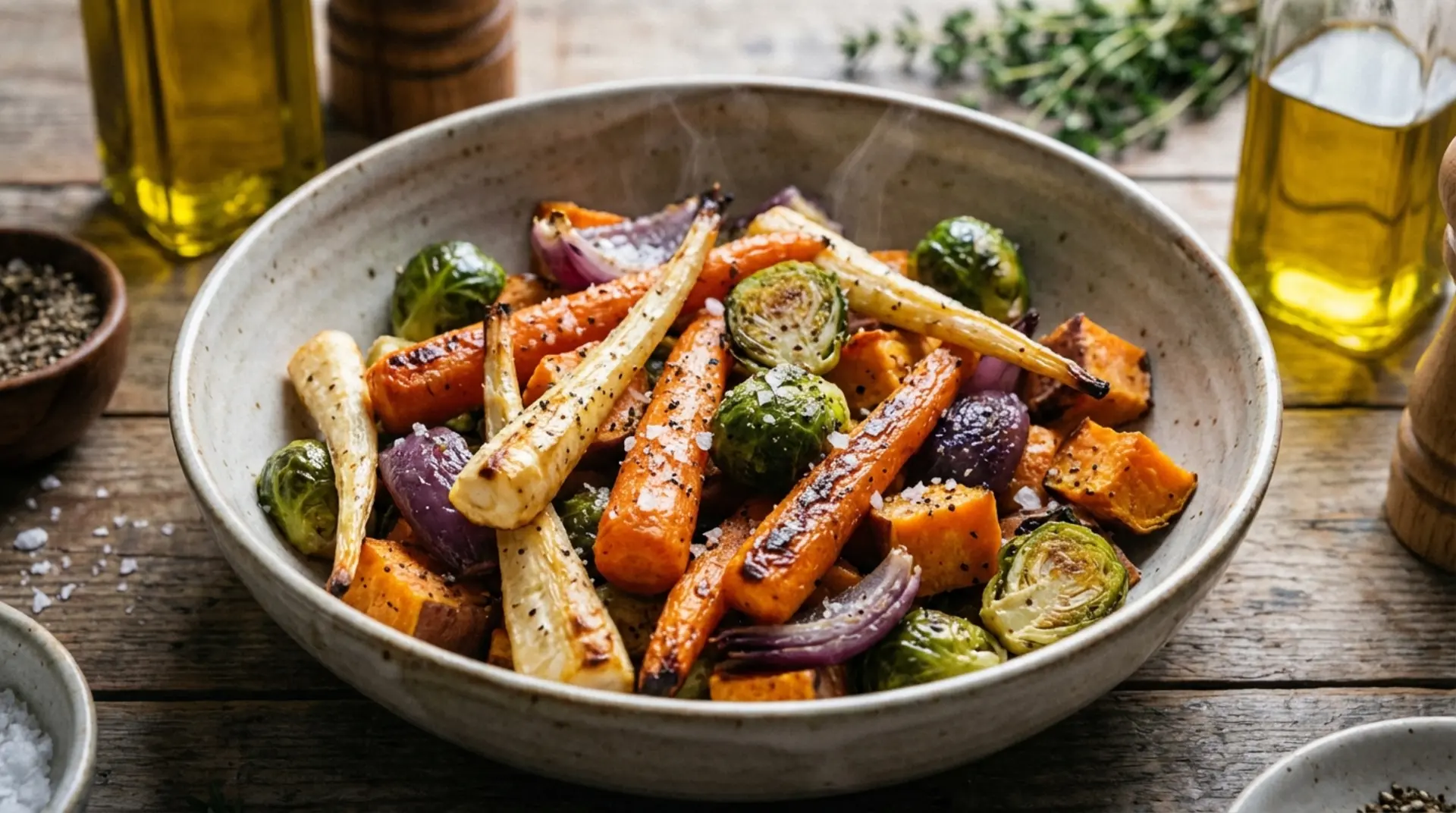
Potatoes, carrots, beets, sweet potatoes, and winter squash do well with longer roasting because they can brown deeply while the interior becomes tender. Cut sizes should be consistent, and smaller pieces brown faster than you expect.
Medium vegetables (classic sheet-pan winners)
Broccoli, cauliflower, Brussels sprouts, green beans, and asparagus roast quickly and reward high heat + space. They brown at the edges and stay crisp-tender inside.
Watery vegetables (roast hot, don’t crowd)
Zucchini, eggplant, mushrooms, tomatoes, and onions release a lot of moisture. Cut larger, roast hotter, and give them extra space. For mushrooms, a single layer with room is everything—crowd them and they’ll steam forever.
Sheet pan roasting hacks for better caramelization
Once the basics are right, a few “small” moves take roasted vegetables from decent to genuinely addictive. The first is pan heat: a cold pan steals energy early, which delays browning. Preheating the sheet pan (empty) while the oven heats can improve contact browning—especially for potatoes and cauliflower. Just be careful when adding oil and vegetables to a hot pan (it can splatter).
The second is rotation and positioning: most ovens have hot spots and airflow patterns. Rotate the pan halfway through, and if you’re using multiple racks, swap positions. The third is the finish: roasted vegetables often taste flat if you don’t add a small “bright” element at the end. A squeeze of lemon, a splash of vinegar, or a pinch of flaky salt right after roasting makes the caramelized flavors pop. If you’re roasting vegetables alongside a protein, the technique logic overlaps with Pan-Searing: stable heat, enough space, and controlled timing produce better browning.
Frequently Asked Questions
Why do my roasted vegetables come out watery instead of browned?
Watery vegetables usually mean the pan was crowded or the oven wasn’t hot enough, so moisture couldn’t evaporate. Spread vegetables into a single layer with gaps, roast in batches if needed, and use higher heat so water leaves the surface early. For watery veg like zucchini or mushrooms, extra spacing matters more than anything.
Should I roast vegetables with convection (fan) on or off?
Convection helps when you want faster moisture removal and crisper edges, especially for watery vegetables or full sheet pans. It can also brown small pieces faster, so watch closely and expect slightly shorter cook times. If your oven’s convection runs aggressive, use it strategically rather than as the default for everything.
When should I salt vegetables for roasting—before or after?
Salting before roasting is great for sturdy vegetables, but watery vegetables can release more surface moisture and delay browning. A practical approach is to salt lightly before, then finish with a final pinch right after roasting for the best texture and flavor. If vegetables keep steaming, spacing is still the first fix.
Conclusion
Great roasted vegetables aren’t about a special recipe—they’re about controlling moisture, spacing, and heat so browning has a chance to happen. Spread everything out, roast hot, and finish with a small hit of acid or salt for contrast. Once you can roast vegetables reliably, sheet-pan meals get faster and taste dramatically more intentional.
Next Step: Learn Reducing Sauce to fix watery sauces and boost flavor
Latest posts
About