Deglazing 101: Use Fond to Make Flavor Fast
If you’ve ever looked at the brown bits stuck to your pan and wondered “is this flavor or is this burnt?”—deglazing is the move that answers it. Deglazing turns good fond into a sauce in minutes by dissolving those browned bits with the right liquid, at the right heat, then reducing for body and finishing for shine.
This technique is one of the core skills in Master Cooking Techniques, and it pairs perfectly with pan-searing when you want a crust + sauce combo that feels restaurant-level without extra work.

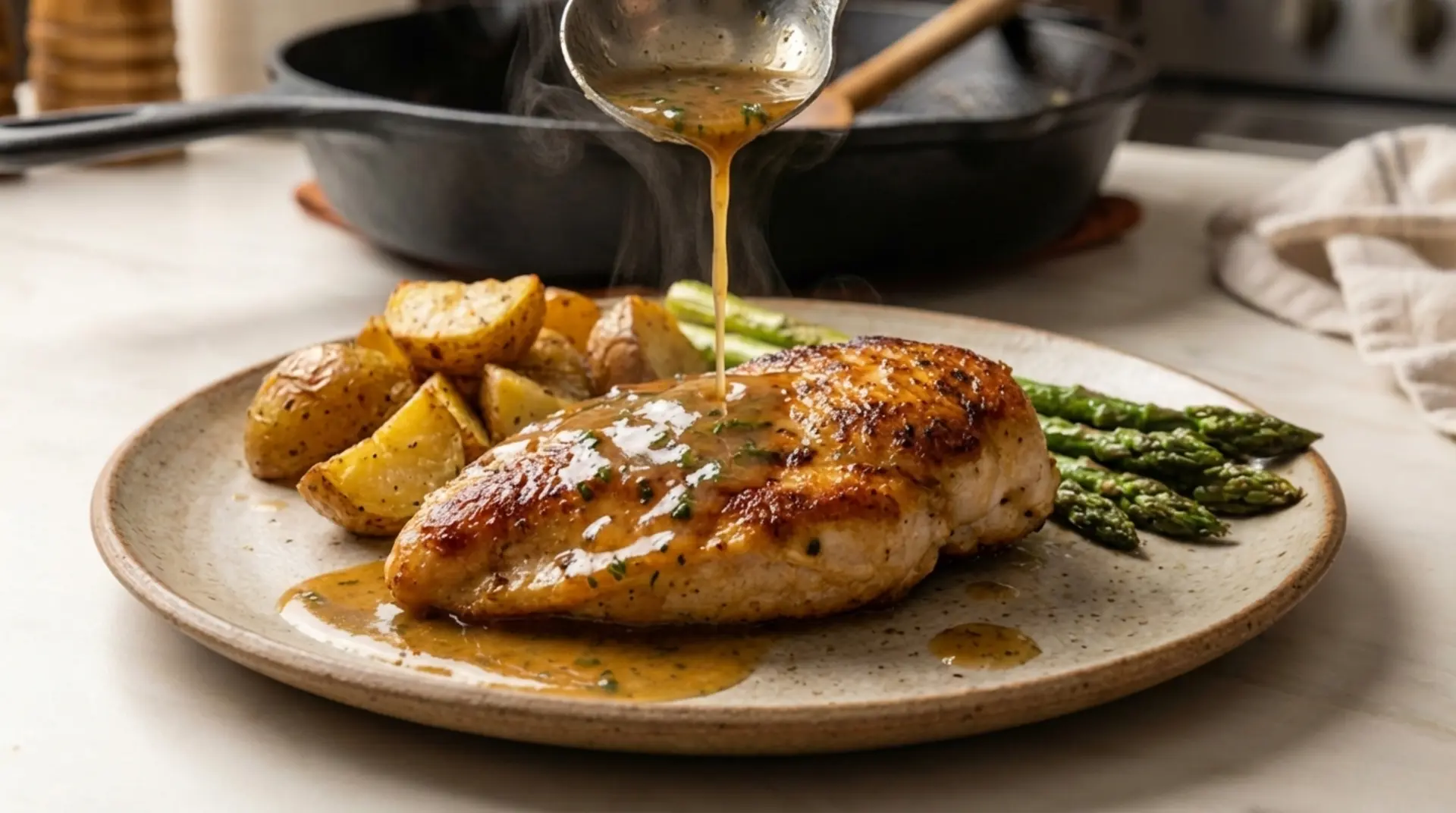
What is fond (and when it’s good vs burnt)?
Fond is the browned, stuck-on layer that forms when proteins and sugars brown on a pan. When it’s golden to deep brown and smells nutty, savory, and “roasty,” it’s concentrated flavor. When it’s black, acrid, or smells like smoke and bitterness, it’s burnt—don’t build a sauce on top of that and hope it fixes itself. The most useful mental model: fond is caramelized flavor only if you controlled heat and didn’t scorch the aromatics.
You can usually tell the difference in seconds. Good fond looks like scattered brown patches, not a uniform black crust. If you see black specks everywhere, your pan was too hot or too dry for too long. If your garlic went dark before your meat browned, that’s not fond—that’s burnt aromatics. Deglazing won’t remove bitterness; it will dissolve it and spread it through the sauce. If the fond is borderline (dark brown but not black), deglaze early with a little liquid, lower the heat, and taste before reducing. If it tastes harsh, dilute, add a touch of acid, or start over with a clean pan next time.
Best deglazing liquids (wine, stock, water, vinegar)
Your deglazing liquid does two jobs: it dissolves fond and sets the flavor direction of the sauce. Water is the neutral “just dissolve it” option—it pulls fond cleanly and lets your finishing ingredients (butter, herbs, pan juices) lead. Stock builds savory body fast, but it can taste flat if it’s weak; if you want a bigger upgrade, use a flavorful stock or reduce it longer. Wine adds acidity and aroma; it’s great when you want the sauce to feel brighter and more complex, but it needs time to simmer so the alcohol cooks off. A splash of vinegar or citrus can work, but think of it as a small corrective tool, not your main liquid, unless you’re intentionally making a sharp, tangy pan sauce.
Practical rules: choose wine when the dish needs lift (rich meats, mushrooms, browned onions). Choose stock when you want a savory “gravy-adjacent” sauce (chicken, pork, pan-roasted veg). Choose water when you don’t want competing flavors (you already have strong pan juices, spices, or a glaze). Use vinegar/citrus in teaspoon amounts to finish or rescue a heavy sauce. And if you want the “cleanest” repeatable result, keep it simple: deglaze with stock or water, reduce, then finish with butter + acid + herbs. For deeper sauce-building beyond deglazing, ladder into reducing sauce to control thickness and intensity without accidentally over-salting.
Step-by-step deglaze (heat, add, scrape, simmer)
Deglazing works best when you treat it like a short sequence, not a vague “splash-and-pray.” Start by removing your protein or vegetables to rest—leave the fond behind. Pour off excess fat if the pan is greasy (a thin glossy layer is good; a pool is not). Lower the heat to medium or medium-high depending on how aggressive your stove runs. Now add your liquid: a small splash is enough to loosen; too much turns this into soup and slows reduction. The moment the liquid hits the pan, it should sizzle and steam, not violently smoke.
Next, scrape the fond with a wooden spoon or spatula, pushing across the hottest spots until the pan bottom looks mostly clean. Let the liquid simmer for 30–90 seconds to dissolve and concentrate. If using wine, simmer a little longer to soften the “raw alcohol” edge. Then reduce to the texture you want: for a quick sauce, reduce until it looks slightly thickened and glossy; for more body, reduce further and finish with fat. A classic finish is “mounting” with cold butter off the heat—this adds shine and a silky feel. If you want a full workflow that starts with a proper crust (so you actually get good fond), go read Pan-Searing next—deglazing is easiest when the sear is clean and controlled.
Common deglazing mistakes (too hot, wrong liquid, not enough reduction)
The most common mistake is deglazing on high heat with a dry pan and burnt fond. You add liquid, it flashes off instantly, and you’re left with bitter sludge. Fix: drop the heat before you add liquid, and if the fond is black, don’t commit—wipe the pan or start fresh. The second mistake is using a liquid that doesn’t match the dish. Sweet wine on a delicate fish pan can feel loud; strong vinegar as the main liquid can turn sharp and thin. Fix: keep your main deglaze liquid neutral (water/stock), and add acid at the end in small amounts.
The third mistake is skipping reduction. Deglazing dissolves fond, but reduction creates body. If you pour it over food immediately, you’ll get a watery “fond tea” instead of a sauce. Fix: simmer long enough to see a visual change—bubbles get tighter, the liquid looks glossier, and it lightly coats the spoon. Last, too much fat makes sauces greasy and dull. Fix: pour off excess fat before deglazing, then add fat back intentionally at the end (a knob of butter, a drizzle of olive oil). If you want a clean diagnostic system for “something’s off” at the end—too salty, too harsh, too rich—tie this technique back into the pillar at Master Techniques and use the balance checklist there.
When to finish with butter or oil (shine + body)
Finishing fat is what turns a reduced deglaze into a sauce that looks intentional. Butter adds gloss, rounds sharp edges, and gives the sauce a thicker, silkier feel. The key is temperature control: add cold butter off the heat (or at very low heat) and swirl until it melts. If you boil after adding butter, the sauce can split and look greasy. Oil (like olive oil) can also finish a sauce, especially if you’re avoiding dairy; it adds sheen and softness, but it won’t thicken the same way butter does.
Use butter when the sauce tastes “good but thin” or “a little sharp” and you want it to feel richer without adding cream. Use oil when you want a cleaner, lighter finish (especially for vegetables or seafood). Either way, finish after reduction, not before—otherwise you’re just boiling fat. Then adjust the final balance: a pinch of salt, a squeeze of lemon, a spoon of pan juices, or chopped herbs. If you overshot reduction and the sauce feels too intense or salty, don’t panic—dilute with a splash of water or unsalted stock, then re-reduce briefly to regain texture. To level up beyond quick pan sauces, your next move is Reducing Sauce, where thickness and concentration become fully predictable instead of accidental.
Frequently Asked Questions
Can you deglaze with water instead of wine or stock?
Yes—water is often the cleanest deglazing liquid because it dissolves fond without adding competing flavors. You’ll still get a real sauce if you reduce it enough and finish with butter/oil plus a little acid or herbs. If the dish already has strong seasonings or pan juices, water can produce the most “pure” result.
How do I know if my fond is burnt and I should not deglaze?
If the bits are black (not deep brown) and the pan smells acrid or smoky, it’s burnt. Deglazing will dissolve that bitterness into your sauce. If it’s dark brown and smells roasty/nutty, it’s usually fine. When in doubt, add a small splash of water, scrape, and taste before you reduce.
Why is my deglazed sauce watery even after scraping the pan?
Scraping dissolves flavor, but reduction creates body. If you don’t simmer long enough (or you added too much liquid), it stays thin. Use medium heat and reduce until the bubbles tighten and the liquid turns glossier and slightly thicker. Then finish with butter/oil to add a silky texture and shine.
Conclusion
Deglazing is one of the highest-leverage “chef moves” because it turns what’s already in your pan into flavor on purpose. Control the heat, choose a liquid that fits the dish, scrape cleanly, and reduce until the sauce looks glossy and slightly thickened. Finish with butter/oil and a touch of acid, and your weeknight cooking instantly feels more intentional.
Next Step: Learn how to make a roux for thicker, silkier sauces
Latest posts
About