How to Reduce a Sauce Without Oversalting
Reducing sauce is the simplest way to turn “watery and meh” into “rich and intentional.” If your sauce tastes flat, reduction fixes the real problem: too much water diluting flavor. The trick is controlling heat and surface area so you concentrate steadily—without burning, turning bitter, or accidentally making it too salty.
This is a core skill inside Master Cooking Techniques, because reduction shows up everywhere: pan sauces, braises, tomato sauces, and quick weeknight finishes. If you’re starting from browned bits in the pan, learn deglazing first—deglaze gives you the base; reduction gives you the body and depth.

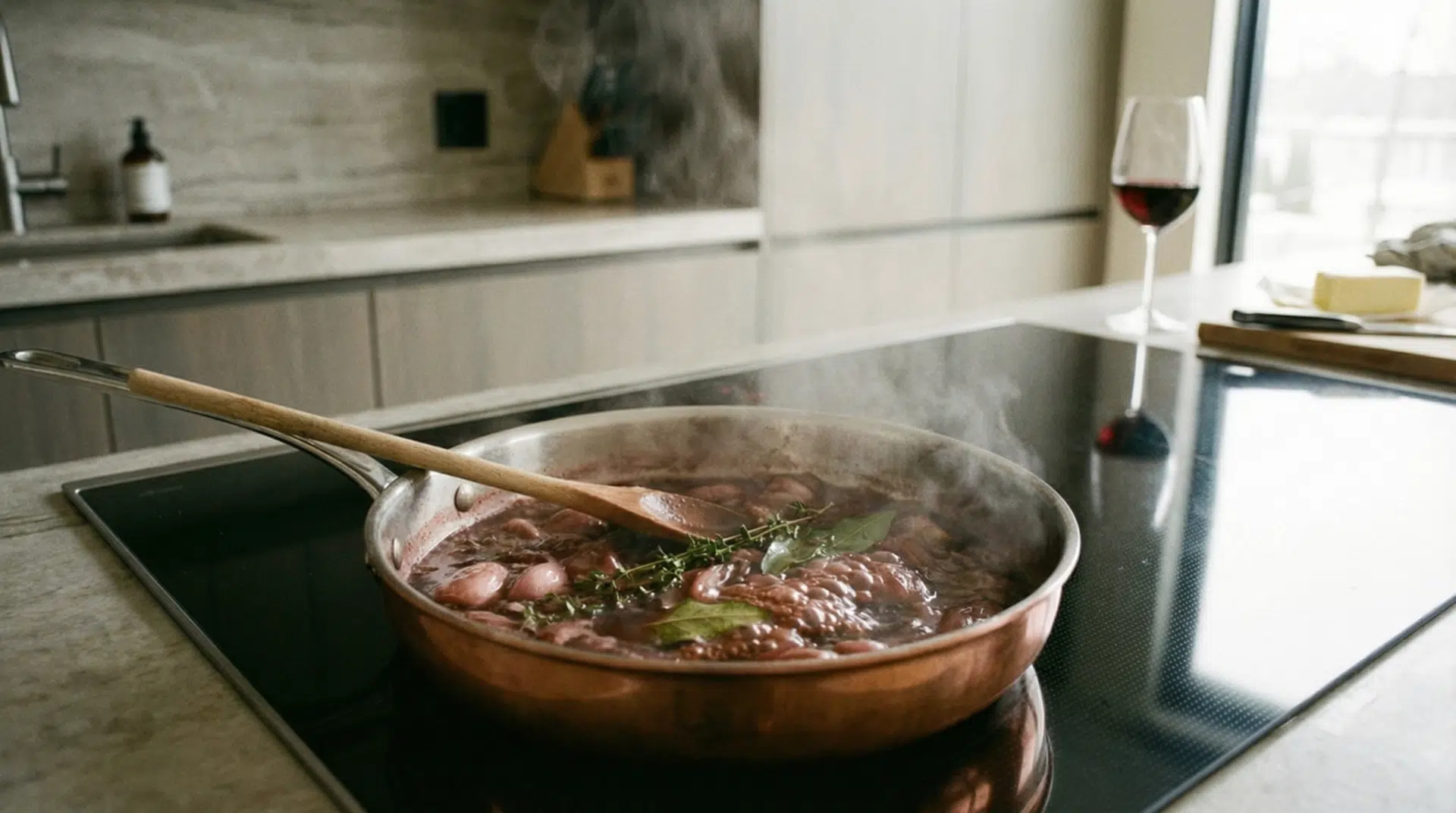
What reduction is (evaporation, concentration)
Reduction is evaporation with a purpose. Most sauces start as a mixture of water + flavor compounds (salt, acids, sugars, aromatics, fat, browned bits). When you simmer, water leaves as steam, but most flavor compounds stay behind—so the same amount of flavor is now in less liquid. That’s why a reduced sauce tastes “louder,” feels richer, and clings to food better.
This also explains why reduction can go wrong. If you reduce too far, you don’t just thicken—you concentrate salt, sweetness, acidity, and bitterness too. A sauce that tasted balanced at the start can become sharp or salty at the end. So the win condition isn’t “reduce until thick.” It’s “reduce until the flavor is concentrated and the texture matches the dish.” You’re aiming for controlled intensity, not maximum intensity.
How to reduce sauce faster (surface area, heat level)
The fastest way to reduce is to increase surface area. A wide skillet reduces faster than a saucepan because more liquid is exposed to air. That’s why pan sauces come together quickly: the pan is already wide and hot. If you’re reducing a soup or braise liquid, you can ladle some into a wide pan and reduce it separately, then return it—same flavor result, less time.
Heat level matters, but it’s a dial, not a flex. Too low and you’ll be waiting forever; too high and you risk scorching sugars/proteins or pushing the sauce into harsh bitterness. Aim for a steady simmer: active bubbles across the surface, but not a violent boil that splatters and reduces unevenly. Stir occasionally, scrape the corners, and keep an eye on the “ring” that forms on the pan—when the ring thickens and the bubbles get slower and glossier, you’re entering the finish zone. If your base started with fond, use deglazing correctly first so you’re reducing clean flavor, not burnt residue.
Preventing “too salty” (when to salt)
The cleanest reduction rule: salt late. If you season heavily early, reduction concentrates that salt and you can’t un-salt without diluting (which defeats the purpose). Instead, build flavor first—aromatics, fond, stock, acids—reduce until the sauce is close, then adjust salt in small increments. This keeps you in control of the final balance.
There are exceptions. If you’re reducing something very under-seasoned and you know you’ll reduce a lot, a tiny amount of salt early can help flavor develop. But “tiny” is the key word. For most home cooking, treat salt as a finishing move: taste when the sauce is near the texture you want, then season. Also: if you’re reducing a salty stock or store-bought broth, assume it will become saltier. Choose low-sodium stock when possible if you plan to reduce aggressively, or be ready to finish with unsalted butter/cream to soften perception (without pretending it removes salt).
How to know it’s done (nappe, spoon trail, sheen)
Reduction “done” is a set of cues, not a timer. As the sauce reduces, bubbles change: they get smaller, slower, and more syrupy-looking. The surface also changes: it goes from thin and watery to glossy with a slight sheen. This is the most reliable signal that you’re approaching the finish.
Use the spoon test. Dip a spoon, lift it, and watch how the sauce coats. For many sauces, you want nappe: it coats the back of the spoon and you can draw a clean line through it with your finger. Another cue is a spoon trail in the pan: drag a spoon across the bottom—if the sauce parts briefly and then slowly closes, you’re close. Remember that sauces thicken slightly as they cool, and they thicken more if you finish with butter or cream. Stop a hair earlier than you think if you plan to mount with butter or reduce further off-heat.
Fixes if you went too far (dilute, balance, mount)
If you over-reduce, don’t panic—reverse it intentionally. First fix is dilution: add a splash of unsalted stock, water, or whatever base liquid matches the sauce, then simmer briefly to re-integrate. This restores volume and can pull the sauce back from “too intense.” If it’s too salty, dilution is the only real mechanical fix; everything else is perception management.
Second fix is balance. If the sauce tastes sharp, add a touch of fat (butter, cream) or a tiny amount of sweetness to round edges—micro amounts only. If it tastes heavy, add acid at the end (lemon, vinegar) in drops, not pours. Third fix is mounting: whisk in cold butter off-heat for sheen and a smoother mouthfeel. If you’re deciding between thickening methods, remember: reduction concentrates flavor; roux thickens with less concentration. If you need thickness without extra intensity, use making a roux (or a slurry) instead of reducing forever.
Frequently Asked Questions
How long does it take to reduce a sauce?
It depends on pan size, heat level, and how much liquid you’re reducing. A wide skillet can reduce a cup of liquid in a few minutes, while a tall saucepan may take much longer. Instead of timing it, watch the cues: thicker ring on the pan, slower bubbles, and a glossy sheen as it approaches the finish.
Why did my reduced sauce turn bitter?
Bitterness usually comes from scorching (heat too high), reducing burnt fond, or concentrating bitter compounds by going too far. Lower the heat, stir more often, and stop earlier next time. If it’s slightly bitter, dilute with unsalted stock and balance with a small amount of fat or sweetness to soften the edge.
How do I thicken sauce without reducing it too much?
Use a thickener instead of extended reduction. A roux gives smooth body without concentrating salt and acidity as aggressively. A cornstarch slurry thickens fast with minimal simmer time. If the sauce tastes right already, thicken. If it tastes weak and watery, reduce first—then decide if you still need thickening.
Conclusion
Reduction is the “make it taste like something” technique. Use a wide pan for speed, hold a steady simmer for control, and salt late so you don’t trap yourself. Watch the finish cues—slower bubbles, sheen, nappe—then stop slightly early if you’ll finish with butter or cream. Once reduction becomes predictable, sauces stop being a gamble.
Next Step: Learn the difference between sautéing vs searing (and stop steaming your food)
Latest posts
About