Sauté vs Sear: Pick the Right Technique
Sautéing vs searing is one of those tiny distinctions that fixes a shocking number of cooking problems. If your meat turns gray, your vegetables get watery, or your garlic burns before anything tastes good, you’re usually using the wrong heat + movement combo.
These are core “master moves” inside Master Cooking Techniques, because once you can choose sauté vs sear correctly, browning, texture, and timing get dramatically easier. For deeper crust rules and the no-sticking setup, go next to pan-searing.

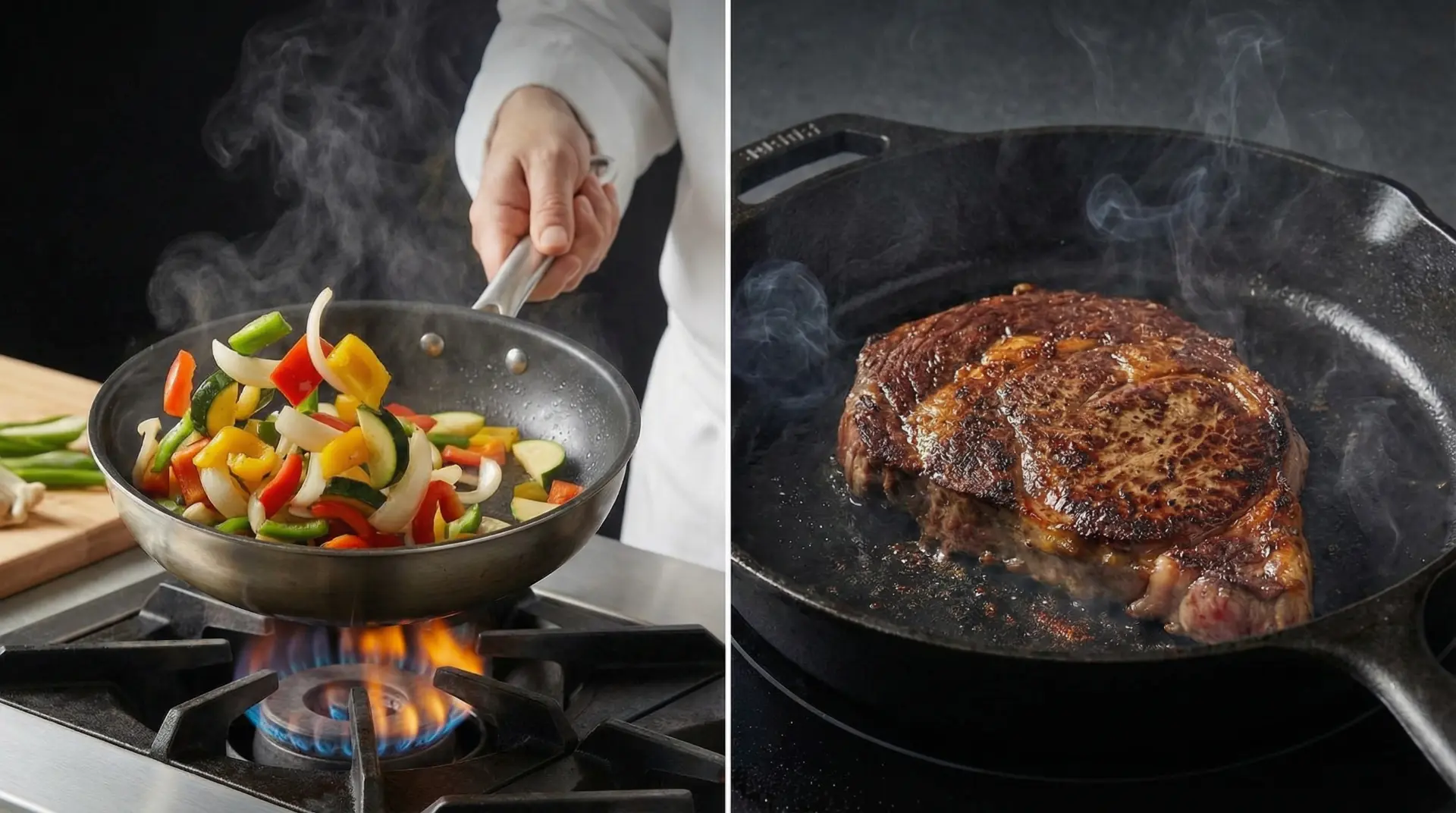
Definitions: sauté vs sear (simple + accurate)
Searing is “contact browning.” You put a larger piece of food (often protein) into a hot pan and leave it alone long enough to build a browned crust. The goal is Maillard browning + texture: deep flavor, crispy edges, and a surface that doesn’t taste boiled. Movement is minimal because the crust needs uninterrupted contact and time.
Sautéing is “fast cooking with movement.” Food is cut smaller and cooked in a hot pan with frequent stirring/tossing. The goal is even cooking and controlled browning—not a thick crust. Sautéing shines for vegetables, sliced proteins, aromatics, and anything you want cooked through quickly without developing a hard sear. If you treat sauté like sear (no movement), it can burn unevenly. If you treat sear like sauté (too much movement), it stays pale and steams.
Heat level and movement (why it matters)
Heat + movement decide whether you brown, steam, or burn. Searing needs higher heat and stillness so moisture can evaporate at the surface and browning can take over. Sautéing needs moderately high heat and movement so small pieces cook evenly and don’t scorch on one side. The same pan can do both, but the rules change the moment you change the goal.
The most common fail is “I tried to sear but it steamed.” That’s almost always one of three things: the pan wasn’t hot enough, the surface was wet, or the pan was crowded. Crowding is brutal because moisture has nowhere to go—steam gets trapped, temperature drops, and food boils in its own water. If you want a crust, give each piece space and keep it still. If you want sauté speed, still avoid crowding—just enough room to move food without trapping steam.
Best foods for each (meat, veg, aromatics)
Use searing for steaks, chops, chicken thighs/skin-on pieces, burgers, scallops, tofu slabs, and any time you want a strong browned exterior. Searing is also step one for pan sauces because it creates fond—those browned bits that become flavor once you deglaze. If your main goal is “deep crust without overcooking,” go deeper in pan-searing.
Use sautéing for sliced chicken, shrimp, chopped vegetables, mushrooms, onions, peppers, and weeknight stir-fries where speed matters. Aromatics (garlic, ginger, herbs) are usually sautéed briefly at controlled heat—because they burn fast. A helpful mental shortcut: searing is for “one big surface” you want browned; sautéing is for “many small pieces” you want evenly cooked. If you need your vegetables browned instead of soft and watery, roasting may be the better move—see roasting vegetables.
Pan choice and oil choice (quick rules)
For searing, choose pans that handle high heat and hold temperature: stainless steel, cast iron, or carbon steel. These pans stay hot when food hits the surface (less temperature crash), which helps browning happen before the food releases a bunch of liquid. Nonstick can sear lightly, but it’s not ideal for deep crust, and many nonstick coatings have lower heat limits—plus you won’t build fond for sauces.
For sautéing, stainless, carbon steel, and nonstick all work—it depends on the food. Nonstick is great for delicate items and quick aromatics; stainless is great when you want light browning and don’t mind managing sticking; carbon steel is a strong all-around option once seasoned. Oil choice is about heat tolerance and flavor. For higher heat, use neutral oils (avocado, canola, grapeseed). For medium heat and flavor, olive oil can work—just don’t push it until it smokes. Butter is a finishing fat or medium-heat sauté fat; for searing, combine oil + butter later or you’ll burn the milk solids before the crust develops.
Common fails (steaming, burning garlic, no browning)
Fail 1: “It’s steaming instead of browning.”
Your pan is too cool, your food is wet, or your pan is crowded. Fix: preheat longer, pat food dry, and cook in batches. For proteins, don’t move them—let the crust form and the food will release more easily. If you’re trying to build a sauce, make sure you get real browning first; then deglaze and reduce. (Deglazing + reducing sauce is the clean workflow.)
Fail 2: “My garlic burns instantly.”
Garlic burns fast because it’s small and sugary. Fix: lower heat, add garlic later, or push it to the side of the pan where it’s not getting direct full heat. If you’re searing first, add garlic after you reduce heat or after you deglaze—garlic will taste sweet and aromatic instead of bitter and sharp.
Fail 3: “No crust / gray meat.”
Usually too much movement, not enough heat, or a wet surface. Fix: dry the surface, use a hot pan, and leave it alone. If the cut is thick, use the reliable method: sear, then finish gently (oven or lower heat) so you get crust + a juicy center.
Frequently Asked Questions
Can you sauté in a cast iron pan?
Yes—cast iron can sauté well, especially once seasoned. The main difference is responsiveness: cast iron changes temperature slowly, so it’s forgiving for searing but less precise for delicate, fast sautéing. If you add a lot of cold food at once, the pan may recover slowly, so avoid crowding and cook in smaller batches.
Why does food stick when I try to sear?
Sticking usually happens when the pan isn’t hot enough, the surface is wet, or you’re flipping too early. A proper sear forms a crust, and that crust releases more easily. Preheat the pan, dry the food, use enough oil, then wait—once browned, it will naturally loosen when it’s ready to flip.
Is sautéing the same as stir-frying?
They’re similar, but stir-frying is usually hotter and faster with more constant motion, often in a wok with very high heat and small pieces. Sautéing is a broader pan technique with controlled heat and movement. The shared rule is the same: don’t overcrowd, or you’ll trap steam and lose browning.
Conclusion
Searing is stillness for crust. Sautéing is movement for speed and evenness. Once you pick the right technique—and stop crowding the pan—browning becomes predictable, aromatics stop burning, and food tastes less “boiled.” This one distinction fixes a lot of kitchen chaos.
Next Step: Back to Master Techniques
Latest posts
About