Chicken Stock for Better Soups and Sauces
Chicken stock is one of the most useful foundations in cooking because it gives soups, sauces, rice, grains, braises, and gravies more body and flavor. Good stock is not just chicken-flavored water. It comes from bones, collagen, aromatics, gentle simmering, and enough time for everything to become useful.
Once you understand how chicken stock works, you can make better velouté, pan sauce, gravy, soup, and risotto without relying on flat boxed broth every time. For the full sauce-building framework behind stocks, roux, emulsions, pan sauces, and flavor balance, start with the main sauces and foundations guide.

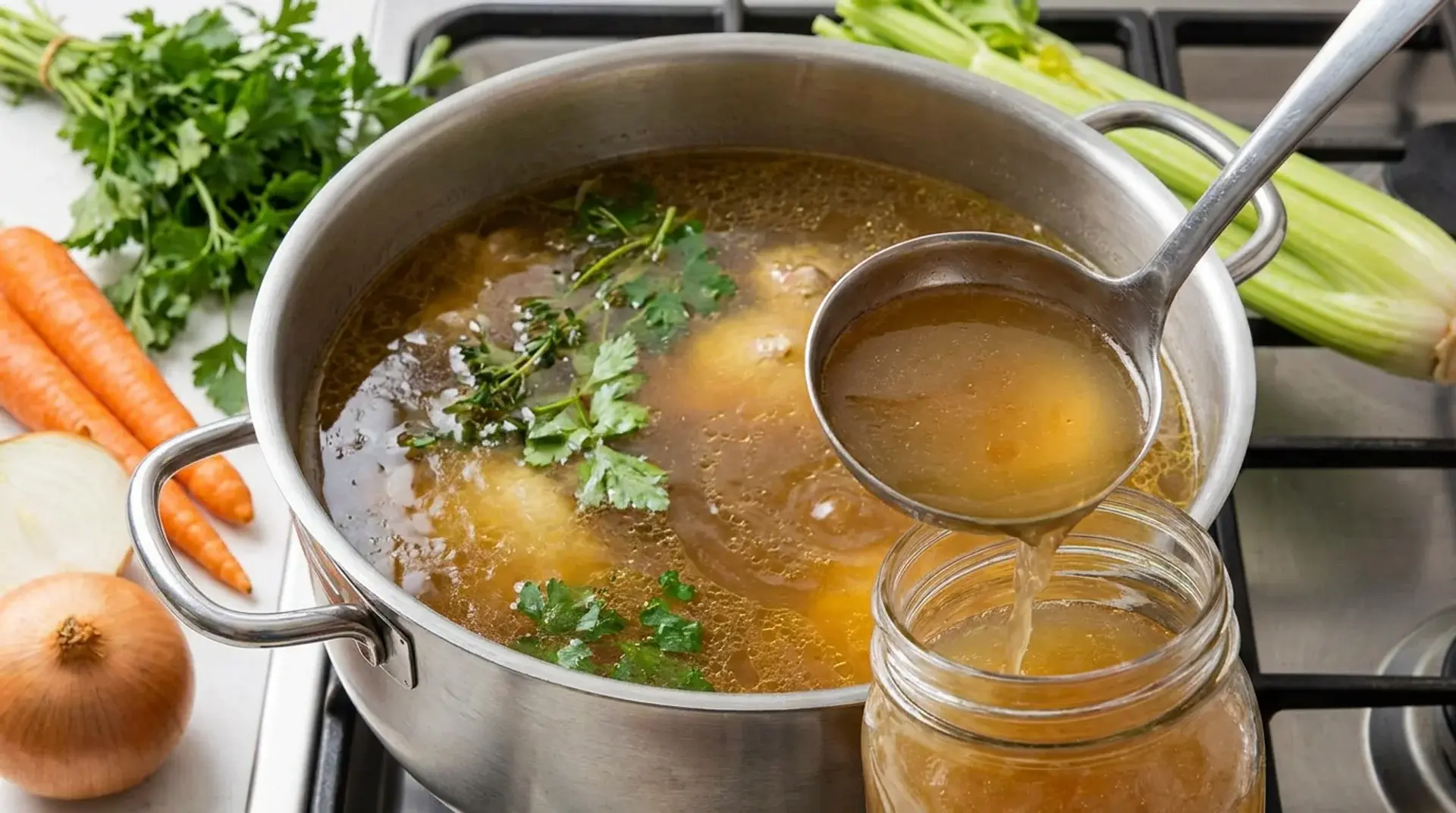
What makes chicken stock different from broth?
Chicken stock and chicken broth are similar, but they are not exactly the same. Chicken stock is usually made with bones, cartilage, skin, aromatics, and water. Chicken broth is often made with more meat and is usually seasoned to be sipped or served as-is. Stock is more of a cooking foundation, while broth is often closer to a finished liquid.
The biggest difference is body. Stock made with bones and connective tissue can develop gelatin, which gives it a richer mouthfeel and helps sauces feel more complete. When chilled, a strong chicken stock may even jiggle slightly. That is a good sign. It means collagen from the bones and joints has converted into gelatin, giving the stock structure instead of just flavor.
Broth can still be delicious, especially if it is made with meat and seasoned well. But because broth is often salted more heavily, it can be less flexible for reduction. If you reduce salty broth into a sauce, the salt becomes concentrated quickly. Stock is usually kept lightly seasoned or unsalted so you can reduce it, build sauces with it, and adjust salt later.
For home cooks, the practical rule is simple: use broth when you want something ready to drink or serve, and use stock when you want a foundation for cooking. Stock gives you more control in sauces, soups, braises, gravies, and reductions because you can shape the final seasoning yourself.
Why bones and collagen matter in chicken stock
Bones and collagen matter because they create the body that makes chicken stock feel rich instead of watery. Chicken bones, joints, wings, feet, backs, necks, skin, and cartilage all contain connective tissue. As the stock simmers, some of that collagen breaks down into gelatin. Gelatin gives the finished liquid a subtle thickness, a round mouthfeel, and better sauce-building power.
This is why a stock made only from boneless chicken meat can taste good but feel thin. Meat contributes flavor, but bones and connective tissue contribute structure. The best chicken stock usually uses a mix: bones for body, some meat or roasted pieces for flavor, and aromatics for depth. Wings, backs, necks, and feet are especially useful because they bring a lot of collagen.
Roasting the bones first changes the flavor. Raw bones make a lighter, cleaner stock that works well for chicken soup, velouté, and delicate sauces. Roasted bones make a darker, deeper stock with more savory flavor. That can be excellent for gravy, rich soups, braises, and deeper pan sauces, but it may be too strong for lighter applications.
Collagen extraction takes time, but boiling hard is not the answer. A gentle simmer is better because it pulls flavor and gelatin into the water without making the stock cloudy or harsh. If you want to use stock directly in a sauce, a gelatin-rich stock is especially helpful in velouté sauce with stock and roux, where the stock is the main flavor and body builder.
Best vegetables and aromatics for chicken stock
The best vegetables and aromatics for chicken stock are simple: onion, carrot, celery, parsley stems, thyme, bay leaf, and peppercorns. These ingredients build a clean savory background without taking over. Garlic can work too, but use it carefully if you want a neutral stock. Too much garlic, rosemary, clove, or strong herb flavor can make the stock less flexible later.
Onion brings sweetness and savory depth. Carrot adds gentle sweetness and color. Celery adds a clean vegetal note. Parsley stems add freshness without wasting leaves. Thyme and bay leaf add subtle herbal structure. Peppercorns add mild warmth. Together, these ingredients create a stock that tastes complete but still adaptable.
Avoid cruciferous vegetables like broccoli, cabbage, cauliflower, Brussels sprouts, and kale stems in a neutral chicken stock. They can turn sulfurous or bitter during long simmering. Be careful with bell peppers, strong herbs, and too many onion skins too. They can dominate the flavor or make the color muddy. A stock should support the dish, not announce every scrap that went into it.
Cut aromatics into large pieces so they can simmer without breaking down too quickly. Add them early for a rounder background flavor, or add more delicate herbs later if you want a fresher note. Do not overthink it. A dependable chicken stock does not need twenty ingredients. It needs good bones, clean aromatics, water, gentle heat, and time.
How long to simmer chicken stock
Chicken stock usually needs about 3 to 6 hours of gentle simmering, depending on the bones, size of the pot, and how concentrated you want the final liquid. A lighter stock can be ready closer to 3 hours. A richer stock with more bones, wings, backs, or feet can go longer. The goal is to extract flavor and gelatin without boiling the stock aggressively.
Gentle simmering means small bubbles, not a rolling boil. A hard boil can make the stock cloudy, break ingredients apart, and create a rougher flavor. It can also emulsify fat into the liquid, which makes the stock harder to clarify and skim. Low and steady is better. You want movement, but not chaos.
When to skim chicken stock
During the first hour, foam and impurities may rise to the surface. Skim them off with a spoon or ladle if you want a cleaner stock. You do not need to obsess over every bubble, but removing the main foam helps the stock taste and look cleaner.
When chicken stock is done
Chicken stock is done when it tastes savory, smells full, and has enough body to feel useful. The bones may look spent, the vegetables may look soft, and the liquid should taste like a cooking foundation. If it tastes weak, strain it and reduce the liquid further, or keep simmering if the ingredients still have flavor to give.
How to store, freeze, and use chicken stock
To store chicken stock safely and keep the flavor clean, strain it first, then cool it quickly. Pour the stock through a fine mesh strainer into a clean container. Discard the spent bones and vegetables. If you want a clearer stock, avoid pressing hard on the solids because that can push cloudy particles into the liquid.
Cool stock in shallow containers so it drops temperature faster. Once chilled, the fat will rise and firm up on top. You can remove that fat for a cleaner stock, or keep a little if you want more richness. Refrigerated chicken stock is best used within a few days. For longer storage, freeze it in practical portions.
Freezing stock in 1-cup, 2-cup, or quart portions works well for soups and braises. Freezing some in ice cube trays is especially useful for quick pan sauces, reheating leftovers, loosening grains, or adding flavor to vegetables. Once frozen, transfer the cubes to a freezer bag or container so they are easy to grab as needed.
Chicken stock can be used anywhere you want savory depth: soups, risotto, rice, grains, beans, braises, gravy, velouté, pan sauces, casseroles, and vegetable dishes. It is especially useful when building a sauce from browned bits in a pan. For that method, pan sauce basics shows how stock, fond, reduction, butter, acid, and seasoning come together quickly.
Frequently Asked Questions
What bones are best for chicken stock?
The best bones for chicken stock are wings, backs, necks, carcasses, and feet because they contain connective tissue and collagen. A mix of bones, cartilage, skin, and some meat gives the best balance of flavor and body. Feet are especially helpful if you want a gelatin-rich stock.
Should chicken stock be salted?
Chicken stock should usually be lightly salted or unsalted if you plan to use it for sauces, reductions, and cooking. Salt becomes more concentrated as stock reduces. Keeping stock low-salt gives you more control later, especially for velouté, gravy, pan sauces, soups, and braises.
Why did my chicken stock turn cloudy?
Chicken stock often turns cloudy from boiling too hard, stirring aggressively, pressing solids while straining, or letting fat emulsify into the liquid. Cloudy stock is usually still usable, especially for soups and sauces. For clearer stock, keep a gentle simmer, skim foam, and strain without pressing the solids.
Conclusion
Chicken stock is one of the simplest ways to make everyday cooking taste deeper and more complete. Bones, collagen, aromatics, and gentle simmering create a foundation that can support soups, sauces, gravies, braises, grains, and vegetables. The better the stock, the less you have to force flavor later.
Keep the process clean and controlled: use bones with connective tissue, choose simple aromatics, simmer gently, season lightly, strain carefully, and freeze portions you will actually use. A good batch of chicken stock turns into many better meals.
Latest posts


About