Velouté Sauce With Stock and Roux
Velouté sauce is one of the easiest classic sauces to understand once you already know the basic roux method. Instead of thickening milk like béchamel, velouté thickens stock, which gives the sauce a lighter, more savory flavor and makes it useful for chicken, fish, veal, vegetables, and gravy-style sauces.
The real skill is learning how stock quality, roux thickness, simmering, and seasoning shape the final sauce. For the full cooking framework behind stocks, roux, emulsions, pan sauces, and flavor balance, start with the main sauces and foundations guide.

What is velouté sauce?
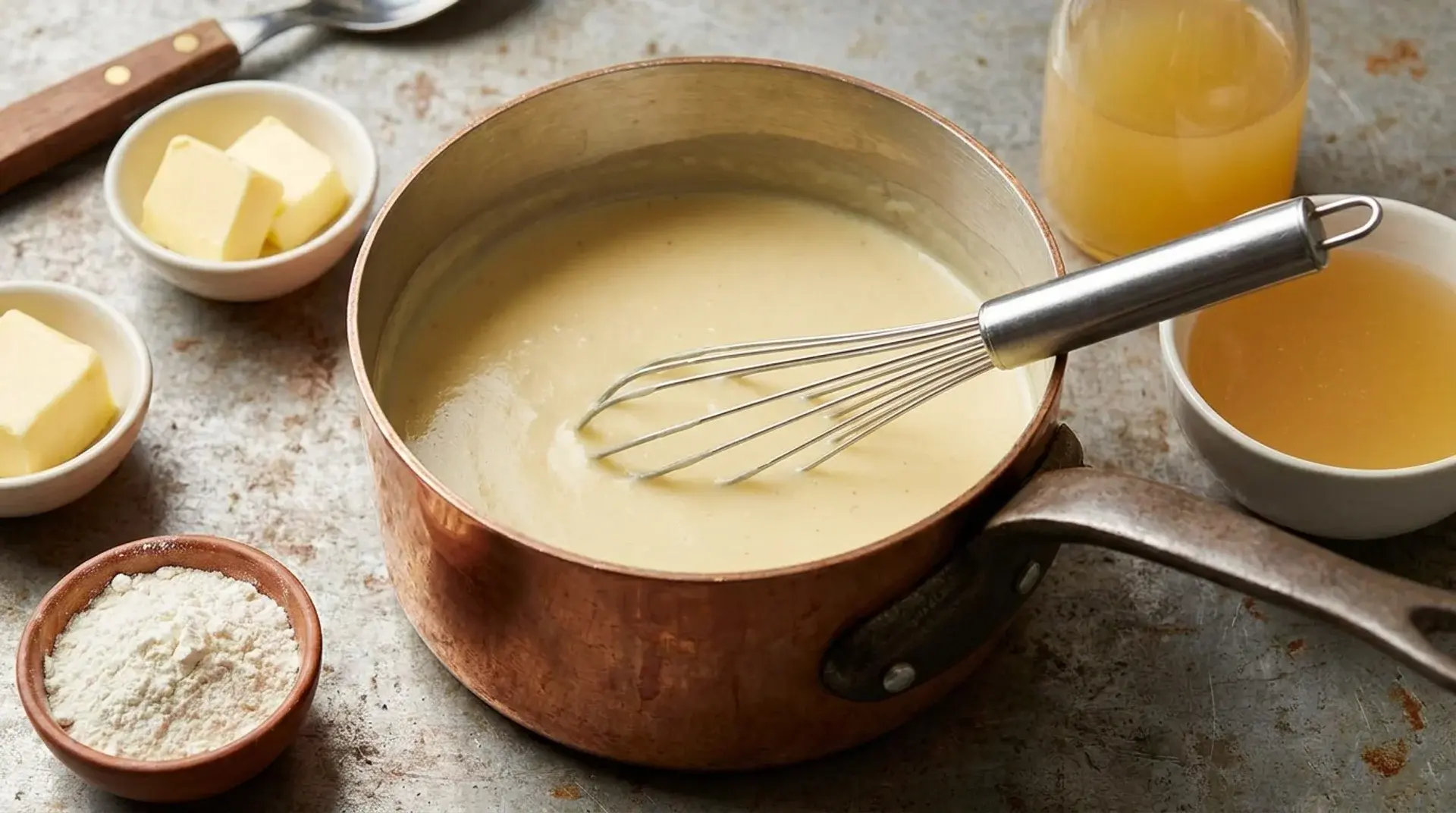
Velouté sauce is a classic French mother sauce made from stock and roux. The name comes from the French word for velvety, which makes sense because the goal is a smooth, silky sauce with enough body to coat food without feeling heavy. It is usually made with light stock, such as chicken stock, fish stock, or veal stock, depending on what the sauce will be served with.
The basic method is straightforward: cook butter and flour together into a pale roux, then whisk in warm stock until the sauce thickens. From there, the sauce is simmered gently so the flour fully hydrates, the texture smooths out, and the stock flavor becomes more integrated. The finished sauce should be glossy, savory, and pourable, not pasty or gluey.
Velouté is considered a mother sauce because it acts as a foundation for other sauces. A chicken velouté can become a mushroom sauce, herb sauce, cream sauce, white wine sauce, or gravy-style sauce. A fish velouté can become a seafood sauce. A veal velouté can become a more refined meat sauce. The base stays simple, then the final flavor is built through reduction, seasoning, cream, wine, herbs, mushrooms, aromatics, or acid.
For home cooks, velouté is useful because it teaches how much stock quality matters. If the stock tastes weak, the sauce will taste weak. If the stock has body, aroma, and clean seasoning, the sauce starts from a much better place.
Velouté vs béchamel: what’s the difference?
The main difference between velouté and béchamel is the liquid. Velouté uses stock, while béchamel uses milk. Both sauces usually start with a pale roux made from butter and flour, and both rely on the same basic thickening process. But because the liquid is different, the flavor, weight, and best uses are different too.
Béchamel is creamy, mild, and dairy-based. It is the foundation for cheese sauces, cream sauces, gratins, lasagna, casseroles, and baked pasta dishes. Velouté is lighter and more savory because it gets its character from stock. It works better when you want a sauce that supports chicken, fish, veal, vegetables, or pan juices without adding a strong dairy flavor.
The texture can be similar, but the eating experience is not the same. Béchamel feels rounder and richer because milk brings dairy sweetness and fat. Velouté feels cleaner and more flexible because stock brings meat, fish, or vegetable flavor. If you make both with the same roux ratio, the béchamel may taste softer while the velouté may taste more directly savory.
The mistake is treating them as interchangeable. A cheese sauce wants béchamel because milk supports the cheese. A poultry gravy or mushroom sauce often wants velouté because stock keeps the flavor connected to the dish. If you want to compare the roux method side by side, the béchamel roux ratio guide is the clearest place to see how milk changes the same thickening foundation.
The basic velouté ratio
The basic velouté ratio is similar to a medium béchamel: about 2 tablespoons butter, 2 tablespoons flour, and 1 cup stock. This creates a sauce that is thick enough to coat a spoon but still loose enough to pour. It is a reliable starting point for chicken velouté, fish velouté, veal velouté, and simple stock-based sauces.
For a thinner velouté, use less roux or more stock. This works well when the sauce will be reduced later or served lightly over delicate foods. For a thicker velouté, use more roux or simmer the sauce longer to concentrate it. This can work for gravy-style sauces or dishes where you want more cling, but too much roux can make the sauce feel heavy or pasty.
The best approach is to start with a medium ratio, then adjust based on the final use. If the sauce is going under fish or vegetables, keep it lighter. If it is going with roasted chicken, mushrooms, or a heartier dish, a slightly thicker texture may work better. If you plan to add cream, wine, lemon juice, or pan drippings, leave room for those ingredients so the sauce does not become too thick or too intense.
Simmering matters after the stock is added. The flour needs time to fully thicken the liquid and lose any raw flavor. Keep the heat gentle and stir often so the sauce does not scorch or thicken unevenly. A good velouté should taste like a smooth, concentrated version of the stock, not like flour suspended in broth.
Why stock quality changes the final sauce
Stock quality changes velouté because stock is the main flavor of the sauce. In béchamel, milk creates a mild base that can be shaped with cheese, nutmeg, mustard, onion, or herbs. In velouté, the stock carries the savory identity from the beginning. Weak stock makes weak velouté. Salty stock can make the finished sauce too salty after reduction. Cloudy or muddy stock can make the sauce taste dull.
Good stock gives velouté body, aroma, and depth. Collagen-rich stock can create a more luxurious mouthfeel because gelatin adds subtle texture. Aromatics like onion, celery, carrot, parsley, thyme, bay leaf, or peppercorns can give the sauce a rounded flavor without making it taste busy. The stock should taste clean and useful before it ever touches the roux.
Salt is the part to watch carefully. If the stock is already heavily salted, reducing the sauce can make it overpowering. Use lightly salted or unsalted stock when possible, then season the finished sauce after it thickens and reduces. This gives you more control and prevents the sauce from becoming harsh.
Homemade stock is ideal, but a good store-bought stock can work if it tastes clean and not too salty. If the stock tastes thin, simmer it down a little before making the sauce, or strengthen the final velouté with aromatics, mushroom, wine, cream, herbs, lemon, or pan juices. For a deeper foundation, learn how bones, collagen, simmering, and aromatics work in chicken stock.
How to turn velouté into finished sauces
Velouté becomes a finished sauce when you add direction. The base sauce is intentionally simple: stock, roux, heat, and seasoning. To make it feel complete, you usually add one or more finishing elements, such as cream, wine, lemon juice, herbs, mushrooms, mustard, pan drippings, roasted garlic, shallot, or a small amount of butter.
For chicken, a velouté can become a simple gravy with pan drippings and extra seasoning. It can become a mushroom chicken sauce with sautéed mushrooms and herbs. It can become a cream sauce with a splash of cream and a little lemon. For fish, a velouté can move toward white wine sauce, lemon herb sauce, or seafood sauce. For vegetables, it can become a light herb sauce or a creamy base for a casserole.
The sequence matters. Add wine or other alcohol early enough to cook off the raw edge. Add cream after the sauce has thickened and reduced enough to taste concentrated. Add lemon juice or vinegar near the end so the brightness stays clear. Add delicate herbs at the end so they do not turn muddy. Add butter at the end if you want more gloss and richness.
The key is to finish with balance. Velouté can taste flat if it has body but not enough seasoning or acid. It can taste heavy if it has cream but no brightness. It can taste thin if the stock is weak or the sauce is under-reduced. Taste the sauce before serving and adjust salt, acid, fat, and texture until it feels connected to the food.
Frequently Asked Questions
What is velouté sauce made of?
Velouté sauce is made from light stock and roux. The roux is usually butter and flour cooked together, then chicken, fish, or veal stock is whisked in and simmered until smooth. The sauce can then be finished with cream, wine, herbs, mushrooms, lemon, or pan juices.
Is velouté the same as gravy?
Velouté is not exactly the same as gravy, but it can become gravy-style sauce. Velouté is a mother sauce made from stock and roux. Gravy often uses pan drippings, stock, roux, flour, or starch. A chicken velouté finished with pan drippings can taste very close to a refined gravy.
Why does my velouté taste bland?
Velouté tastes bland when the stock is weak, the sauce is under-seasoned, or it has not reduced enough. Use a flavorful stock, simmer the sauce until it has body, then adjust salt and acidity at the end. A little lemon, wine, herbs, cream, or pan drippings can also help finish the flavor.
Conclusion
Velouté sauce is a simple but powerful foundation: stock thickened with roux until it becomes smooth, savory, and silky. The method is close to béchamel, but the flavor is lighter and more stock-driven, which makes it useful for chicken, fish, veal, vegetables, and gravy-style sauces.
The best velouté starts with good stock, a properly cooked roux, gentle simmering, and careful seasoning. Once the base is right, you can turn it into finished sauces with cream, wine, herbs, mushrooms, lemon, pan drippings, or butter.
Next Step: Learn how chicken stock builds better sauces
Latest posts


About