Mother Sauces Explained for Home Cooks
A mother sauces overview makes classic sauce-making feel a lot less intimidating. Instead of memorizing dozens of sauces, you learn the five foundations behind them: béchamel, velouté, espagnole, hollandaise, and tomato sauce. Each one teaches a different way to build flavor, body, texture, and balance.
Once you understand the mother sauces, cream sauces, gravies, brown sauces, butter sauces, and tomato-based sauces become easier to recognize and adjust. For the full framework behind stocks, roux, emulsions, pan sauces, vinaigrettes, and seasoning balance, start with the main sauces and foundations guide.

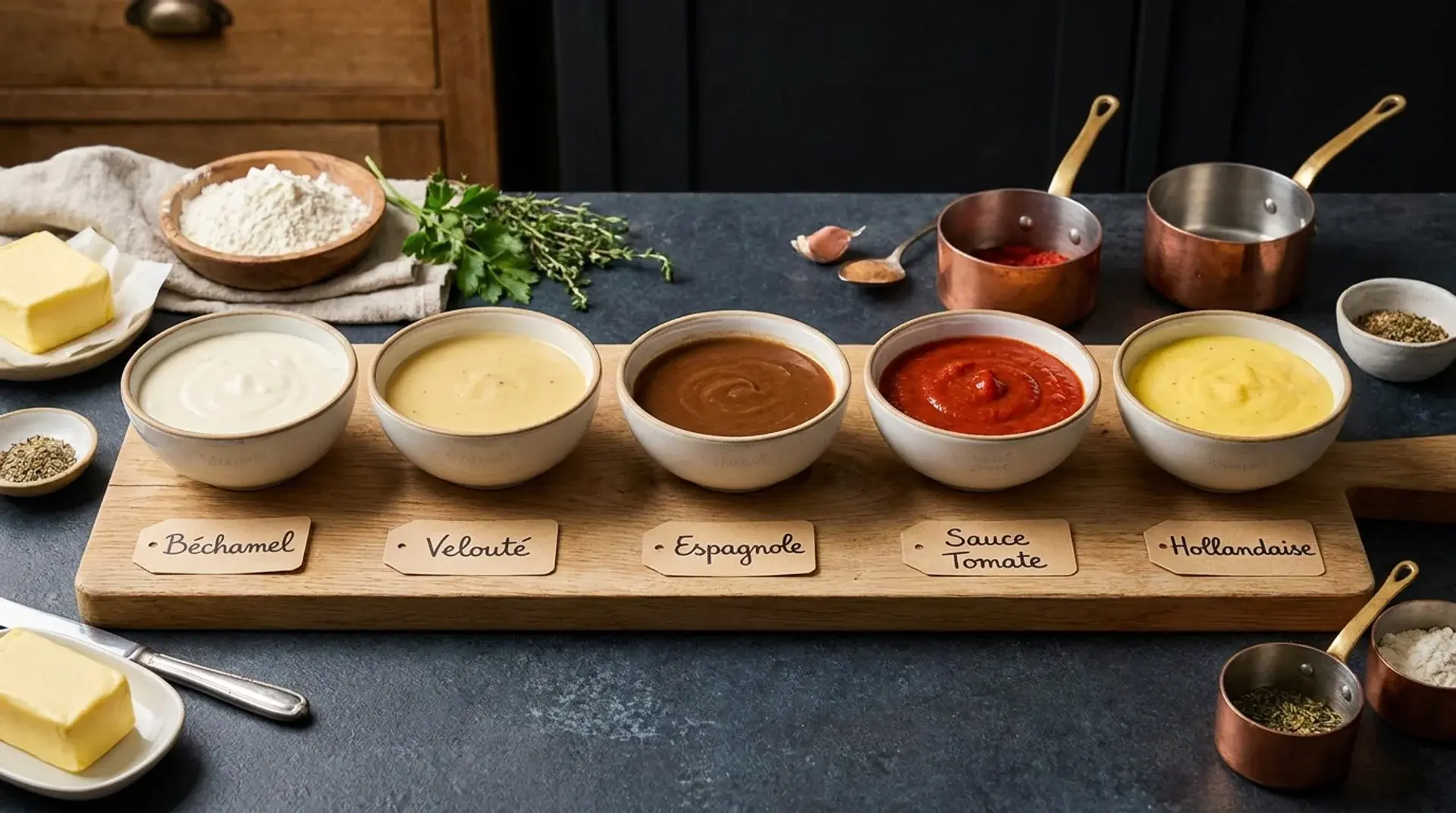
What are the five mother sauces?
The five mother sauces are béchamel, velouté, espagnole, hollandaise, and tomato sauce. They are called mother sauces because they act as base sauces that can be turned into many other sauces. Once you know the foundation, you can add cheese, herbs, wine, cream, mustard, stock, aromatics, acid, or other ingredients to create a more specific finished sauce.
Béchamel is a white sauce made from milk thickened with a pale roux. It is the base for cheese sauce, mornay sauce, cream sauce, and many baked dishes. Velouté is similar in structure, but it uses light stock instead of milk. That makes it useful for chicken, fish, veal, gravy-style sauces, and lighter savory sauces.
Espagnole is a brown sauce made with brown stock, browned roux, aromatics, and often tomato product. It is deeper, darker, and more concentrated than béchamel or velouté. Hollandaise is different because it is an emulsion, not a roux-thickened sauce. It uses egg yolks, butter, lemon, and gentle heat to create a rich, silky texture. Tomato sauce is built from tomatoes, aromatics, fat, seasoning, and cooking time.
The key thing to understand is that each mother sauce teaches a different sauce method. Béchamel and velouté teach roux thickening. Espagnole teaches brown sauce development. Hollandaise teaches warm emulsions. Tomato sauce teaches acidity, simmering, and flavor balance.
Why mother sauces still matter for home cooks
Mother sauces still matter for home cooks because they make sauce-making easier to understand. You do not need to cook like a restaurant chef every night, and you definitely do not need to memorize every classical variation. The real value is that mother sauces give you a practical map. They show you how liquid, fat, thickening, heat, seasoning, and balance come together.
Once you understand béchamel, you can make cheese sauce, cream sauce, lasagna filling, gratins, and casseroles with more confidence. Once you understand velouté, gravy and stock-based sauces become less mysterious. Once you understand espagnole, you can see why browned ingredients, stock, and reduction create deeper flavor. Once you understand hollandaise, you understand why emulsions break and how gentle heat protects texture. Once you understand tomato sauce, you learn how acidity, sweetness, salt, fat, and time affect flavor.
These sauces also help you troubleshoot. If a roux sauce tastes pasty, the flour may not have cooked enough. If a stock-based sauce tastes weak, the stock may be thin or the sauce may need reduction. If hollandaise breaks, the fat may have been added too quickly or the heat may have gone too high. If tomato sauce tastes sour, the balance may need salt, fat, sweetness, or simmering time.
The point is not to be traditional for tradition’s sake. The point is to cook with more control. Mother sauces give you a foundation you can actually use, whether you are making mac and cheese, gravy, eggs Benedict, pasta sauce, or a weeknight pan sauce.
Béchamel, velouté, espagnole, hollandaise, and tomato sauce compared
Béchamel, velouté, espagnole, hollandaise, and tomato sauce all create body and flavor in different ways. Béchamel starts with butter and flour cooked into a pale roux, then milk is whisked in until the sauce becomes smooth and creamy. It is mild, rich, and adaptable, which is why it works so well as a base for cheese sauce and creamy baked dishes.
Velouté also uses roux, but it swaps milk for stock. That one change makes the sauce more savory and less dairy-heavy. A chicken velouté uses chicken stock, a fish velouté uses fish stock, and a veal velouté uses veal stock. The quality of the stock matters because the stock is the main flavor, not just the liquid. If you want to understand the roux side first, start with the béchamel roux ratio, because it is one of the clearest ways to learn how fat, flour, and liquid become sauce.
Espagnole is darker and more intense. It uses brown stock, browned roux, aromatics, and tomato product to create a deeper sauce that can become demi-glace or other brown sauces. Hollandaise is rich in a different way. It does not rely on flour or stock for body. Instead, egg yolks hold warm butter and lemon together in an emulsion. Tomato sauce is more flexible and familiar, built from tomatoes, aromatics, fat, seasoning, and simmering time.
A simple comparison helps: béchamel is milk and roux, velouté is stock and roux, espagnole is brown stock and brown roux, hollandaise is egg yolk and butter, and tomato sauce is tomatoes cooked into balance.
How mother sauces become small sauces
Mother sauces become small sauces when you add specific ingredients to change the flavor, texture, or purpose of the base. A mother sauce is the foundation. A small sauce is the finished variation. This is why one base method can turn into many different sauces without requiring a completely new technique every time.
Béchamel can become mornay sauce when cheese is added. It can become a mustard cream sauce with Dijon, or a soubise-style sauce with cooked onions. Velouté can become mushroom sauce, herb sauce, white wine sauce, or poultry gravy depending on the stock and additions. Espagnole can become demi-glace, bordelaise, mushroom brown sauce, or other rich meat sauces. Hollandaise can become béarnaise with tarragon and vinegar reduction, or Maltaise with orange. Tomato sauce can shift toward marinara, arrabbiata, vodka sauce, or meat sauce depending on the ingredients.
The practical lesson is that variation comes after structure. If the base sauce is thin, lumpy, greasy, broken, bland, sour, or scorched, the add-ins will not magically fix it. A good small sauce starts with a good foundation. Once the base has the right body and balance, the final flavor additions can actually shine.
This also makes cooking more efficient. Instead of learning every sauce as a separate recipe, learn the parent method. Then treat small sauces as controlled edits. Add cheese to a béchamel. Add herbs to a velouté. Add tarragon to hollandaise. Add acid and butter to a pan reduction. The method stays familiar, even when the flavor changes.
Which mother sauce should you learn first?
The best mother sauce to learn first is usually béchamel because it is simple, forgiving, and useful. It teaches roux, gradual liquid addition, whisking, heat control, and texture in one sauce. Those skills carry into cheese sauce, cream sauce, gravy, lasagna, casseroles, gratins, and other everyday dishes. It also uses common ingredients: butter, flour, milk, salt, and sometimes nutmeg, pepper, or cheese.
After béchamel, velouté is a natural next step because it uses the same thickening logic with stock instead of milk. This helps you see how the liquid changes the final sauce. If the stock is weak, the sauce tastes weak. If the stock is rich and well-seasoned, the sauce has more depth. Velouté is especially helpful for understanding gravy and lighter savory sauces.
Tomato sauce is probably the most familiar mother sauce, and it is worth learning early because it teaches balance. A good tomato sauce is not just tomatoes cooked down. It needs salt, fat, aromatics, acidity control, sweetness control, and enough time for the flavors to come together. Hollandaise is more technical because it can break or scramble if the heat gets away from you. Espagnole is usually the least beginner-friendly because it takes more time, deeper stock, and careful browning.
A good learning order is béchamel, tomato sauce, velouté, hollandaise, then espagnole. If you want a deeper brown sauce path, read espagnole brown sauce once you are comfortable with roux, stock, and reduction.
Frequently Asked Questions
What are the five mother sauces in order?
The five mother sauces are béchamel, velouté, espagnole, hollandaise, and tomato sauce. There is not one required learning order, but many home cooks should start with béchamel because it teaches roux and texture clearly. Tomato sauce and velouté are also practical early sauces to learn.
Why are they called mother sauces?
They are called mother sauces because they act as parent sauces for many smaller finished sauces. Once the base method is made, ingredients like cheese, herbs, wine, mustard, cream, stock, or aromatics can be added to create variations. The mother sauce provides the structure.
Which mother sauces use roux?
Béchamel, velouté, and espagnole traditionally use roux. Béchamel uses milk and a pale roux, velouté uses stock and roux, and espagnole uses brown stock with a darker roux. Hollandaise is an emulsion, and tomato sauce is usually thickened through cooking and reduction.
Conclusion
A mother sauces overview gives you a simple way to understand classic sauce-making without getting buried in culinary terminology. Béchamel, velouté, espagnole, hollandaise, and tomato sauce each teach a different foundation: roux, stock, browning, emulsion, acidity, reduction, and balance.
Once you understand the parent sauces, small sauces become easier to build and adjust. You can start with béchamel for creamy sauces, move into velouté for stock-based sauces, practice tomato sauce for acidity balance, then work toward hollandaise and espagnole as your technique gets stronger.
Next Step: Learn the béchamel roux ratio
Latest posts



About