Vinaigrette Ratio Explained for Better Dressings
The basic vinaigrette ratio is the difference between a dressing that tastes bright and balanced and one that tastes oily, sharp, or weirdly flat. Once you understand how oil, vinegar, mustard, salt, and sweetness work together, you can make a good dressing without needing a recipe every time.
Vinaigrette is also one of the easiest ways to understand sauce-building because it teaches fat, acid, seasoning, and emulsification in one small bowl. For the full cooking framework behind stocks, roux, emulsions, pan sauces, and flavor balance, start with the main sauces and foundations guide.

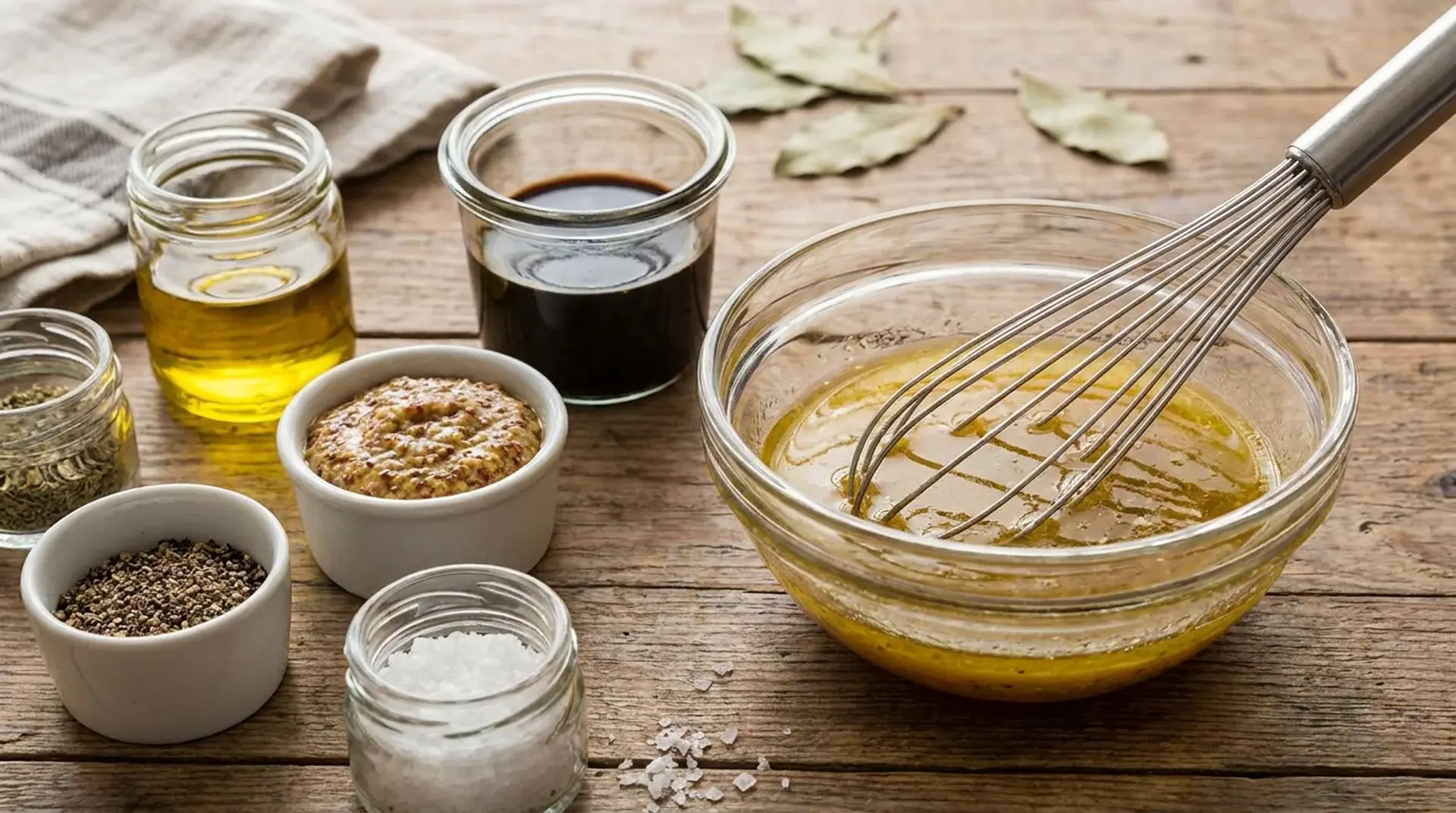
What is the basic vinaigrette ratio?
The basic vinaigrette ratio is 3 parts oil to 1 part vinegar or acid. That means 3 tablespoons of oil to 1 tablespoon of vinegar, or 3/4 cup oil to 1/4 cup vinegar if you are making a larger batch. This ratio gives you a classic dressing that tastes smooth, rich, and lightly tangy without letting the acid dominate.
That said, 3:1 is a starting point, not a law. Some salads need more brightness. Some vinegars are mild, while others are intense. Some greens are delicate, while others can handle a sharper dressing. A rich salad with cheese, nuts, avocado, roasted vegetables, or grains may need more acid to cut through the fat and starch. A tender lettuce salad may taste better with a softer, rounder vinaigrette.
A good vinaigrette usually has five parts working together: oil, acid, salt, an emulsifier, and optional flavor. Oil gives body and richness. Vinegar or lemon juice gives brightness. Salt makes the dressing taste clear instead of dull. Mustard helps the dressing hold together. Optional additions like honey, garlic, shallot, fresh herbs, spices, or citrus zest can shift the flavor without changing the basic structure.
The easiest way to build confidence is to start with the classic ratio, taste it, then adjust. If it tastes too sharp, add more oil or a small touch of sweetness. If it tastes too oily, add more acid and salt. If it tastes bland, it probably needs more salt before it needs more fancy ingredients.
Oil to vinegar ratio: 3:1 vs 2:1
The two most useful vinaigrette ratios are 3:1 and 2:1. A 3:1 ratio means 3 parts oil to 1 part vinegar. It is classic, mellow, and versatile. A 2:1 ratio means 2 parts oil to 1 part vinegar. It tastes brighter, sharper, and more modern. Neither one is automatically better. The right choice depends on what the dressing needs to do.
Use 3:1 when you want a dressing that feels smooth and balanced. It works well for delicate greens, simple side salads, and dressings made with stronger vinegars. Red wine vinegar, white wine vinegar, sherry vinegar, and some balsamic vinegars can be assertive, so a little extra oil can help soften the edge. A 3:1 vinaigrette also works well when the salad itself is already acidic from tomatoes, pickles, citrus, or fermented ingredients.
Use 2:1 when the salad needs more lift. This is helpful for grain bowls, roasted vegetables, rich toppings, hearty greens, and anything with cheese, nuts, bacon, avocado, or creamy ingredients. The extra acid keeps the dressing from feeling heavy and helps the whole dish taste fresher. Lemon juice also tends to work well in a 2:1 ratio because it can taste cleaner and less harsh than some vinegars.
The best habit is to taste the dressing with the food, not just from a spoon. A vinaigrette that tastes too sharp alone may taste perfect once it hits greens, grains, or roasted vegetables. If you want to understand this larger tasting logic, seasoning balance with salt, fat, acid, and sweetness explains how to adjust food by what it actually needs.
Why mustard helps vinaigrette stay together
Mustard helps vinaigrette stay together because it acts as an emulsifier. Oil and vinegar naturally separate because fat and water-based liquids do not want to mix permanently. When you whisk them together, they can look blended for a short time, but without help, the oil eventually rises and the vinegar settles. Mustard slows that separation and gives the dressing a smoother texture.
Dijon mustard is the most common choice because it blends easily and adds sharpness without taking over. Whole grain mustard works too, but it gives the dressing more texture and a stronger mustard presence. Even a small amount can help. For a basic vinaigrette, start with about 1 teaspoon Dijon mustard for every 1/4 cup vinegar, then adjust based on how much mustard flavor you want.
The order of mixing also matters. For the smoothest vinaigrette, whisk together the vinegar, mustard, salt, pepper, and any sweetener first. Then slowly drizzle in the oil while whisking. Adding the oil gradually helps it break into smaller droplets, which makes the dressing look thicker and more cohesive. You can also shake everything in a jar, which is less precise but very practical for everyday cooking.
Vinaigrette is usually a temporary or semi-stable emulsion, meaning it may still separate after sitting. That does not mean it failed. Just shake or whisk it again before using. Warm emulsions like hollandaise are more sensitive because heat, egg yolks, and butter have to stay in balance, so if you want the next level of emulsion practice, read the guide to hollandaise emulsion.
How to fix vinaigrette that tastes too sharp or too oily
If vinaigrette tastes too sharp, the acid is too dominant. The quickest fix is to whisk in more oil a little at a time. Start small, taste, then keep adjusting until the dressing feels smoother. If more oil makes it taste dull or heavy, add a small pinch of salt or a tiny amount of honey, maple syrup, sugar, or jam. Sweetness does not need to make the dressing sweet. It can simply round the acid.
If vinaigrette tastes too oily, it usually needs more acid, more salt, or both. Add vinegar or lemon juice in small amounts, then taste again. If the dressing still feels flat, add salt before adding more acid. Fat can mute flavor, so an oily dressing often tastes bland and greasy at the same time. Salt helps bring the flavor forward, while acid cuts through the weight.
If vinaigrette tastes bland, do not immediately add garlic, herbs, or more mustard. First check the salt. A vinaigrette with too little salt can taste like plain oil and vinegar sitting next to each other instead of a finished dressing. After salt, check acid. Then decide whether it needs sweetness, mustard, pepper, shallot, garlic, herbs, or citrus zest.
If vinaigrette tastes bitter, the issue may be the oil, mustard, citrus pith, burned garlic, or too much raw allium. Add a little sweetness, more acid, or a milder oil to soften it. If the bitterness is strong and unpleasant, it may be better to remake the dressing with a cleaner base rather than trying to bury it.
Easy vinaigrette variations for salads, grains, and vegetables
Once you know the basic vinaigrette ratio, variations become easy. Keep the structure steady, then change the acid, oil, sweetener, herbs, or aromatics. For a classic everyday vinaigrette, use olive oil, red wine vinegar, Dijon mustard, salt, pepper, and a small amount of honey. For a brighter lemon dressing, use olive oil, lemon juice, Dijon, salt, pepper, and lemon zest. For a softer dressing, use champagne vinegar or rice vinegar.
For salads with delicate greens, keep the dressing lighter and avoid too many heavy add-ins. A simple 3:1 vinaigrette with mild vinegar is usually enough. For hearty greens like kale, arugula, radicchio, or cabbage, use more acid, stronger seasoning, or a slightly more aggressive 2:1 ratio. These greens can handle sharpness, and many actually taste better when the dressing softens their bitterness or toughness.
For grain bowls, roasted vegetables, beans, or lentils, make the vinaigrette bolder. These foods absorb dressing and often need more salt and acid than lettuce does. Add minced shallot, garlic, herbs, citrus zest, chili flakes, tahini, yogurt, miso, or toasted spices depending on the dish. A dressing that tastes too intense on its own may be exactly right once it coats warm grains or roasted vegetables.
For richer ingredients like avocado, cheese, nuts, bacon, roasted squash, or fried toppings, lean brighter. Acid keeps the dish from feeling heavy. For very sharp ingredients like pickled onions, olives, capers, or feta, lean softer. The best variation is not the fanciest one. It is the one that balances what is already on the plate.
Frequently Asked Questions
What is the best vinaigrette ratio for salad?
The best vinaigrette ratio for salad is usually 3 parts oil to 1 part vinegar for a classic, balanced dressing. Use 2 parts oil to 1 part vinegar if the salad has rich toppings, hearty greens, grains, or roasted vegetables. Always taste the dressing with the food before making final adjustments.
Why does my homemade vinaigrette separate?
Homemade vinaigrette separates because oil and vinegar do not naturally stay mixed. Mustard helps slow separation, but most vinaigrettes are temporary emulsions. Whisk the vinegar, mustard, salt, and seasonings first, then slowly add the oil. If it separates later, just shake or whisk it again before serving.
How do you make vinaigrette less acidic?
To make vinaigrette less acidic, whisk in more oil a little at a time. If it still tastes sharp, add a small amount of honey, maple syrup, sugar, or jam to round the edge. Salt can also help the dressing taste more complete, so adjust seasoning before adding too many extra ingredients.
Conclusion
The vinaigrette ratio is simple once you understand what each ingredient is doing. Start with 3 parts oil to 1 part vinegar for a classic dressing, or use 2 parts oil to 1 part vinegar when you want something brighter. Then adjust with salt, mustard, sweetness, herbs, aromatics, or more acid based on what the salad actually needs.
A good vinaigrette should taste balanced, not random. If it is too sharp, soften it. If it is too oily, brighten it. If it is flat, season it. Once you get comfortable with that process, you are not just making salad dressing. You are learning one of the most useful sauce foundations in everyday cooking.
Next Step: Learn seasoning balance with salt, fat, acid, sweetness, and heat
Latest posts



About