Seasoning Balance for Better Flavor
Seasoning balance is the skill that helps you fix food when it tastes flat, harsh, bland, heavy, sour, bitter, or unfinished. Instead of adding random ingredients and hoping something works, you learn to taste what is missing and adjust with salt, fat, acid, sweetness, bitterness, or heat.
This is one of the most useful sauce and cooking skills because it applies to dressings, soups, sauces, vegetables, grains, meat, pasta, and leftovers. For the full framework behind sauces, stocks, roux, emulsions, and pan sauces, start with the main sauces and foundations guide.

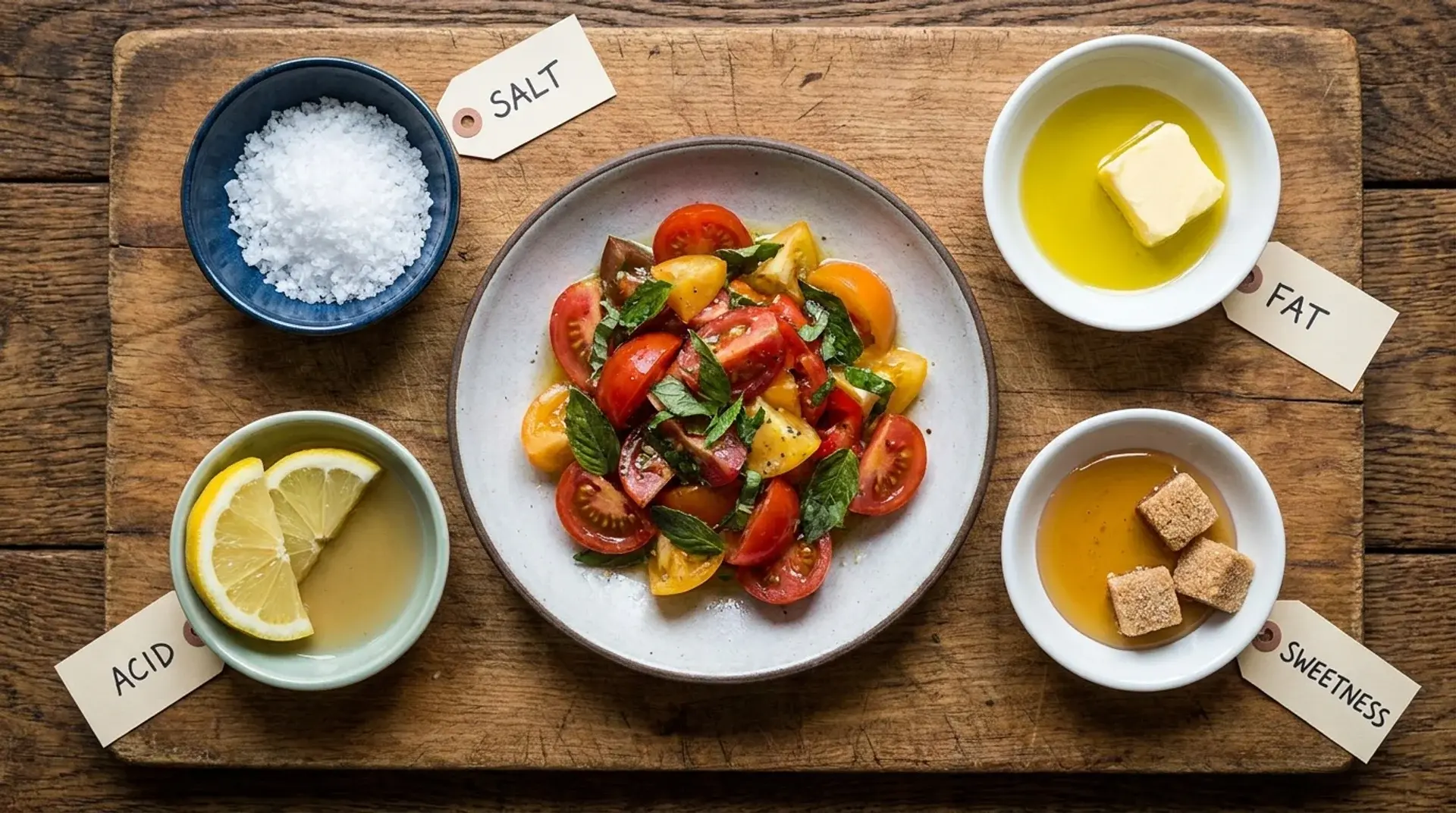
Why food tastes flat, sharp, bland, or heavy
Food usually tastes flat, sharp, bland, or heavy because one part of the flavor structure is out of balance. Flat food often needs salt or acid. Sharp food may need fat, sweetness, dilution, or more cooking time. Bland food may need salt before it needs more spices. Heavy food usually needs acid, freshness, bitterness, or heat to cut through richness.
The mistake is treating all bad flavor the same way. If something tastes wrong, most people add more salt, garlic, spice, butter, sugar, or sauce without identifying the actual problem. Sometimes that works by accident. Other times it makes the dish louder but not better. A flat soup becomes salty and still dull. A sour tomato sauce becomes sweet but still harsh. A rich cream sauce becomes heavier when what it needed was acid.
A better habit is to pause and name the flavor problem. Does the food taste muted, like the flavors are there but hidden? That usually points toward salt. Does it taste dull but already salty enough? Try acid. Does it taste too sharp or aggressive? Try fat, sweetness, or dilution. Does it taste rich but tiring? Add brightness or freshness. Does it taste thin? It may need reduction, body, or more concentrated flavor.
This is especially important with sauces because sauce touches every bite. A sauce that is slightly off can make the whole dish feel off. Once you learn to diagnose flavor, you can fix food more cleanly and stop overcorrecting.
How salt changes flavor
Salt changes flavor by making ingredients taste more like themselves. It does not just make food salty. In the right amount, salt makes tomato taste more tomato-like, chicken taste more savory, vegetables taste more vivid, and sauces taste more complete. When food tastes flat, muted, or oddly unfinished, salt is usually the first thing to check.
The key is to add salt gradually and taste after each addition. Salt works quickly, but it can also go too far quickly. Add a small pinch, stir well, wait a moment, then taste again. If the food suddenly tastes clearer, you were under-seasoned. If it starts tasting salty but still dull, salt is no longer the missing piece. That is when acid, fat, sweetness, or depth may be the better correction.
Salt also affects how other flavors show up. Acid can taste harsh when there is not enough salt. Sweetness can taste cloying when there is not enough salt. Fat can taste greasy when there is not enough salt or acid. Bitterness can feel more controlled when salt is present in the right amount. This is why seasoning at the end matters so much. The final salt level changes how the whole dish reads.
Be extra careful with reductions, stocks, cheese, soy sauce, miso, olives, capers, cured meat, and salted butter. These ingredients already bring salt, and sauces become saltier as water evaporates. Season lightly early, then make the final salt decision when the dish is close to finished.
How fat rounds out harshness
Fat rounds out harshness by softening sharp edges and creating a richer mouthfeel. Butter, olive oil, cream, cheese, egg yolk, coconut milk, tahini, nut butter, and rendered animal fat can all make food feel smoother and more complete. This is why a little butter can make tomato sauce taste less sharp, olive oil can make vinaigrette feel less aggressive, and cream can soften a spicy or acidic sauce.
Fat also carries flavor. Many aromatic compounds dissolve well in fat, which means ingredients like garlic, onion, chili, spices, herbs, and tomato paste often taste better when they are bloomed or cooked in fat before liquid is added. Fat gives those flavors somewhere to develop and spread. Without enough fat, a sauce can taste thin, raw, or harsh even if the ingredients are technically correct.
The risk is heaviness. More fat does not always mean better flavor. If a dish already feels rich, greasy, creamy, or coating, adding more fat may make it worse. In that case, the fix is usually acid, salt, freshness, bitterness, or heat. A rich hollandaise needs lemon. A buttery pan sauce may need vinegar. A creamy soup may need herbs or a squeeze of citrus.
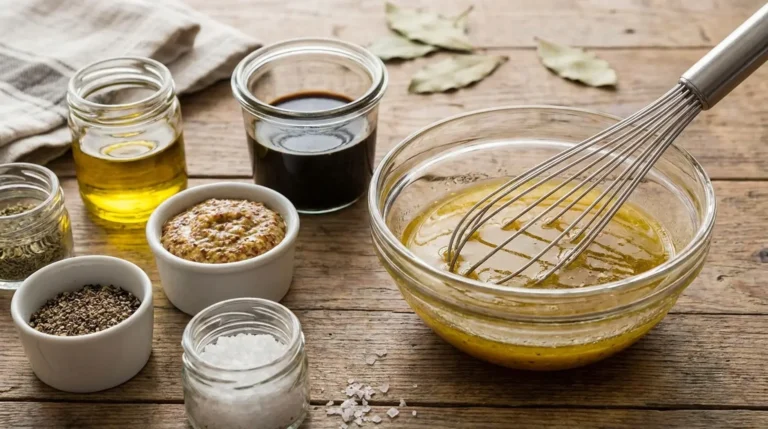
Fat is also central to emulsions, where it needs to be balanced with liquid, acid, and movement. A vinaigrette is the simplest example: oil brings richness, vinegar brings brightness, and mustard helps them hold together. For that practical structure, see the vinaigrette ratio guide.
How acid makes food taste brighter
Acid makes food taste brighter by adding lift, contrast, and freshness. Lemon juice, lime juice, vinegar, wine, tomato, yogurt, buttermilk, pickles, capers, fermented foods, and some fruits can all bring acidity. When a dish tastes dull, heavy, greasy, muddy, or overly rich, a small amount of acid can make the flavors feel more awake.
Acid is especially useful at the end of cooking. Long simmering can soften flavor and make a sauce taste round but slightly tired. A splash of vinegar or lemon juice near the end can restore brightness without changing the whole dish. This is why pan sauces, soups, beans, stews, roasted vegetables, and creamy sauces often taste better after a final acid adjustment.
The trick is to add acid in small amounts. Too much acid can make food sharp, sour, or thin. If that happens, you may need fat, sweetness, salt, dilution, or more cooking time to soften it. Acid should make the food taste more alive, not make your mouth tighten. Taste after each addition and stop when the dish feels clearer.
Tomato sauce is a perfect example of acid balance because tomatoes are naturally acidic, but the sauce still needs to taste rich and rounded. If the sauce tastes sour, the answer is not always sugar. It may need salt, olive oil, butter, simmering, or better aromatics. For that specific problem, read tomato sauce acidity balance.
How to balance sweetness, bitterness, and heat
Sweetness, bitterness, and heat are powerful balancing tools, but they need restraint. Sweetness rounds acidity, softens bitterness, and helps savory flavors feel fuller. Bitterness adds structure and prevents food from tasting too sweet, rich, or one-dimensional. Heat adds energy, contrast, and warmth. Used well, these elements make food more interesting. Used carelessly, they take over.
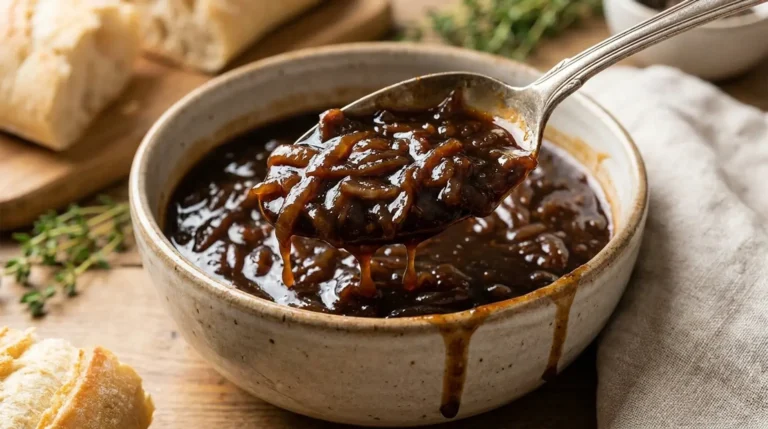
Sweetness does not have to mean making food sweet. A pinch of sugar in tomato sauce, a little honey in vinaigrette, caramelized onion in soup, roasted carrot in sauce, or maple in a glaze can round sharpness without turning the dish sugary. The goal is balance, not dessert. If you can clearly taste sweetness in a savory dish where it does not belong, you may have gone too far.
Bitterness can come from char, greens, coffee, cocoa, citrus peel, olive oil, herbs, spices, beer, or browned ingredients. A little bitterness can make food feel grown-up and complex. Too much bitterness can taste burnt, harsh, or medicinal. Mild bitterness can be balanced with salt, fat, acid, or sweetness. Burnt bitterness is harder to fix and often needs dilution or a restart.
Heat from chilies, pepper, ginger, mustard, horseradish, or hot sauce can bring movement to food. Heat works best when it has support from salt, fat, acid, and sometimes sweetness. If spicy food tastes harsh, add fat or sweetness. If it tastes muddy, add acid. If it tastes hot but bland, add salt. The goal is flavor with heat, not heat in place of flavor.
A simple tasting checklist for fixing food fast
A simple tasting checklist can keep you from overcorrecting. First, ask if the food tastes flat. If yes, add a small amount of salt, stir, and taste again. If it tastes clearer, keep going carefully. If it tastes salty enough but still dull, add acid. A squeeze of lemon, a splash of vinegar, or a little wine can wake it up.
Next, ask if the food tastes too sharp. Sharpness can come from acid, raw garlic, raw onion, alcohol, harsh tomatoes, or undercooked spices. Try fat, sweetness, dilution, or more cooking time depending on the dish. Butter, olive oil, cream, broth, water, or a pinch of sugar can all soften harshness when used carefully.
If food tastes heavy
Add acid, freshness, bitterness, or heat. Rich dishes often need lift, not more richness. Try lemon, vinegar, fresh herbs, pickled ingredients, black pepper, chili, bitter greens, or a fresher garnish.
If food tastes thin
The issue may be concentration or body. Reduce the liquid, add stock, use a thickener, finish with butter, or strengthen the base. Do not keep adding salt to watery food if what it really needs is reduction.
If food tastes almost right
Make the smallest adjustment possible. Food that is close usually needs a tiny amount of salt, acid, fat, or sweetness. Big corrections at the end can throw off the balance you already built.
Frequently Asked Questions
How do you fix food that tastes flat?
To fix food that tastes flat, add salt first in small amounts and taste again. If it tastes salty enough but still dull, add acid like lemon juice or vinegar. If the flavor is thin, reduce the liquid or add a stronger base instead of adding more seasoning.
How do you fix food that tastes too acidic?
To fix food that tastes too acidic, add fat, sweetness, dilution, or more cooking time depending on the dish. Butter, olive oil, cream, stock, sugar, honey, or cooked aromatics can soften sharpness. Add carefully and taste often so the food does not become heavy or sweet.
What is the difference between seasoning and flavoring?
Seasoning adjusts how clear and balanced food tastes, often with salt, acid, fat, sweetness, bitterness, or heat. Flavoring adds a specific taste, like garlic, herbs, spices, cheese, or smoke. If food tastes flat, it may need seasoning before it needs more flavoring ingredients.
Conclusion
Seasoning balance is the difference between adding more and adding what the food actually needs. Salt makes flavor clearer, fat rounds harshness, acid adds brightness, sweetness softens sharp edges, bitterness creates depth, and heat adds contrast. Once you can identify the problem, the fix gets much simpler.
The best habit is to taste, name the issue, adjust small, and taste again. Flat food does not always need spice. Sour food does not always need sugar. Heavy food does not need more butter. When you learn the difference, your sauces, soups, vegetables, grains, and weeknight meals all get better.
Next Step: Apply these essential tips to a delicious tomato sauce
Or explore the Learn the essentials of cooking science.
Latest posts


About