Tomato Sauce Acidity Balance Made Simple
Tomato sauce acidity balance is what makes the difference between sauce that tastes rich and bright and sauce that tastes sour, flat, bitter, watery, or unfinished. Tomatoes naturally bring acid, sweetness, water, and fruitiness, so the trick is not removing acidity completely. The trick is balancing it.
Once you understand how salt, fat, sweetness, simmering, and aromatics work together, tomato sauce becomes much easier to fix by taste. For the full framework behind stocks, roux, emulsions, pan sauces, and flavor balance, start with the main sauces and foundations guide.

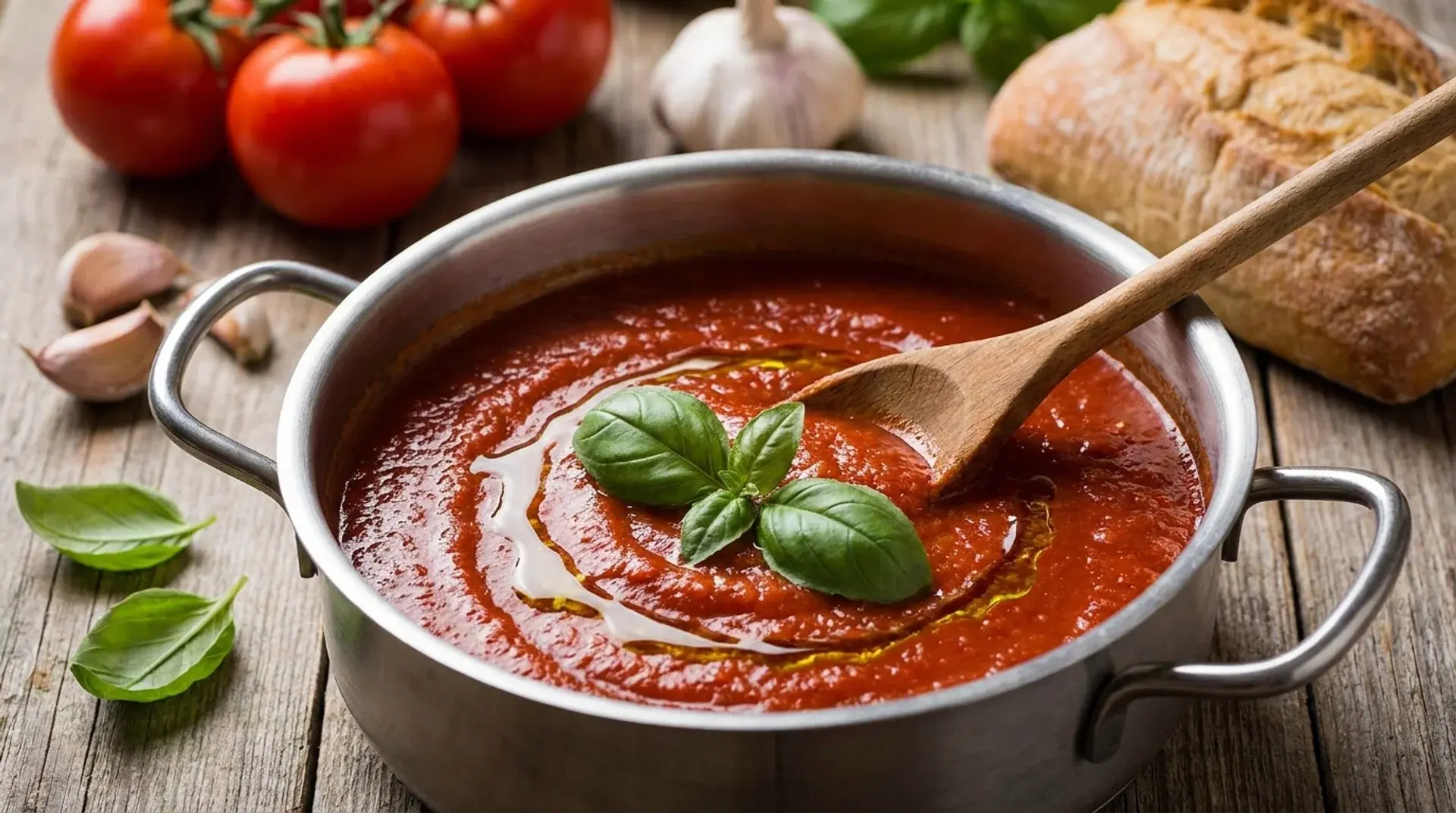
Why tomato sauce tastes too acidic
Tomato sauce tastes too acidic when the sourness is louder than the rest of the flavor. Tomatoes naturally contain acid, and that brightness is part of why tomato sauce works. The problem happens when there is not enough salt, fat, sweetness, simmering time, or savory depth to support it. Then the sauce tastes sharp instead of lively.
The tomatoes themselves matter. Canned tomatoes, fresh tomatoes, tomato paste, crushed tomatoes, and passata can all taste different depending on ripeness, variety, processing, and brand. Some tomatoes taste naturally sweet and round. Others taste metallic, watery, harsh, or aggressively tart. If the base ingredient starts sharp, the sauce needs more help from aromatics, fat, time, and seasoning.
Undercooked aromatics can also make acidity feel harsher. Raw garlic, sharp onion, or tomato paste that has not been cooked enough can add a rough edge. Cooking onion slowly in olive oil before adding tomatoes builds sweetness and depth. Cooking tomato paste until it darkens slightly can remove the raw edge and make the sauce taste more rounded.
Acidity also feels stronger when sauce is thin. A watery sauce spreads sourness without enough body to carry it. Reducing the sauce helps by evaporating extra water, concentrating tomato flavor, and giving aromatics time to blend. The goal is to make the acid from the tomato balanced with salt, fat and sweetness for savory depth.
How salt, fat, and sweetness balance tomato sauce
Salt, fat, and sweetness balance tomato sauce in different ways. Salt makes tomato flavor clearer and less dull. Fat softens sharp edges and gives the sauce a richer mouthfeel. Sweetness rounds acidity, but it should be used carefully. The mistake is reaching for sugar first every time tomato sauce tastes sour. Sometimes the sauce does not need sugar. It needs salt, olive oil, butter, better aromatics, or more simmering.
Salt should usually be adjusted before sweetness. A sauce with too little salt can taste sour and flat at the same time because the tomato flavor is not fully awake. Add salt in small increments, stir, and taste again. If the sauce suddenly tastes more tomato-forward and less harsh, salt was the missing piece.
Fat works differently. Olive oil, butter, cream, cheese, or meat drippings can soften acidity and make the sauce taste more complete. Olive oil keeps the flavor cleaner and more Mediterranean. Butter makes tomato sauce taste rounder and softer. Cheese adds salt, fat, and umami. Meat adds richness and savory depth. The right fat depends on the sauce style.
Sweetness should be subtle. A pinch of sugar, grated carrot, cooked onion, or a small amount of honey can help if the tomatoes are very tart. But too much sweetness makes tomato sauce taste cheap or candy-like. Seasoning balance with salt, fat, acid, sweetness, and heat is key to fix food by taste instead of guessing.
When to add sugar, butter, olive oil, or cheese
Add sugar when the tomatoes are genuinely tart and the sauce still tastes sharp after salt, fat, and simmering have had a chance to work. Use a small amount first. A pinch can round the edge without making the sauce taste sweet. Sugar is best treated as a correction, not the main strategy. If you need a lot of sugar to make the sauce palatable, the tomatoes may be weak or the sauce may need better aromatics and cooking time.
Add butter when you want the sauce to taste softer, rounder, and richer. Butter is especially useful in simple tomato sauces where the flavor is mostly tomato, onion, and fat. It can smooth sharpness without making the sauce taste sugary. Olive oil is better when you want a cleaner, fruitier sauce with more traditional tomato-garlic-herb character.
Add olive oil early, late, or both depending on the sauce. Early olive oil helps cook aromatics and carry flavor. A small drizzle at the end can add freshness and richness. If the sauce tastes harsh, a little more olive oil may help, but too much can make it greasy. If the sauce looks oily on top, stop adding fat and adjust salt or simmering instead.
Add cheese when the dish can support it. Parmesan, pecorino, or similar hard cheeses add salt, fat, and umami, which can make tomato sauce taste more complete. Add cheese near the end or at serving so it does not overcook or turn grainy. Be careful with salt after adding cheese because the sauce can become too salty quickly.
How simmering changes tomato sauce flavor
Simmering changes tomato sauce flavor by reducing water, softening aromatics, concentrating tomato solids, and giving the sauce time to become cohesive. A sauce that tastes raw, watery, or sharply acidic often needs more time at a gentle simmer. The heat helps onion, garlic, herbs, oil, tomato, and seasoning stop tasting separate and start tasting like one sauce.
Short simmering works when the tomatoes are already flavorful and the sauce is meant to taste fresh. This is common for quick marinara-style sauces, summer tomato sauces, or simple pasta sauces where brightness is the point. Long simmering works better when the tomatoes taste harsh, watery, or underdeveloped, or when the sauce includes meat, deeply cooked aromatics, or tomato paste.
The key is gentle heat. A hard boil can splatter, scorch the bottom, and reduce the sauce unevenly. A steady simmer gives you more control. Stir occasionally, especially if the sauce is thick or contains tomato paste. Scrape the bottom gently so sugars and solids do not burn. Burnt tomato sauce can turn bitter, and bitterness is harder to fix than acidity.
Simmering also changes seasoning. As water evaporates, salt becomes more concentrated. This is why it is smart to season in stages and make final adjustments near the end. A sauce may taste under-salted at first and perfect after reduction. Or it may taste balanced early and too salty later if you season heavily too soon.
Common tomato sauce mistakes and quick fixes
Common tomato sauce mistakes include too much acidity, not enough salt, watery texture, bitterness, excessive sweetness, weak aromatics, and scorched tomato paste. The fastest way to fix the sauce is to identify the actual problem before adding more ingredients. A sour sauce needs a different fix than a flat sauce. A bitter sauce needs a different fix than a watery one.
If the sauce is too acidic, try salt first, then fat, then a small amount of sweetness if needed. If the sauce is flat, add salt and consider a splash of acid only if it tastes dull rather than sour. If it is watery, simmer it uncovered until it reduces. If it is too thick, loosen it with pasta water, stock, or a small amount of water. If it is bitter, check whether anything burned. Mild bitterness can sometimes be softened with fat, sweetness, or dilution, but scorched sauce may not fully recover.
If the sauce is too sweet, add salt and acid carefully. A splash of vinegar, lemon juice, or wine can help, but add it slowly so the sauce does not swing from sweet to harsh. If the garlic tastes raw, simmer longer. If the onion tastes sharp, it may not have cooked enough before the tomatoes went in. If the sauce tastes metallic, simmering, fat, and proper seasoning may help, especially with some canned tomatoes.
Tomato sauce is one of the five classic mother sauces, but it is also one of the most flexible everyday sauces. To see how it fits beside béchamel, velouté, espagnole, and hollandaise, use the mother sauces overview as your broader reference point.
Frequently Asked Questions
How do you fix tomato sauce that is too acidic?
To fix tomato sauce that is too acidic, add salt first, then consider fat like olive oil or butter. If it still tastes sharp, add a small pinch of sugar or a naturally sweet ingredient like cooked onion or grated carrot. Simmering longer can also soften harsh acidity.
Does sugar reduce acidity in tomato sauce?
Sugar does not remove acidity, but it can balance how acidic tomato sauce tastes. Use it lightly. Too much sugar makes sauce taste sweet instead of balanced. Before adding sugar, check whether the sauce needs salt, olive oil, butter, better aromatics, or more simmering time.
Why does my tomato sauce taste bitter?
Tomato sauce usually tastes bitter when garlic, tomato paste, spices, or the sauce itself has scorched. It can also taste bitter from too much dried herb or over-reduction. Mild bitterness may be softened with fat, sweetness, or dilution, but strongly burnt sauce is usually hard to save.
Conclusion
Tomato sauce acidity balance is not about removing brightness. It is about supporting that brightness with salt, fat, sweetness, aromatics, and enough simmering time. A good tomato sauce should taste lively and rich, not sour, watery, flat, bitter, or sugary.
Start with salt, then adjust fat, sweetness, and simmering based on what the sauce actually needs. If it is thin, reduce it. If it is harsh, soften it. If it is flat, season it. Once you learn to taste those differences, tomato sauce becomes much easier to fix.
Next Step: Explore other classic mother sauces
Latest posts




About