Espagnole Brown Sauce for Deep Flavor
Espagnole sauce is the classic brown sauce foundation built from browned roux, stock, aromatics, tomato, and slow flavor development. It is richer and deeper than lighter mother sauces, but it also needs more care because browning can turn bitter fast if the heat gets away from you.
Once you understand espagnole, brown sauces, demi-glace-style reductions, mushroom sauces, and meat sauces become much easier to build with intention. For the full sauce-building framework behind roux, stocks, emulsions, pan sauces, and seasoning balance, start with the main sauces and foundations guide.

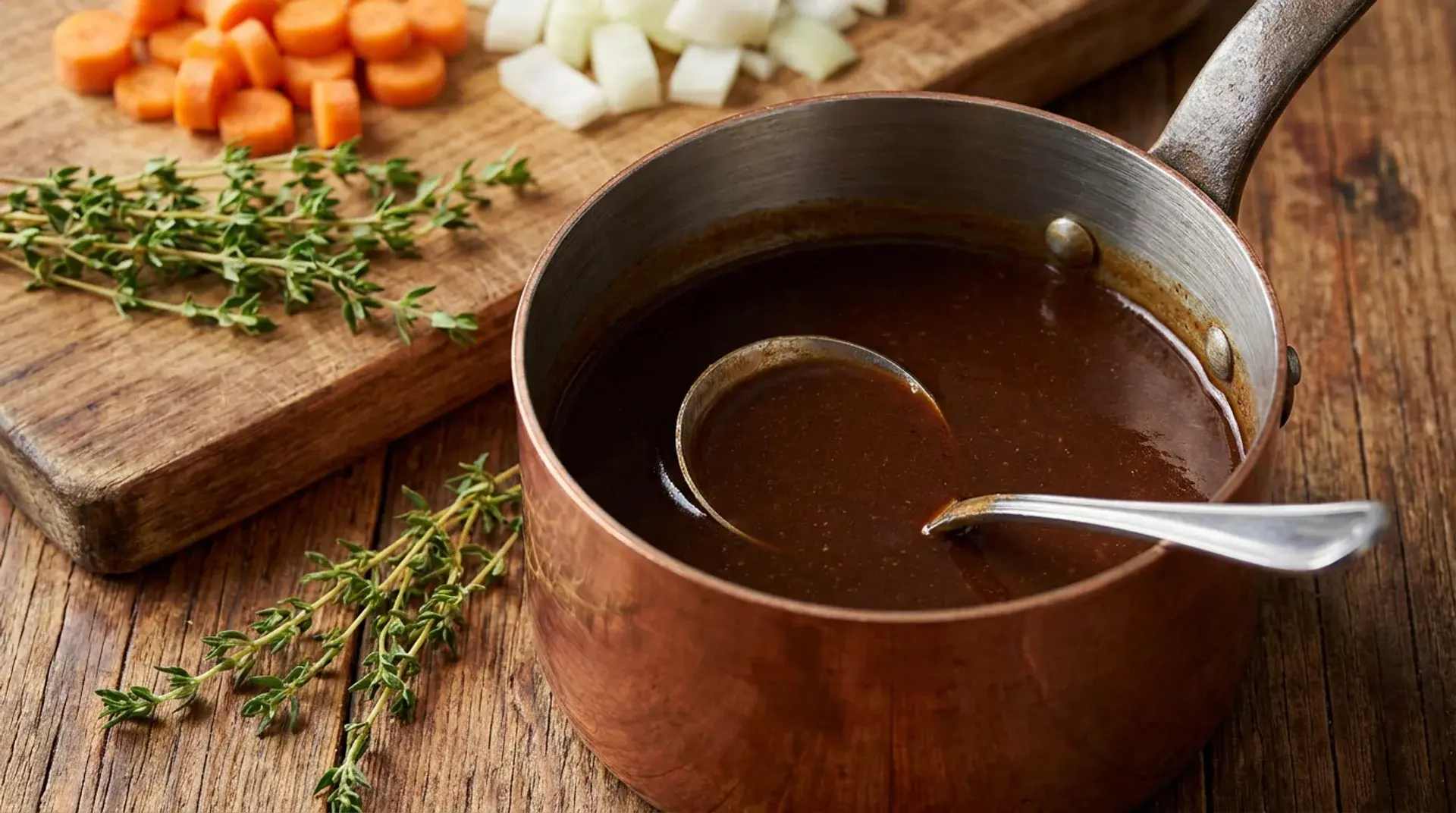
What is espagnole sauce?
Espagnole sauce is one of the five classic mother sauces. It is a foundational brown sauce made from brown stock, browned roux, aromatics, and tomato product. Compared with béchamel or velouté, espagnole is darker, richer, and more savory. It is not usually served plain in large amounts. Instead, it is often used as a base for smaller finished sauces, reductions, and demi-glace-style preparations.
The basic idea is simple: build flavor through browning, then extend and refine that flavor with stock and simmering. The roux is cooked darker than the roux used for béchamel or velouté. Aromatics like onion, carrot, celery, garlic, bay leaf, thyme, parsley stems, or peppercorns add depth. Tomato paste or tomato product adds body, acidity, color, and savory sweetness. Brown stock brings the main backbone.
Espagnole has a reputation for being old-school, but the method still teaches useful cooking logic. It shows how deep flavor comes from layering, not dumping everything into a pot at once. Browning the roux creates nuttiness. Cooking the aromatics develops sweetness. Tomato paste adds concentration when it is cooked properly. Stock gives body and savory depth. Simmering gives the sauce time to settle into itself.
For home cooks, espagnole is less about making a restaurant mother sauce every week and more about understanding brown sauce structure. Once you know the method, you can build better gravies, meat sauces, mushroom sauces, and reductions with more control.
Why brown roux creates deeper flavor
Brown roux creates deeper flavor because the flour and fat are cooked longer, allowing the mixture to develop nutty, toasted, savory notes. A pale roux is mostly about thickening. A brown roux still thickens, but it also contributes flavor and color. That is why espagnole tastes more developed than a light stock sauce made with a pale roux.
The tradeoff is that darker roux has less thickening power than pale roux. As flour cooks longer, its starches change, so it will not thicken liquid as aggressively. This is not a flaw. It is part of the style. Espagnole gets body from roux, stock gelatin, tomato product, reduction, and simmering together, not just from maximum starch thickening.
Brown roux requires attention because there is a fine line between toasted and burned. Cook it over moderate heat, stir often, and watch both color and smell. It should smell warm, nutty, and roasted. If it smells acrid, harsh, or scorched, it has gone too far. Burned roux will make the whole sauce bitter, and it is usually not worth trying to save.
This is where espagnole differs from lighter roux sauces. With a white sauce, the goal is smoothness and mildness. With brown sauce, the goal is controlled depth. If you want to understand how lighter roux behaves before working darker, the béchamel roux ratio guide gives you a cleaner foundation for how butter, flour, and liquid turn into sauce.
Espagnole vs demi-glace: what’s the difference?
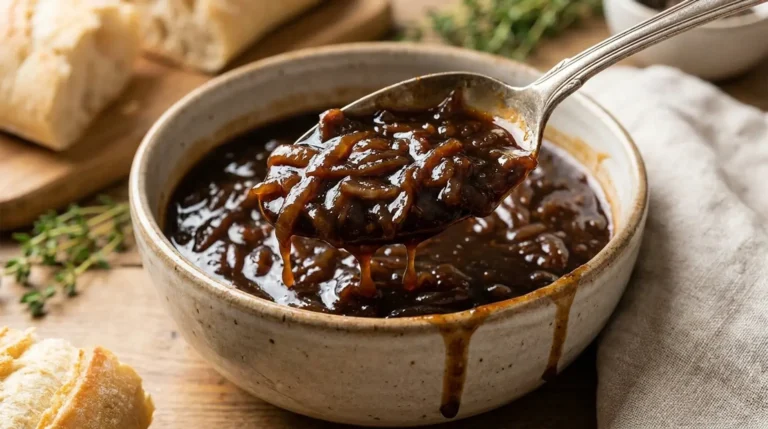
Espagnole and demi-glace are related, but they are not the same thing. Espagnole is the mother sauce. Demi-glace is a more concentrated finished sauce or sauce base that traditionally comes from espagnole combined with brown stock and reduced. In practical terms, espagnole is the foundation, while demi-glace is deeper, glossier, more intense, and more reduced.
Espagnole has more structure from roux and aromatics. It is usually simmered, skimmed, and strained so it becomes smooth and balanced. Demi-glace takes that foundation further by reducing it until the flavor is concentrated and the texture becomes richer. Because of that reduction, demi-glace is usually used in smaller amounts to finish sauces, glaze meat, or deepen pan sauces.
For home cooking, you do not always need a classical demi-glace to get value from the method. Understanding the difference helps you decide what your sauce needs. If you want a base sauce with body and savory depth, espagnole is the useful concept. If you want a concentrated finishing element, reduction is the useful concept. A spoonful of reduced stock, a concentrated pan sauce, or a quick mushroom reduction can borrow the same logic without following the full classical process.
The main caution is salt. The more you reduce a sauce, the more concentrated the salt becomes. If your stock or espagnole is already salty, reducing it into demi-glace-style intensity can make it harsh. Start with low-salt stock whenever possible and season near the end.
How to build flavor without making sauce bitter
To build flavor without making espagnole bitter, focus on controlled browning. Brown does not mean burned. The roux, aromatics, tomato paste, and stock all need attention because any one of them can push the sauce from deep and savory into harsh and scorched. Keep the heat moderate, stir regularly, and watch the bottom of the pan.
Start with the roux. Cook the flour and fat until the color deepens and the smell turns nutty, but stop before it smells acrid. Then add aromatics and let them soften and lightly brown. If they stick, manage the heat instead of scraping aggressively over high heat. Tomato paste should be cooked until it darkens slightly and smells sweeter, not burnt. That small step removes the raw tomato edge and adds depth.
Use stock to capture flavor, not hide burning
When stock goes in, it dissolves browned flavor from the pan and carries it through the sauce. That only works if the browned bits taste good. If the bottom of the pan is black or smells burnt, stock will not fix it. It will spread that bitterness into the entire sauce.
Simmer gently and skim when needed
A gentle simmer helps the sauce integrate without roughing up the flavor. Hard boiling can make the sauce cloudy, reduce it too aggressively, or cause scorching along the edges. Skim foam or excess fat as needed, then strain the sauce when the flavor and texture are where you want them.
Common brown sauce mistakes and quick fixes
Common brown sauce mistakes include burned roux, weak stock, greasy texture, bitterness, thin body, and over-reduction. Burned roux is the hardest problem to fix because scorched flour carries bitterness through the whole sauce. If the roux smells burnt, start over. It is frustrating, but it is better than spending more time and ingredients on a sauce that will still taste harsh.
Weak stock is another major issue. Espagnole depends on stock for depth, so thin or watery stock creates a thin-tasting sauce. Simmer weak stock down before using it, or strengthen the sauce with aromatics, mushroom, tomato paste, pan drippings, or reduction. If you want stronger sauce foundations from the start, learning chicken stock basics will help you understand how bones, collagen, aromatics, and simmering affect body and flavor.
If the sauce is greasy, skim excess fat from the surface and avoid adding more fat until the balance is right. If the sauce is bitter, dilute with unsalted stock and add a little fat, sweetness, or acidity only if the bitterness is mild. If the bitterness is from burning, dilution may reduce the intensity but will not fully remove the problem.
If the sauce is too thin, simmer it gently to reduce and concentrate. If it is too thick, whisk in unsalted stock a little at a time. If it is too salty, dilution is usually the best fix. If it tastes flat, adjust salt and acid near the end. Espagnole should taste deep and savory, but it still needs balance to avoid feeling heavy.
Frequently Asked Questions
What is espagnole sauce made of?
Espagnole sauce is made with brown stock, browned roux, aromatics, and tomato product. The sauce is simmered so the flavors develop, then it is usually strained for a smoother texture. Common aromatics include onion, carrot, celery, bay leaf, thyme, parsley stems, garlic, and peppercorns.
Why does espagnole sauce taste bitter?
Espagnole sauce usually tastes bitter when the roux, tomato paste, aromatics, or pan bottom has burned. Deep browning creates flavor, but scorching creates bitterness. Use moderate heat, stir often, and stop cooking the roux before it smells acrid. If the sauce is truly burnt, it is usually best to remake it.
Is espagnole sauce the same as brown gravy?
Espagnole sauce is not exactly the same as brown gravy, but they share similar ideas. Espagnole is a classic mother sauce made with brown stock and brown roux. Brown gravy is usually a simpler sauce made from drippings, stock, and thickener. Espagnole is typically more structured and deeply developed.
Conclusion
Espagnole sauce is a deep brown sauce foundation built from browned roux, stock, aromatics, tomato, and patient simmering. Its power comes from controlled browning and reduction, not from rushing the heat or forcing intensity. When made well, it creates a rich base for brown sauces, meat sauces, mushroom sauces, and demi-glace-style reductions.
The main lesson is simple: brown carefully, season late, and use good stock. If the roux burns, start over. If the stock is weak, reduce or strengthen it. If the sauce tastes heavy, balance it before serving. That is how espagnole becomes deep and savory instead of bitter and muddy.
Next Step: Learn how pan sauce turns browned bits into a finished sauce
Latest posts

About