Hollandaise Emulsion for Smooth Perfect Sauce
Hollandaise emulsion is the reason egg yolks, butter, lemon, and heat can turn into a glossy sauce instead of a greasy scramble. The sauce feels fancy, but the logic is simple: keep the fat moving slowly into the yolks, control the temperature, and balance the richness with acid and salt.
Once you understand how the emulsion works, hollandaise becomes much less fragile. For the full sauce-building framework behind roux, stocks, vinaigrettes, pan sauces, and flavor balance, start with the main sauces and foundations guide.

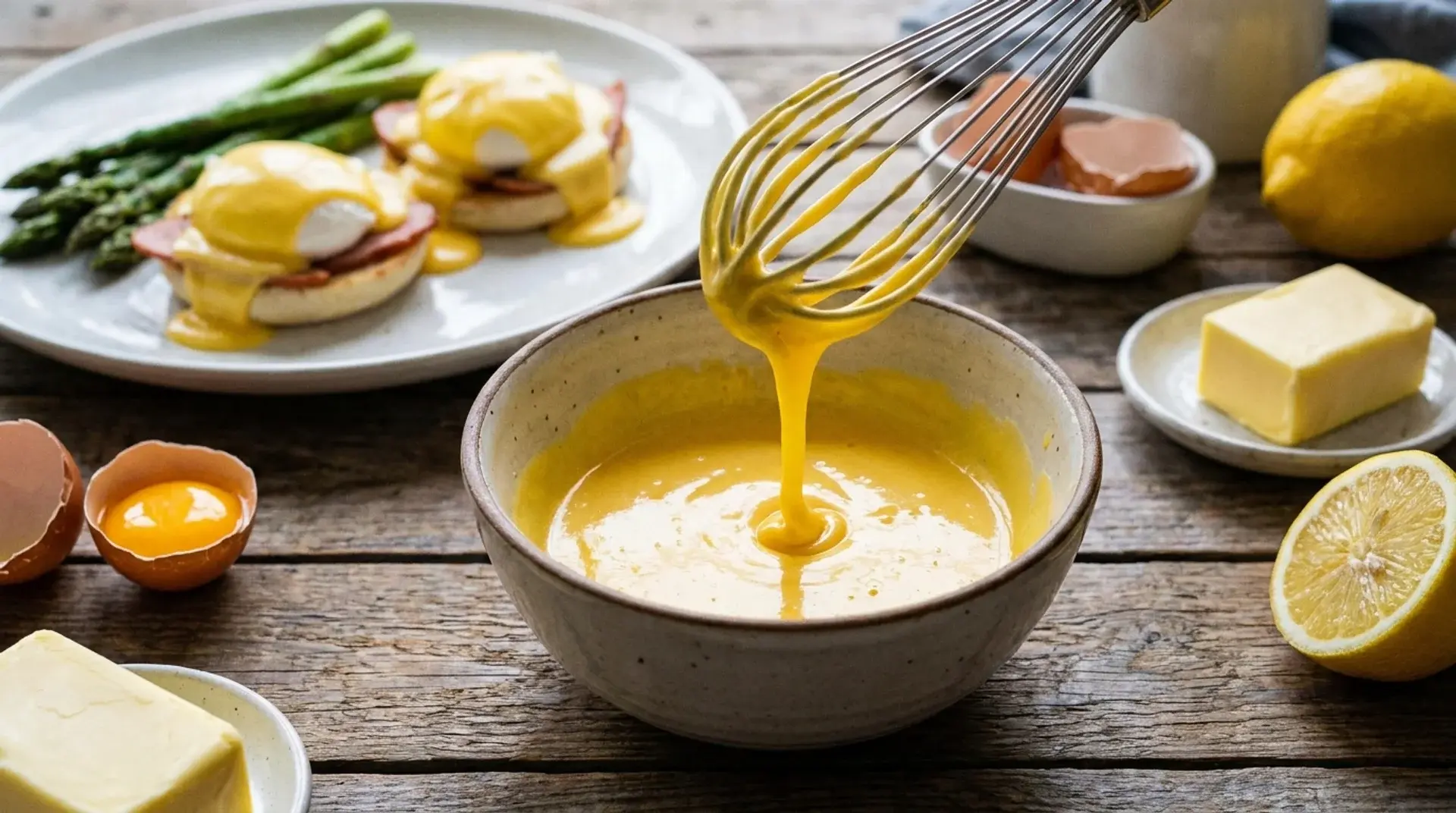
What is an emulsion in hollandaise?
An emulsion in hollandaise is a mixture of fat and water-based liquid held together in a smooth, stable sauce. Butter is mostly fat, while lemon juice and the water in egg yolks are water-based. On their own, those ingredients do not naturally stay blended. The job of the emulsion is to keep tiny droplets of butter suspended throughout the yolk and lemon mixture so the sauce feels creamy instead of separated.
Hollandaise is a warm emulsion, which makes it more delicate than a simple vinaigrette. In a vinaigrette, you can shake oil and vinegar together and accept that it may separate later. With hollandaise, the sauce needs to stay smooth while the yolks thicken gently and the butter is slowly incorporated. Too much heat can scramble the yolks. Too much butter too quickly can overwhelm the emulsion. Not enough movement and the sauce may separate.
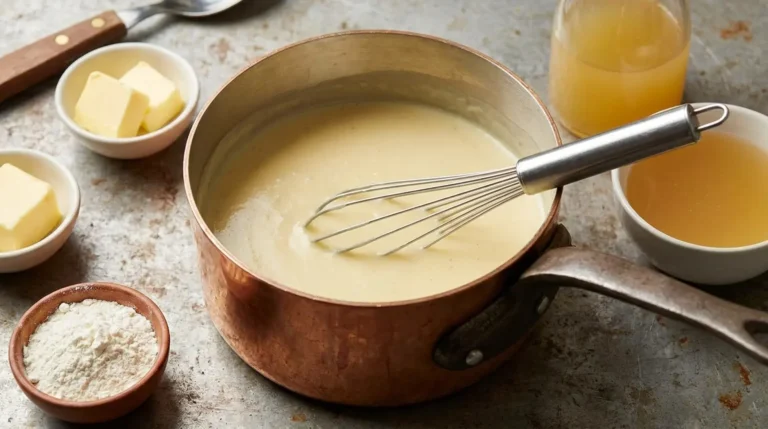
The goal is a sauce that is glossy, pale yellow, thick enough to ribbon from a spoon, and balanced enough to taste rich but not heavy. It should not look greasy, curdled, watery, or grainy. When hollandaise works, it feels like the butter has become lighter and more elegant because it is dispersed through the yolks instead of sitting as pure fat.
Hollandaise is one of the five classic mother sauces, but its real value for home cooks is that it teaches emulsion control. Once you understand why it holds together, broken butter sauces, mayonnaise-style sauces, and warm egg-based sauces become much easier to understand.
Why egg yolks help butter and lemon stay together
Egg yolks help butter and lemon stay together because they contain natural emulsifiers, especially lecithin. An emulsifier makes it easier for fat and water-based ingredients to stay dispersed instead of separating immediately. In hollandaise, the yolks act as the bridge between melted butter and lemon juice, creating a thicker sauce that can hold fat in tiny droplets.
Yolks also thicken as they warm, which gives hollandaise its body. This is why heat control matters so much. Warm the yolks gently and they become thicker, silkier, and more capable of holding the sauce. Push the heat too far and they coagulate into scrambled egg. The difference between a smooth sauce and a broken, grainy one is often only a small temperature shift.
The butter needs to be added slowly because the yolks can only hold so much fat at once. When butter is drizzled in gradually while whisking, it breaks into small droplets and gets suspended in the yolk mixture. If you pour in a lot of butter at once, the sauce may turn greasy because the emulsion cannot capture all that fat quickly enough.
Lemon juice does more than add flavor. It brings water and acidity, which helps the sauce taste brighter and can support the texture when used in the right amount. Too little acid makes hollandaise taste heavy. Too much can make it sharp or thin. The balance between yolks, butter, lemon, and heat is what makes the sauce feel finished.
How heat control prevents scrambled hollandaise
Heat control prevents scrambled hollandaise because egg yolks thicken gently before they curdle. The goal is to warm the yolks enough that they gain body, but not so much that they turn grainy. This is why many cooks use a double boiler or a bowl set over barely simmering water. Gentle indirect heat gives you more time to whisk, watch the texture, and pull the sauce away from heat before it goes too far.
The water under the bowl should not be aggressively boiling. Hard steam can heat the bowl too quickly and cook the yolks unevenly. A low simmer is safer. Whisk constantly while the yolks warm, and pay attention to texture. The yolk mixture should become slightly thicker and lighter before the butter is added. If it starts looking dry, clumpy, or grainy, the heat is too high.
Use on-and-off heat
You do not have to keep the bowl over heat the entire time. Move it on and off the pan as needed. If the sauce thickens too quickly, pull it away and keep whisking. If it feels too loose, return it briefly to the heat. This control is more important than following a strict time.
Watch the butter temperature
Warm melted butter blends more easily than cold butter, but extremely hot butter can shock the yolks and make the sauce unstable. The butter should be melted and warm, not aggressively hot. Add it slowly, especially at the beginning, while the emulsion is still forming.
How to fix broken hollandaise
To fix broken hollandaise, first look at how it broke. If the sauce looks greasy and separated, the emulsion likely became overloaded with butter or got too hot. If it looks grainy or scrambled, the yolks may have overcooked. A greasy broken sauce is often fixable. A fully scrambled sauce is harder to save, although it may be strained if the curdling is mild.
For a separated hollandaise, start with a clean bowl and add 1 teaspoon warm water or lemon juice. Whisk it, then slowly drizzle in the broken sauce a little at a time as if you were adding butter again. The fresh liquid gives the emulsion a new place to form, and the slow addition helps the fat break back into tiny droplets. Keep the heat gentle or off entirely while you do this.
If the sauce is too thick and beginning to split, whisk in a few drops of warm water. This can loosen the emulsion and help it come back together. If the sauce is too hot, remove it from heat immediately and whisk. If it is too cold and the butter is firming up, warm it very gently while whisking.
If the sauce has scrambled, strain it through a fine mesh sieve to remove small cooked bits, then decide if the remaining sauce is still worth using. If it tastes eggy, grainy, or harsh, remake it. Hollandaise is fussy, but it is honest. When the texture is gone, forcing it won't have good results for your meal.
Hollandaise balance: butter, lemon, salt, and heat
Hollandaise balance depends on butter, lemon, salt, and heat working together. Butter gives the sauce richness and body, but too much unbalanced butter makes it taste heavy or greasy. Lemon juice cuts through that richness and gives the sauce lift. Salt makes the butter, yolks, and lemon taste clearer. Heat thickens the yolks and helps the emulsion form, but too much heat destroys the texture.
If hollandaise tastes flat, it probably needs salt or lemon. Add a pinch of salt first, then a few drops of lemon juice if it still feels dull. If it tastes too sharp, whisk in a little more butter or a few drops of warm water to soften it. If it tastes too rich, add lemon juice carefully. If it tastes greasy, the sauce may be under-acidified, under-seasoned, or starting to separate.
Hollandaise should taste rich, bright, and rounded. It should not taste like plain melted butter, sour lemon, or egg. This is why tasting matters at the end. Even if the texture is perfect, the sauce is not finished until the flavor feels balanced. A small adjustment can make the difference between heavy and elegant.
The same tasting logic applies across dressings and sauces. Fat needs acid. Acid needs salt. Richness needs brightness. If this part feels more important than the technique itself, the guide to seasoning balance with salt, fat, acid, sweetness, and heat will help you adjust food more confidently by taste.
Frequently Asked Questions
Why does hollandaise sauce break?
Hollandaise breaks when the butter separates from the yolk mixture. This usually happens because the butter was added too quickly, the sauce got too hot, or the emulsion became too thick and unstable. A few drops of warm water or lemon juice can often help bring it back together.
How do you keep hollandaise from scrambling?
Keep hollandaise from scrambling by using gentle heat and constant whisking. A bowl over barely simmering water gives better control than direct heat. Move the bowl on and off the heat as needed, and do not let the yolks get grainy, dry, or clumpy.
Can you make hollandaise ahead of time?
Hollandaise is best served soon after making because it is a warm emulsion and can break when reheated. You can hold it briefly in a warm spot, stirring occasionally. If it thickens too much, whisk in a few drops of warm water to loosen it before serving.
Conclusion
Hollandaise emulsion is all about control. Egg yolks help melted butter and lemon stay together, but the sauce only works when the butter is added gradually, the heat stays gentle, and the final flavor is balanced with salt and acid. It is delicate, but it is not random.
If hollandaise breaks, slow down and rebuild the emulsion with warm water or lemon juice. If it scrambles, the heat went too far. Once you understand the difference, the sauce becomes much easier to troubleshoot and repeat.
Next Step: For a simpler everyday emulsion, explore vinaigrette ratios
Latest posts



About