Master Cooking Techniques: Core Skills for Home Cooks
If you can control heat, browning, and timing, cooking stops feeling like a guessing game. This master cooking techniques guide is your shortcut to repeatable results: better crusts, sweeter roasted vegetables, quick pan sauces, predictable egg doneness, and faster prep that actually feels safe.
Use this hub to diagnose what’s going wrong and then jump into the exact technique you need—starting with Pan-Searing if you want the fastest “wow” upgrade in any kitchen.

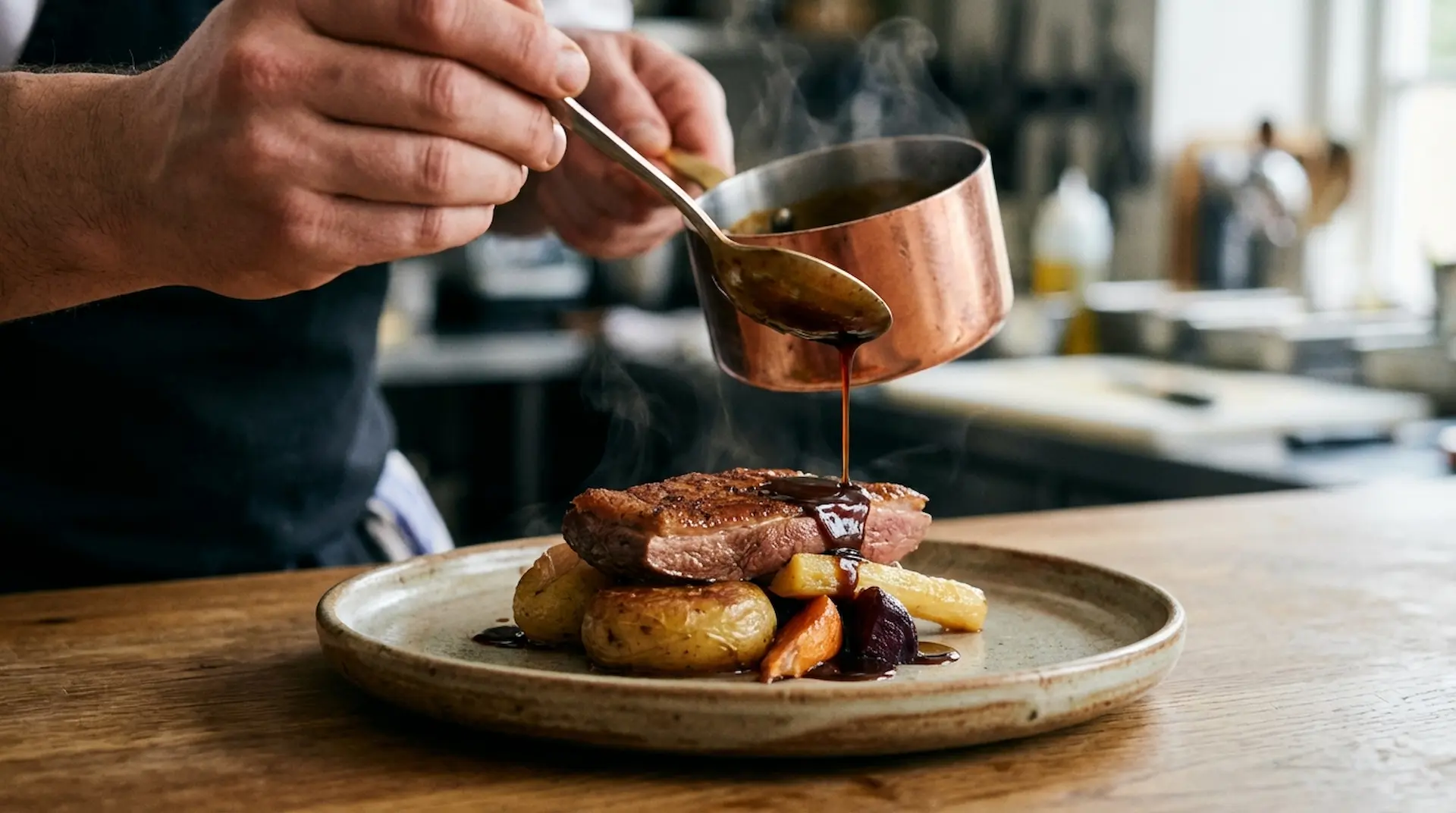
The master cooking techniques that unlock most recipes
Most recipes are just “the same few moves” wearing different outfits. When a dish goes wrong, it usually isn’t because you used the wrong spice or missed a niche trick—it’s because one foundational variable drifted: the pan wasn’t hot enough, the surface was wet, the food was crowded, the sauce wasn’t reduced, or the seasoning was added too early. Master techniques fix that by giving you repeatable checkpoints you can run on autopilot.
Here’s the core idea: treat cooking like cause and effect. Heat moves, moisture regulates temperature, browning needs contact + dryness + time, and sauces are built by concentrating flavor and balancing at the end. That’s why techniques scale: once you know how to build a crust and manage carryover, you can cook steak, chicken thighs, tofu, scallops, or mushrooms with the same logic. If you want a single first skill that immediately upgrades everything, start with pan-searing—it teaches heat, dryness, timing, and pan behavior in one move.
Heat control in practice: preheat, zones, and timing
“Heat control” sounds abstract until you attach it to decisions you make every day: how long you preheat, how you manage hot vs cool zones, and when you add ingredients. Preheating isn’t about “very hot” as a vibe—it’s about giving the pan enough time to reach a stable temperature so the surface doesn’t crash the moment food hits it. If you add food too early, you get sticking, steaming, pale surfaces, and uneven doneness because the pan is still climbing.
Zones are your cheat code. On the stove, you create zones by shifting the pan position, lowering the burner after browning, or moving food to the edges. In the oven, zones show up as top rack vs middle rack, convection vs standard, and the natural hot spots every oven has. Timing becomes easier when you separate “browning time” from “finishing time.” Brown first at higher heat, then finish more gently so the inside catches up. This same logic applies whether you’re crisping vegetables, setting eggs, or reducing a sauce: control the heat, then give the process the time it actually needs.
Browning and flavor: when to sear and when to roast
Browning is not “burning slowly.” It’s a controlled flavor-building phase that needs the right conditions: a dry surface, steady heat, and enough contact time. The biggest reason browning fails is moisture. If the surface is wet or the pan is crowded, heat gets spent evaporating water instead of building color and flavor. That’s why “gray meat” happens even on high heat: it’s not hot enough once the moisture floods the pan.
So when do you sear vs roast? Searing is best when you want a fast crust on a flat surface with direct pan contact (meat, fish, tofu, mushrooms). Roasting is best when you want even browning over many surfaces with dry heat and airflow (vegetables, chicken pieces, sheet-pan meals). A practical rule: if you need contact, sear; if you need airflow, roast. And if you want both, do both—sear for crust, then finish in the oven. That’s the reliable path for thick cuts and also a great way to keep vegetables crisp without scorching.
Pan sauces and sauce building: deglaze, reduce, finish
Pan sauces are the highest return-on-effort technique in home cooking. You cook something in a pan, you see brown bits (fond), and instead of treating them like “burnt stuff,” you convert them into flavor. The three-step pattern is simple: deglaze to dissolve the fond, reduce to concentrate flavor and texture, then finish to add body and balance. Once you understand that pattern, you can turn an average chicken breast, pork chop, or sautéed mushrooms into something that tastes restaurant-level in minutes.
Deglazing is the moment you add liquid (wine, stock, water, vinegar) to a hot pan and scrape up the fond. Reduction is the simmer phase where water evaporates and flavor concentrates—this is where watery becomes glossy. Finishing is where you decide the “shape” of the sauce: butter for shine and richness, a splash of acid for lift, herbs for freshness, or a small amount of cream for roundness. If you want the step-by-step version (plus what to do when the bits are actually burnt), go straight to Deglazing.
Hard-boiled egg doneness you can repeat every time
Eggs are a perfect example of why technique beats vibes. “Boil for X minutes” fails because stoves, pot sizes, water volume, and egg temperature vary—so the heat curve varies. The repeatable approach is to standardize the process: use a consistent method (steaming or gentle boiling), start timing at the right moment, and stop cooking decisively. When you do that, you can choose your yolk texture on purpose: jammy, fully set, or somewhere in between.
Peeling is mostly about controlling how the egg cooks and how it cools. Steam can help because it’s efficient and often reduces violent bubbling that cracks shells. A short ice bath (or at least a cold rinse) helps by stopping carryover cooking and encouraging the egg to contract slightly away from the shell. The result: fewer green rings, fewer cratered whites, and far less “why is this sticking?” drama. For the exact timing chart and peel rules, use Hard-Boiled Eggs.
Foundations of thickening: roux, reduction, and emulsions
Most “sauce problems” are really texture problems: too thin, greasy, broken, or grainy. The fix starts with picking the right thickening method. Roux thickens by starch gelatinization (flour cooked in fat, then hydrated with liquid). Reduction thickens by evaporation and concentration (water leaves, everything else becomes more intense). Emulsions thicken by dispersing fat into water in tiny droplets (think silky dressings, mayonnaise-style sauces, and butter-enriched pan sauces).
A practical decision rule: choose roux when you want stable thickness without needing a ton of reduction time (gravy, mac and cheese base, gumbo); choose reduction when you want concentrated flavor and a glossy finish (wine sauces, stock-based sauces); choose emulsification when you want richness without heaviness (mounting with butter, emulsified vinaigrettes). Each method has failure modes—roux can lump or taste raw, reduction can get too salty if you season early, emulsions can break if overheated. The safest “learn this first” thickener is roux; start with Making a Roux.
Knife skills that matter: speed, safety, consistency
Knife skills aren’t about looking fancy—they’re about removing friction. When prep feels slow or unsafe, you avoid cooking. The goal is simple: a stable grip, protected fingers, and cuts that cook evenly. Even cooking depends on uniform size; if one piece is double the thickness, it needs double the time, which is how you end up with burnt edges and raw centers on the same pan or sheet tray.
The two habits that change everything are the pinch grip (control the blade, not the handle) and the claw (tuck fingertips so the blade rides the knuckles). From there, focus on the few cuts you use constantly: slicing, chopping, and dicing. You don’t need 12 classical French cuts to cook better; you need consistency and a knife that isn’t dull. Sharp is safer because it requires less force and is less likely to slip. If prep is your biggest bottleneck, go to Knife Skills and make cooking feel lighter immediately.
Common cooking technique mistakes and fast fixes
Most technique mistakes fall into a few categories: heat too low (no browning), heat too high (burning before the inside cooks), moisture unmanaged (steaming instead of crisping), crowding (temperature crash), and seasoning too early (over-salting after reduction). The fix is usually not “do more,” it’s “do less, earlier.” Dry surfaces before heat. Preheat longer than you think. Cook in batches. Salt near the end if you plan to reduce.
Here’s a rapid troubleshooting lens: if it’s pale, you need more heat stability and a drier surface; if it’s burning, you need lower heat or a two-stage approach (brown, then finish gently); if it’s watery, you need spacing (for roasting) or reduction (for sauces); if it’s sticking, you likely moved it too early or the pan wasn’t hot enough before adding oil/food. And if you’re not sure whether you should sauté or sear, that confusion alone can create the wrong heat and movement pattern—use Sautéing vs Searing to pick the right move fast.
Recommended reading paths: start here and build fast wins
If you want a clean “curriculum,” follow this order. It stacks skills in a way that makes each next technique easier, and it keeps you focused on repeatable wins—not random kitchen trivia.
Start here: the 8 technique clusters
Pan-Searing — Build a deep crust without overcooking, and stop the sticking/burning cycle.
Roasting Vegetables — Get crispy edges and sweet caramelization instead of soggy sheet pans.
Knife Skills — Prep faster and safer with cuts that cook evenly every time.
Hard-Boiled Eggs — Nail yolk doneness and peeling with a simple timing system.
Deglazing — Turn fond into instant flavor and fast pan sauces.
Making a Roux — Control thickness (and avoid lumps) for gravy, gumbo, and cheese sauce.
Reducing Sauce — Fix watery sauces and build glossy texture without over-salting.
Sautéing vs Searing — Choose the right technique in 10 seconds so food browns the way you want.
Frequently Asked Questions
What are the most important cooking techniques to learn first?
Start with heat + browning: pan-searing, then deglazing, then reduction. Those three teach dryness, temperature stability, timing, and how to build flavor fast. Add one prep skill (knife basics) and one “foundation” thickener (roux), and you’ll cover most weeknight cooking problems with a small, repeatable toolkit.
Why does my food taste bland even when I follow recipes?
Usually it’s technique, not ingredients: not enough browning, not enough reduction, or seasoning added at the wrong time. If moisture prevents browning, you lose depth. If sauces aren’t reduced, flavor stays diluted. Master moves like searing, deglazing, and reducing concentrate flavor and make “simple food” taste intentional.
How do I get consistent results without a thermometer?
You can still improve consistency by controlling variables you can see: preheat longer, keep surfaces dry, cook in batches, and use zones (brown hot, finish gentle). But a thermometer removes the biggest guess: internal doneness. If consistency is your top goal, using even a basic thermometer is the fastest upgrade.
Conclusion
Cooking gets dramatically easier when you stop chasing perfect recipes and start running repeatable moves. Control heat, manage moisture, build browning on purpose, and use simple sauce patterns to concentrate flavor. Use this hub when something feels “off,” then jump into the technique that fixes the root cause.
Next Step: Start with Pan-Searing to get better browning fast
Latest posts
About